
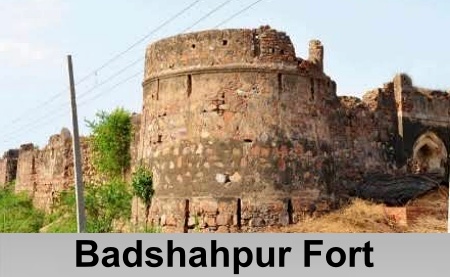
 Badshahpur Fort is located in Badshahpur village of Gurugram in the
state of Haryana.
The fort is believed to have been built during medieval period. Badshahpur fort
was actually the palace of one of the wives of Mughal
emperor Bahadur Shah Zafar. Most of the
fort is now in ruins. The fort is located near the fort an old baoli or step
well which is believed to have been constructed during the Mughal period.
The baoli once served as a water-storage and distribution system for royals.
The village Badshahpur is named after this historic fort.
Badshahpur Fort is located in Badshahpur village of Gurugram in the
state of Haryana.
The fort is believed to have been built during medieval period. Badshahpur fort
was actually the palace of one of the wives of Mughal
emperor Bahadur Shah Zafar. Most of the
fort is now in ruins. The fort is located near the fort an old baoli or step
well which is believed to have been constructed during the Mughal period.
The baoli once served as a water-storage and distribution system for royals.
The village Badshahpur is named after this historic fort.
Badshahpur Fort
Badshahpur Fort is a historic defensive structure reflecting the architectural traditions of its era. Built with granite and red sandstone, the fort witnessed numerous battles and changing rulers. Today, much of the structure lies in ruins due to neglect and encroachment.
Introduction
Architecture of Badshahpur Fort
Badshahpur Fort served as a strategic defensive stronghold and reflects the architectural characteristics of the Mughal period. The fort was constructed with robust walls made of granite and red sandstone, showcasing the strength and grandeur typical of Mughal architecture. Over the centuries, it witnessed numerous battles and the rule of several rulers, becoming an important part of the region’s historical landscape.
Today, the fort lies largely in ruins as a result of
prolonged neglect and unchecked encroachment. Only fragments of its
once-imposing walls, a tunnel, and a stepwell remain, offering glimpses of its
former architectural and historical grandeur.
Architecture of Badshahpur Baoli
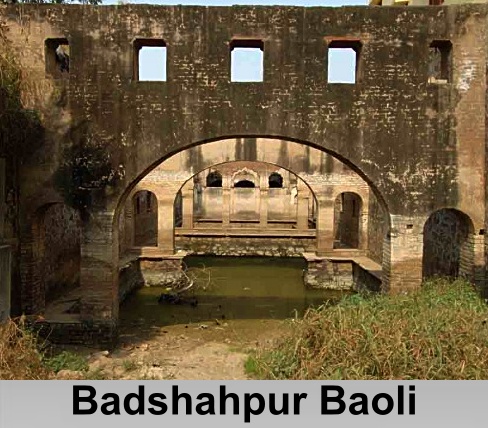 The Baoli at Badshahpur is situated adjacent to the fort. Built
in 1905, the Badshahpur Baoli was designed to collect, store, and recharge
water in a landscape where every drop was considered valuable. The historic
water structure consists of a rectangular tank that can be accessed through a
series of broad steps. The tank is further divided into several smaller spaces
by a series of arched walls extending across its width. Constructed of brick
and finished with plaster, the Baoli reflects the traditional architectural
features of historic water-management structures.
The Baoli at Badshahpur is situated adjacent to the fort. Built
in 1905, the Badshahpur Baoli was designed to collect, store, and recharge
water in a landscape where every drop was considered valuable. The historic
water structure consists of a rectangular tank that can be accessed through a
series of broad steps. The tank is further divided into several smaller spaces
by a series of arched walls extending across its width. Constructed of brick
and finished with plaster, the Baoli reflects the traditional architectural
features of historic water-management structures.
The structure represented more than just a traditional water-management system; it reflected the community’s deep understanding of water conservation and its close relationship with the natural environment. Its design demonstrated how local communities adapted their way of life to efficiently manage and sustain water resources.
At present, the Baoli is no longer functional and remains in a poor state of preservation. The presence of stagnant water has further contributed to its deteriorating condition, highlighting the need for appropriate conservation and maintenance measures.
Present Condition of Badshahpur Fort
Badshahpur Fort is a historic structure associated with the region’s rich architectural and cultural heritage. It originally covered an area of 17 acres. Although the fort is traditionally described as dating back to 1216 AD, the monument today faces serious challenges due to unchecked encroachment. Over the years, more than 150 residential structures have come up in and around the fort premises, threatening its historical character and surroundings.
Despite being featured on the state government’s tourism
website, the fort has received little attention in terms of conservation and
preservation. The lack of adequate measures to protect the monument has raised concerns
about the gradual loss of an important part of the region’s historical legacy.
Recently updated articles in Indian Monuments
Badshahpur Fort
Badshahpur Fort is a historic defensive structure reflecting the architectural traditions of its era. Built with granite and red sandstone, the fort w...
Sitabenga and Jogimara Caves
Sitabenga and Jogimara Caves in Chhattisgarh are ancient rock-cut monuments dating to the early historic period. Known for their Brahmi inscriptions,...
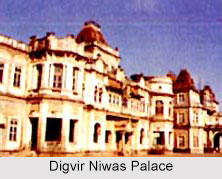
Digvir Niwas Palace
Digvir Niwas Palace in Vansda, Gujarat is one of the popular heritage buildings that reflect the majestic architecture of the early 20th century.
Historical Monuments of Satara
Among the historical monuments of Satara the fort at Satara is the most famous. Most of the constructions here belong to the Marathas.
Architecture Of Bihar
Architecture of Bihar consists of Buddhist and Mughal style of architecture.
Related articles in Indian Monuments

Monuments of Lakshwadeep
Monuments of Lakshwadeep are famous for their ancient religious feel and historical value.

Monuments of West Bengal
Monuments of West Bengal, mainly from the British era, are considered as priceless heritage of the state and attracts many tourists to the state.
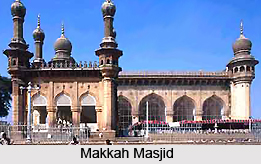
Monuments of Telangana
Monuments of Telangana covers the ancient, medieval and modern historical structures illustrating the architectural grandeur and attracting thousands...
Architecture Of Andhra Pradesh
Architecture of Andhra Pradesh is an illustration of diverse types of Hindu, Buddhist and Islamic architectural styles.
Architecture of Lucknow
Architecture of Lucknow is mostly Islamic in nature. It is representative of 18th and 19th century Indian architecture. The architecture is broadly di...