
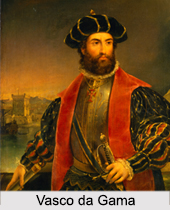
 Vasco da Gama was one of the notable Portuguese explorers who discovered a sea route from Portugal to the East. On the 27th of May 1498, Vasco da Gama stepped ashore on the coast of Malabar, and for Kerala a new era began. His discovery of this sea route helped the Portuguese establish a long-lasting colonial empire in Asia and Africa. The new ocean route around Africa allowed Portuguese sailors to avoid the Arab trading hold in the Mediterranean and Middle East.
Vasco da Gama
Vasco da Gama was a Portuguese explorer who sailed from Portugal to India in the year 1498. He is the first person to sail directly from Europe to India.
Introduction
Vasco da Gama was one of the notable Portuguese explorers who discovered a sea route from Portugal to the East. On the 27th of May 1498, Vasco da Gama stepped ashore on the coast of Malabar, and for Kerala a new era began. His discovery of this sea route helped the Portuguese establish a long-lasting colonial empire in Asia and Africa. The new ocean route around Africa allowed Portuguese sailors to avoid the Arab trading hold in the Mediterranean and Middle East.
Early Life of Vasco da Gama
Vasco da Gama was born in 1460 to a minor nobleman who commanded the fortress at Sines, Portugal. His career as an explorer started after his father was selected to lead an expedition to open the sea route to Asia and to outflank the Muslims, who enjoyed a monopoly of trade with India and other eastern states. He took command when his father died and sailed from Lisbon in the month of July 1497. The patron of Vasco da Gama was King Manuel I of Portugal. Vasco da Gama"s maritime career was during the period when Portugal was searching for a trade route around Africa to India.
Vasco da Gama in India
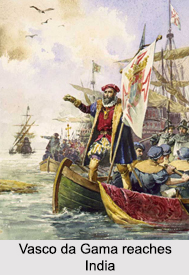 Vasco da Gama made two expeditions to India between 1497 and 1524. In 1497, King Manuel I chose da Gama to lead a Portuguese fleet to India in search of a maritime route from Western Europe to the East. At the time, the Muslims held a monopoly of trade with India and other Eastern nations. Vasco da Gama sailed from Lisbon in July 1497. Many explorers made several attempts. It was Bartolomeu Dias who was the first to round Africa and make it to the Indian Ocean in 1488. But he was forced to head back to Portugal before he could make it to India. Vasco da Gama rounded the Cape of Good Hope, and anchored at Malindi on the east coast of Africa. With the aid of an Indian navigator, Vasco da Gama was able to cross the Indian Ocean and reach the coast of India at Calicut (now Kozhikode) in May 1498.
For the next 20 years, Vasco da Gama continued to advise the Portuguese ruler on Indian affairs. In 1524, King John III appointed him as Portuguese viceroy in India with the task of combating the growing corruption that had tainted the Portuguese government in India. Vasco da Gama arrived in Goa but soon fell ill, and in December 1524 he died in Cochin. He was buried in the local church. In 1539, his remains were brought back to Portugal.
First Indian Expedition of Vasco da Gama
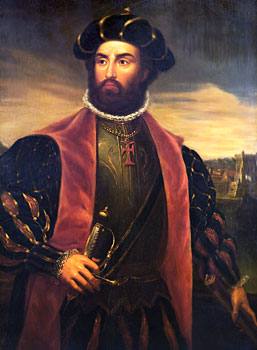 The first contact of the Portuguese with the Malabar Coast was made by the ancient Red Sea route years before Vasco da Gama sailed from Belem. In 1487 Joao II sent one of his noblemen, Joao Peres de Covilhao, on a mission of reconnaissance. Covilhao knew Arabic sufficiently well to pass as a Muslim; in disguise he travelled to Aden, and thence sailed on an Arab ship to the Malabar Coast, where he stayed undetected for several months in Calicut and Kannur (Cannanore). While returning, he came by way of Abyssinia, but there he died before his story could be narrated to the king who had sent him. Nevertheless, the Portuguese moved ahead with their plans for an expedition around the Cape of Good Hope, and in the month of July 1497, Vasco da Gama sailed from Portugal. The following year, he arrived at Calicut via Natal, Mozambique and Mombasa. Initially he was welcomed by the Zamorins of Calicut.
To the Malayalis, the newly-arrived strangers and their strange craft were objects of wonder, but the Arab merchants, who had close trading links with the Mediterranean, were clearly aware of the identity of the newcomers, and when, as they awaited an audience with the Zamorin, the Portuguese tried to open trade, they encountered a disconcerting lack of interest in the goods they offered. Eventually, after a noble delay, the Zamorin welcomed Vasco da Gama in ceremonial durbar, along with his ministers and chieftains. Braving the humid Malabar heat, da Gama dressed intricately in velvet and blue satin, and a brocade-lined cloak of tawny satin; a long beard which he had vowed to cut till he returned to Portugal, presented an impressive appearance. His trumpeters marched before him, and his pages contained the presents he had brought, including a gilded chair on which the Zamorin sat to conduct the audience. There was a theatrical tawdriness regarding the Portuguese procession, in comparison with the curious combination of extreme simplicity of dress and great richness of jewellery which the Zamorin, clad and adorned in the manner of the sovereigns of Kerala, presented to the curious eyes of his visitors.
Among the debts we owe to the Portuguese reaching the Malabar Coast on the early expeditions are such vivid detailed descriptions, the first clear pictures we possess of traditional Keralan life. But for Vasco da Gama the strangeness of his surroundings seems to have been no compensation for the evasiveness of the Zamorin when it came to questions of business. The Portuguese did not receive any clear answer with regard to their trade in Calicut. Thus, the Portuguese became suspicious of Arab intrigues. They even - with no apparent justification - became concerned about their safety and seized five Malayalis as hostages; ignorant of local customs, they made the mistake of picking low-caste fishermen. Lastly, the Zamorin agreed that the Portuguese might leave a factor to look for buyers for their unsold goods; provided they pay the usual customs dues. The proposal was refused by Vasco da Gama, and sailed away with his hostages. This confirmed the Zamorin the warnings received by the Arab merchants regarding the ambitions of the Portuguese and sowed the seeds of future hostility.
Second Indian Expedition of Vasco da Gama
 The second expedition of Vasco da Gama to India was in the month of February 1502, and this time he brought with him eight hundred men and fifteen ships. King John III, who followed King Manuel I, sent da Gama to India as the representative of the King. His ships docked at Anjadiva and afterwards he visited Cannanore and was welcomed nicely by the Kalathiri who decided to sell spices to the Portuguese. Then he went to Calicut, and at the sight of such a large fleet, the Zamorin assumed a conciliatory tone and offered compensation for the destruction of Cabral`s factory. However, Da Gama demanded the immediate expulsion of all the Arab merchants to which the Zamorin refused. Then Da Gama bombarded Kochi (Cochin) and took thirty four Arabs, hanged them and cut off their heads, feet and hands. These gruesome relics he put into an open boat, together with a Brahmin envoy of the Zamorin who had arrived on a Portuguese safe-conduct, but who now drifted back to shore minus his ears, nose and hands, which were hung around his neck with a palm-leaf message to the Zamorin recommending him to make himself a curry of them.
After the death of King Manuel, King John III again sent Vasco da Gama to India as a Portuguese viceroy in the year 1524. After landing at Goa, he sent a fleet and defeated Kutti Ali at Calicut. The Cannanore king surrendered one of his captains named Balia Hassan to the Portuguese and he was kept in the dungeon in Cannanore fort. Though Vasco da Gama came out for a third term in 1524 in the hope of reforming the administration, he died almost immediately in Cochin on the 24th of December1524, with little achieved.
Recently updated articles in History of India
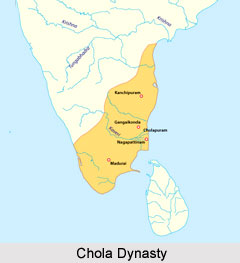
Chola Dynasty
Chola Dynasty is a Tamil dynasty and had longest duration of ruling in parts of South India. Chola dynasty had ruled South India successfully for a ex...
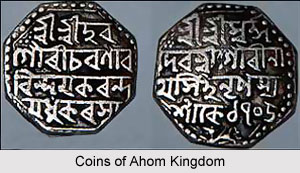
Suhungmung
Suhungmung was the fourteenth ruler of the Ahom dynasty who ruled from the period 1497 to 1539 AD. His reign was significant in terms of expansion of...
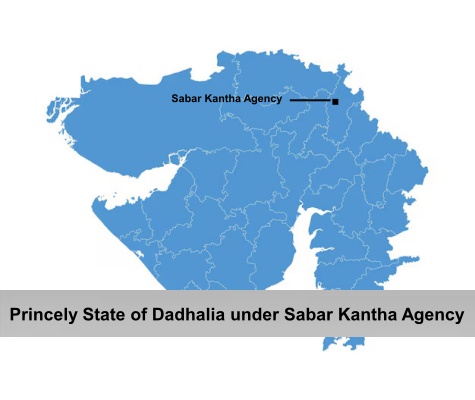
Princely State of Dadhalia
Princely State of Dadhalia was located in the present state of Gujarat. The state covered a total area of 28 sq miles and comprised of 15 villages. Th...
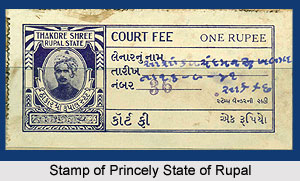
Princely State of Rupal
Princely State of Rupal was a part of the Baroda Agency, a sub division of Western India States Agency. It was under the administrative control of the...
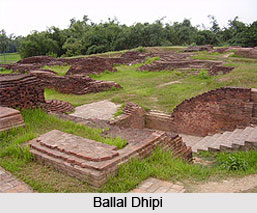
Archaeological Sites of West Bengal
Archaeological sites of West Bengal reveal several aspects of ancient India. Excavations by the Archaeological Survey of India have furnished artefact...
Related articles in History of India
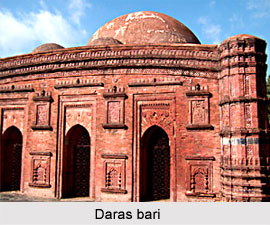
Mughal Architecture during Babur
Mughal architecture during Babur marked the foundation of a new architectural era in India, blending Timurid, Persian, and local influences. His reign...
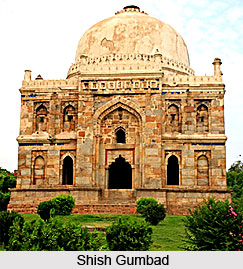
Architecture during Sayyid and Lodi Dynasty
Architectures during the Sayyid and Lodi dynasty were mainly the tombs and monuments for the dead rulers. It were carefully designed and meticulously...
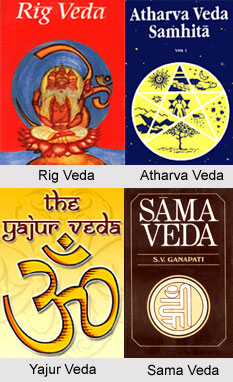
Brahmanical Sources of Ancient History
Brahmanical Sources of ancient history are contained in the Vedas and they constitute one of the most important literary sources of information about...
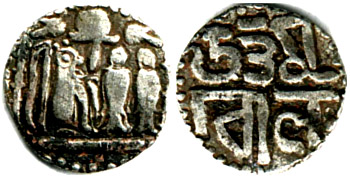
Coins of Chola Empire
Coins of Chola Empire were issued in gold, silver and copper and carried the Chola emblem.
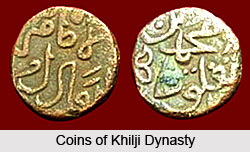
Coins of Khilji Dynasty
Coins of Khilji Dynasty had an influential feature that was followed by the other dynasties.