
Ram Prasad Bismil was a prominent Indian revolutionary and an Indian freedom fighter. He took active participation in the Mainpuri Conspiracy in the year 1918, as well as the Kakori Train Robbery Conspiracy in 1918, against the rule of the British Empire in India. Bismil was also a patriotic poet and composed poetry in Urdu and Hindi under the pseudonyms Bismil, Agyat and Ram. Ram Prasad Bismil was also a member of the Arya Samaj and was highly inspired by the book Satyarth Prakash by Swami Dayanand Saraswati. He was also associated with Lala Har Dayal through Swami Somdev, who was a respected preacher of the Arya Samaj. He was amongst the founding members of Hindustan Republican Association (HRA), which was later known as Hindustan Socialist Republican Association (HSRA), a revolutionary organisation. He was lauded by the renowned revolutionary Shaheed Bhagat Singh as a great poet and writer of Hindi and Urdu. He had also translated the books Catherine from English and Bolshevikon Ki Kartoot from Bengali.
Early Life of Ram Prasad Bismil
Ram Prasad Bismil was born on 11 June 1897 at Shahjahanpur, in Uttar Pradesh in a Hindu family, to the parents Murlidhar and Moolmati. During his initial years he completed his studies from the English medium Mission School of the city and the Government School in Shahjahanpur. During this period, he started composing poems under the pseudonym Bismil.
Revolutionary Activities of Ram Prasad Bismil
Ram Prasad Bismil founded a revolutionary group known as Matrivedi, which menas Altar of Motherland. He eventually contacted a school teacher named Pt. Genda Lal Dixit at Auraiya. This meeting was organized by Som Dev, as he knew that Ram Prasad Bismil would be more efficient and attain success if he gained the support of experienced and eminent personalities. Pt. Genda Lal Dixit was associated with some influential dacoits in the territory. Thus, he wanted to utilise the expertise and power of the dacoits in the armed revolution against the rule of the British Empire in India and significantly contribute to the Indian freedom struggle.
Ram Prasad Bismil published a pamphlet named Deshvasiyon Ke Nam Sandesh, meaning "A Message to Countrymen". He distributed the pamphlets along with his poetic composition of Mainpuri Ki Pratigya (Vow of Mainpuri). Under the organisation of Matrivedi, Bismil decided to gather funds for the various operations of the party through raiding and looting. On 3 separate occasions in the year 1918, the party undertook looting in order to conduct revolutionary activities for national independence. As a result of these, a criminal case was filed against the members of the revolutionary association and the incident was known as the Mainpuri Conspiracy, which was conducted against the British Emperor. B.S. Chris, the Judiciary Magistrate of Mainpuri, announced the judgment against all accused on 1st November 1919 and announced Pt. Genda Lal Dixit and Bismil as absconders.
During the years 1919 and 1920, Ram Prasad Bismil remained inconspicuous and shifted around several villages in Uttar Pradesh. He also wrote a number of books. Later he became a member of the revolutionary group party would be the Hindustan Republican Association (HRA). Bismil was declared as the District Organiser of Shahjahanpur, as well as the Chief of Arms Division. But after the senior coordinators of the Hindustan Republican Association were detained by the British police, Ram Prasad Bismil took charge of the organisation. He once again decided to gather funds by stealing from the rich individuals in the society. Under his leadership, the group conducted loots in the district of Pilibhit and also at Dwarkapur in Pratapgarh district of Uttar Pradesh. Eventually, he devised a meticulous plan for raiding the treasury of the British government that was being carried through a train at Kakori, near Lucknow. This historical incident occurred on 9th August 1925 and became renowned as the Kakori conspiracy or Kakori Train Robbery.
Around forty revolutionaries were arrested by the British Indian Police and criminal conspiracy cases were filed against more than 28 members of the Hindustan Republican Association (HRA). Rajendra Nath Lahiri, Roshan Singh, Khan and Ram Prasad Bismil were sentenced to death for their participation in the incident.
Ram Prasad Bismil
Ram Prasad Bismil was an Indian freedom fighter and a revolutionary. He participated in the Mainpuri Conspiracy and the Kakori train robbery conspiracy in 1918.
Recently updated articles in History of India
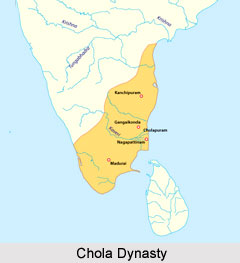
Chola Dynasty
Chola Dynasty is a Tamil dynasty and had longest duration of ruling in parts of South India. Chola dynasty had ruled South India successfully for a ex...
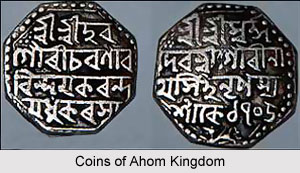
Suhungmung
Suhungmung was the fourteenth ruler of the Ahom dynasty who ruled from the period 1497 to 1539 AD. His reign was significant in terms of expansion of...
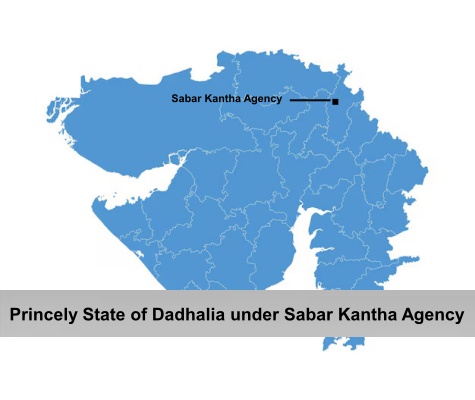
Princely State of Dadhalia
Princely State of Dadhalia was located in the present state of Gujarat. The state covered a total area of 28 sq miles and comprised of 15 villages. Th...
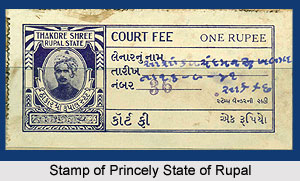
Princely State of Rupal
Princely State of Rupal was a part of the Baroda Agency, a sub division of Western India States Agency. It was under the administrative control of the...
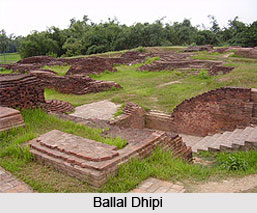
Archaeological Sites of West Bengal
Archaeological sites of West Bengal reveal several aspects of ancient India. Excavations by the Archaeological Survey of India have furnished artefact...
Related articles in History of India

Mughal Architecture during Babur
Mughal architecture during Babur marked the foundation of a new architectural era in India, blending Timurid, Persian, and local influences. His reign...
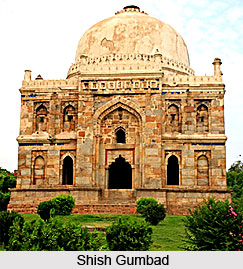
Architecture during Sayyid and Lodi Dynasty
Architectures during the Sayyid and Lodi dynasty were mainly the tombs and monuments for the dead rulers. It were carefully designed and meticulously...
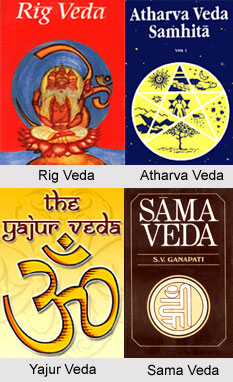
Brahmanical Sources of Ancient History
Brahmanical Sources of ancient history are contained in the Vedas and they constitute one of the most important literary sources of information about...
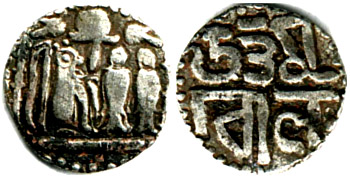
Coins of Chola Empire
Coins of Chola Empire were issued in gold, silver and copper and carried the Chola emblem.
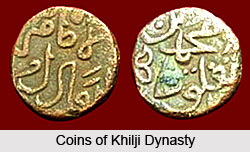
Coins of Khilji Dynasty
Coins of Khilji Dynasty had an influential feature that was followed by the other dynasties.