 Privy Purse in India was a payment that was made to the royal families of the former princely states of India. The Privy Purse was created as part of the agreements made by them to merge with Union of India in the year 1947. Later in 1949, the various Indian Princes merged their princely states whereby the individual independent rulers lost their ruling rights. Until the Constitutional Amendment of 1971 was passed the Privy Purse in India was sustained to the royal families. Through this amendment, which was implemented after an extensive legal conflict, the privileges and allowances, provided by the Central Government of India to the Indian princes, ceased to exist. But there were some instances where the privy purses sustained for years for those rulers who held ruling powers before the independence of India in 1947.
History of Privy Purse in India
After the British Government ceded its authority to independent India in 1947, there were around 565 princely states in India. The position and rank of these states were determined through separate treaties. Further more, the importance of each princely state was decided upon by a system of Gun salutes. Most of these princely states of India signed the Instrument of Accession with India or Pakistan on the eve of Indian independence. Some of these states also demanded total independence after the surrender of the British East India Company. Jodhpur, Bhopal and Travancore signed the Instruments of Accession prior to August 15th, 1947, due to the discretion of V.P. Menon and Sardar Vallabhbhai Patel. After attaining independence, the princely states of Hyderabad, Junagadh and Kashmir hesitated, but were incorporated later.
The Instruments of Accession required that the princely states only cede communications, foreign relations and defence to India. Democratic institutions were established in the princely states and later in the year 1949, these states were completely merged with India and new states were formed. Cochin and Travancore Ambliara formed the new state of Thiru Kochi by merging with India. During 1947, the Indian princes and the royal families were allowed to retain large amounts of funds as their Privy Purse. But in 1949, after the princely states and their revenues were acquired by the Government of India, the Indian administration provided Privy Purses to the rulers of these states and their families as well. The Privy Purse in India was determined by various factors like history of the ruling dynasty, gun salutes assigned to the state and the revenue of the princely state.
Abolition of Privy Purse in India
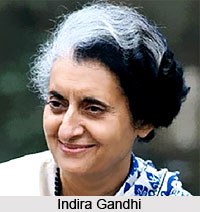
Indira Gandhi, the former Prime Minister of India, proposed the motion to abolish Privy Purse in India in the year 1971. This was successfully passed as the 26th Amendment to the Constitution of India in the same year. The then Prime Minister Indira Gandhi declared that the abolition of Privy Purse was based on the requirement of the government to decrease the revenue deficit and also on equal rights for all citizens. Most of the former rulers protested the abolition, mainly through campaigns to contest seats in the 1971 Lok Sabha elections, but were defeated by vast margins.