
The Princely State of Palash Vihir, also known as Palasvihir, was one of the renowned princely states of India that was managed and supervised by a native prince under the guidance of the British authorities. The princely state was under the indirect control of the British Empire in India. The state was scattered over a total area of 2.02 sq miles and comprised a total population of 294 in the year 1941. The territory of Palash Vihir included only a single village, after the final settlement of the status of the Dangs in the year in the year 1888. The princely state of Palash Vihir was the 2nd smallest state amongst the Dangi states, but was than the state of Bilbari. It comprised of only a single block of land that was located towards the eastern region of the Dangs.
The Princely State of Palash Vihir or Palasvihir was under the administrative control of the Baroda Agency, which was incorporated as a part of the Western India States Agency. Later the territory was merged with the state of Gujarat.
History of Princely State of Palash Vihir
The native ruler of the princely state of Palash Vihir, who held the title of Naik, was a Bhil. Palash Vihir or Palasvihir was initially part of Dherbhavata but consequently became recognized as a distinctive Dang State. The native rulers did not take charge of the administration of the state as they were less educated and rather incapable to rule properly. The Naiks of Palash Vihir were all aboriginals, which included a Kokani and 13 Bhils. Due to their backwardness and lack of proper education, civil and criminal jurisdictional powers were exercised by the resident of British India, also known as Political Agent, on behalf of the native rulers. But the Naiks of Palash Vihir state held some revenue rights over their own regions.
They also possessed certain customary rights of settling disputes. The Naiks and the Patels, headmen of the villages who were around 300 to 400 in number, met with the British resident or the Civil Administrator, in the absence of the Political Agent, in Darbar for 3 to 4 times annually. The claims of the state of Baroda to economic rights in the Dangs were renewed into a fixed annual payment. All the native rulers also received a pension from the British Government of India.
After the withdrawal of the British and the Partition of India on 15th August 1947, the state was acceded to the newly independent Union of India, also known as the Dominion of India. This erstwhile princely state is currently a part of the Indian state of Gujarat.
Princely State of Palash Vihir
Princely State of Palash Vihir was under the indirect rule of the British administration. It covered an area of 2.02 sq miles and was a part of the Baroda Agency.
Recently updated articles in History of India
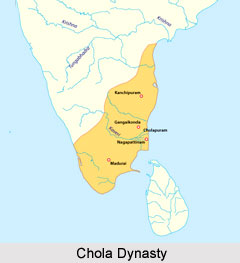
Chola Dynasty
Chola Dynasty is a Tamil dynasty and had longest duration of ruling in parts of South India. Chola dynasty had ruled South India successfully for a ex...
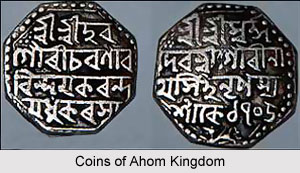
Suhungmung
Suhungmung was the fourteenth ruler of the Ahom dynasty who ruled from the period 1497 to 1539 AD. His reign was significant in terms of expansion of...
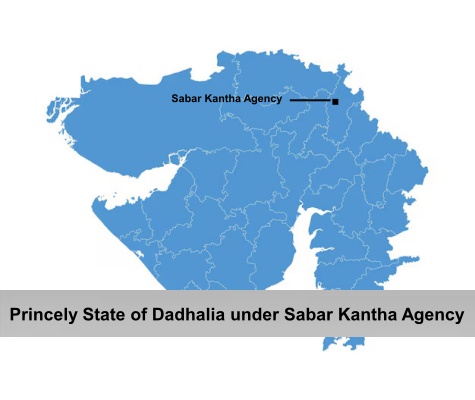
Princely State of Dadhalia
Princely State of Dadhalia was located in the present state of Gujarat. The state covered a total area of 28 sq miles and comprised of 15 villages. Th...
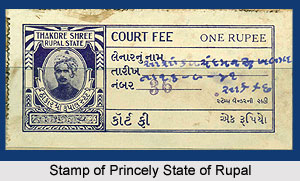
Princely State of Rupal
Princely State of Rupal was a part of the Baroda Agency, a sub division of Western India States Agency. It was under the administrative control of the...
Archaeological Sites of West Bengal
Archaeological sites of West Bengal reveal several aspects of ancient India. Excavations by the Archaeological Survey of India have furnished artefact...
Related articles in History of India

Mughal Architecture during Babur
Mughal architecture during Babur marked the foundation of a new architectural era in India, blending Timurid, Persian, and local influences. His reign...

Architecture during Sayyid and Lodi Dynasty
Architectures during the Sayyid and Lodi dynasty were mainly the tombs and monuments for the dead rulers. It were carefully designed and meticulously...

Brahmanical Sources of Ancient History
Brahmanical Sources of ancient history are contained in the Vedas and they constitute one of the most important literary sources of information about...

Coins of Chola Empire
Coins of Chola Empire were issued in gold, silver and copper and carried the Chola emblem.

Coins of Khilji Dynasty
Coins of Khilji Dynasty had an influential feature that was followed by the other dynasties.