
The Princely State of Kadana was appointed as an Indian native state under the indirect supervision of the British administration. The Indian princely state was managed by a native ruler. The state was spread over a total area of 132 sq miles and comprised of a total population of 19,790 in the year 1941. The territory of Kadana was under the administrative control of the former Rewa Kantha Agency. Kadana was incorporated as a part of the Baroda Agency, which was a sub division of the erstwhile Western India States Agency. Later the territory became a part of the modern Indian state of Gujarat.
The Princely State of Kadana was bounded by the princely state of Lunawada in the northwest; by the princely state of Dungarpur (Rajputana) in the north; and by the princely state of Sant in the south and east.
History of Princely State of Kadana
The Parmar of Puwar Rajputs were the native rulers of the territory. A relative of the founder of Sant state, named Limdev, founded the native state during middle of the 13th century. The state was rather small in size and suffered from lack of adequate finance. As a result the princely state did not pay any annual tribute to other native rulers of the British. The native rulers of the state frequently conflicted with the princely states of Balasinor, Dungarpur and Sant (Sunth). The rule of male primogeniture was followed in the succession of the throne or gadi of the princely state of Kadana, through which the eldest child inherited the entire estate of one or both parents, to the exclusion of all others.
The princely state of Kadana was a third class jurisdictional state before the class system was abolished in the year 1928. The native ruler of the region held the title of Thakor and exercised full criminal and civil jurisdiction. The claims that were deduced by Sant state to overlordship of Kadana were declined by the British government of India in the year 1871. Eventually the independence of the state was recognized. After the death of the last native ruler, who died without any male heirs in 1941, the British authorities decided to take advantage of the situation to amalgamate a small and unprofitable unit with a larger and progressive state. The administration of the princely state was in utter chaos.
Kadana state was annexed to the princely state of Sant after 1943, even before the implementation of the general attachment scheme. The territory of Kadana was one of the original constituent members of the Chamber of Princes, a number of smaller states indirectly represented by 12 princes whom they elected periodically. The native ruler held the style of Rana. The rulers who exercised jurisdictional powers were addressed as Meherban.
After the country achieved its freedom from the dominion of the British Crown, the last Rana Thakor of the princely state of Kadana, who was the 23rd of his line, acceded his state to the Union of India, also known as the Dominion of India.
Princely State of Kadana
Princely State of Kadana was scattered over a total area of 132 sq miles and was a part of the erstwhile Rewa Kantha Agency.
Recently updated articles in History of India
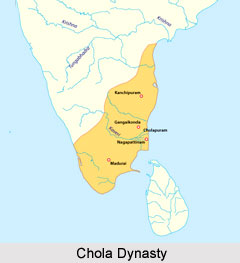
Chola Dynasty
Chola Dynasty is a Tamil dynasty and had longest duration of ruling in parts of South India. Chola dynasty had ruled South India successfully for a ex...
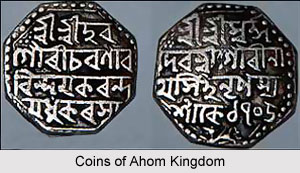
Suhungmung
Suhungmung was the fourteenth ruler of the Ahom dynasty who ruled from the period 1497 to 1539 AD. His reign was significant in terms of expansion of...
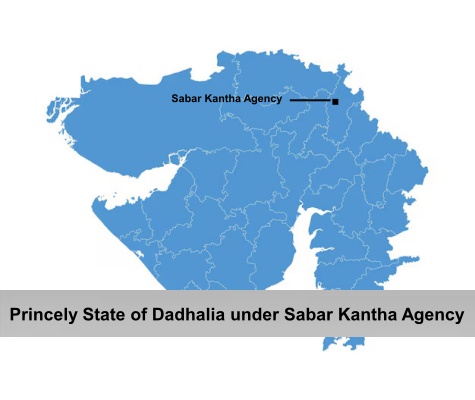
Princely State of Dadhalia
Princely State of Dadhalia was located in the present state of Gujarat. The state covered a total area of 28 sq miles and comprised of 15 villages. Th...
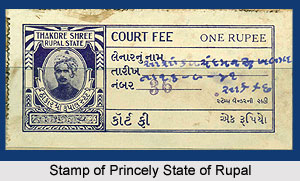
Princely State of Rupal
Princely State of Rupal was a part of the Baroda Agency, a sub division of Western India States Agency. It was under the administrative control of the...
Archaeological Sites of West Bengal
Archaeological sites of West Bengal reveal several aspects of ancient India. Excavations by the Archaeological Survey of India have furnished artefact...
Related articles in History of India

Mughal Architecture during Babur
Mughal architecture during Babur marked the foundation of a new architectural era in India, blending Timurid, Persian, and local influences. His reign...

Architecture during Sayyid and Lodi Dynasty
Architectures during the Sayyid and Lodi dynasty were mainly the tombs and monuments for the dead rulers. It were carefully designed and meticulously...

Brahmanical Sources of Ancient History
Brahmanical Sources of ancient history are contained in the Vedas and they constitute one of the most important literary sources of information about...

Coins of Chola Empire
Coins of Chola Empire were issued in gold, silver and copper and carried the Chola emblem.

Coins of Khilji Dynasty
Coins of Khilji Dynasty had an influential feature that was followed by the other dynasties.