
The interpretations of the metaphysical categories of prajna and upaya are varied and spread among different realms. In the realm of sound and speech they are referred to as referred to as ali and kali. Ali pertains to the vowel series whereas kali is the consonant series. Just like the communion of prajna and upaya generates bodhichitta, the union of the vowel and consonant produces the syllable, aksara. The seed syllable, bija, may be a pure vowel when it indicates the unmanifested state. Generally, the seed syllable of a manifested divinity consists of a consonant (or consonants), a vowel and a final `m` (anusvara). ). The anusvara indicates the union (bindu), and is written as a dot over the syllable. Every complete seed syllable thus represents the essential idea of updya (vajra or kali), prajna ( lotus or ali) and the consummation (bindu). In every set of alphabets, `a` is the first letter and is the source of all other letters. Hence it is an apt symbol to indicate the void nature of the dharmas, i.e., sunyata/prajna.
The Ekallavira-candamaharosana- tantra also employs `a` to represent prajna and `va` to represent upaya. The Hindu texts too often use `a` to represent Brahma, the creator of the universe. In the Bhagavad Gita, Lord Krishna declares that among the letters He is `a`. Hence the letter `a` represents best prajna or sunyata.
Another set of vowel and consonant used generally to indicate praja and upaya are `e` and `vam`. `e` is bhaga, (i.e. the lotus, the female sexual organ, or prajna), and `vam` is kulisa (i.e. the vajra, the male sexual organ, the updya). The compound syllable `evam` expresses the union of the bi-polar nature of the Bhagavan.
Hevajra Tantra states that "the divine letter `e`, adorned with the syllable vam placed within it, is the abode of all bliss and the receptacle of the jewels of Lord Buddha.
`Evam` represents the Ultimate Reality.
In the Dohakosa of Kanhupadait is stated that one who has understood e-vam-kara has understood everything completely. In Hevajra Tantra e and vam have been variously interpreted. The seed-syllable `hum` also indicates the union of prajna and upaya (hum. .prajnopayasvabhavakam).
The text uses few other words as well to indicate prajna and upaya as well as their union, viz., `Hevajra`, `Candali` and `Vajrasattva`.
The term `Hevajra` is a combination of `he` and vajra`. The former symbolizes Great compassion and the latter Wisdom. . The word `Candali is composed of `canda` (the fierce one) which refers to Wisdom (prajna) and `ali` which refers to Vajrasattva. Usually, in iconographic representations, Wisdom is portrayed with a benign bhav (appearance), but here Wisdom is fierce in the sense that it destroys the klesas and the Maras. It is also said that canda is Wisdom and the left nadi, Ali is Means and the right nadi. The union of the two nadis in accordance with the Guru`s instructions is called Candali, conceived as a blazing fire engulfing every manifestation of existence.
There are various interpretations given to this composite word but all agree that it indicates the union of Voidness and Compassion.
The composite word Vajrasattva is formed of two words, `vajra` and `sattva`. The vajra is the void which is indestructible, indivisible and incapable of being consumed. Here vajra stands for prajna. Sattvam refers to existent being. It is the aggregate of the five components of phenomenal awareness. Sattvam here stands for the upaya. It is stated that the union of Ali and Kali is the seat of Vajrasattva. It means that vajra refers to the symbol (bimba) and sattva refers to the seed syllable (bila). The principal deity originates from the sattvabimba which is the union of sattva and bimba. The deity is the embodiment of the union of these two natures, namely the prajna and upaya. So once again, the term vajrasattva indicates the dual nature of non dual reality.
The understanding of Upaya and Prajana in terms of vowels and consonants is one of the many ways adopted to understand the ultimate nature of Absolute Reality.
Prajna and Upaya as Vowel and Consonant
Prajna and Upaya as vowel and consonant is a perspective which explains the metaphysical categories in terms of sound and speech.
Recently updated articles in Religion in India
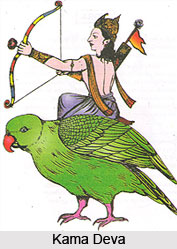
Kusumayudha
Kusumayudha is a name of Kamadeva, the Hindu God of Love. Depicted with a sugarcane bow and flower-tipped arrows, he represents attraction and longing...

Bhoyar Caste
Bhoyar Caste is largely found in the Central Provinces of the country. Traditional occupation of Bhoyars is agriculture. They are good cultivators and...
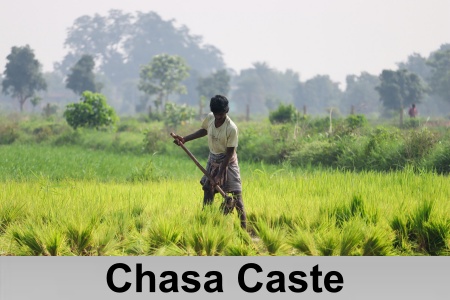
Chasa Caste
Chasa caste is a prominent agrarian community native to Odisha. Traditionally associated with cultivation and farming, Chasas have historically played...
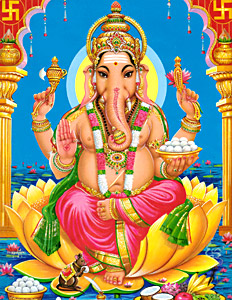
Vigneswara, A Form of Lord Ganesha
Lord Vigneswara is another form of Lord Ganesha or Vinayaka, prominently worshipped as the God of intelligence and good luck in the Indian subcontinen...
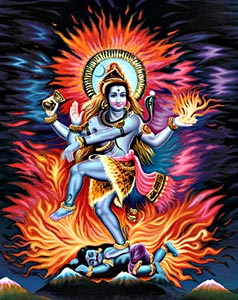
Maheswara
Maheswara, meaning “the Great Lord,” is a revered name of Lord Shiva in Hindu tradition. It represents Shiva’s supreme authority over creation, preser...
Related articles in Religion in India
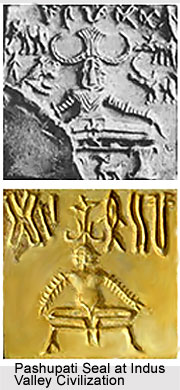
Religion in Indus Valley Civilization
Religion in Indus Valley Civilisation included Hinduism, Buddhism and Jainism. Details about the religion in Indus Valley Civilization have been gathe...
Iyer Brahmin
Iyer Brahmins are originally from Tamil Nadu of South India. They are known for their adherence to Advaita philosophy and Smarta traditions. Tradition...
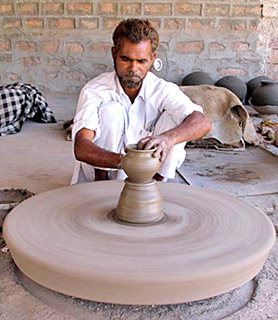
Kumbhakar / Kumhar Caste
Kumbhakar or Kumhar caste is a traditional artisan community in India known for pottery making. Derived from Sanskrit word Kumbhakar, meaning potter,...

Gujjars in Mughal Era
Gujjars in the Mughal era enjoyed great power. Further their power increased with the decline of Aurangzeb, Mughal emperor.
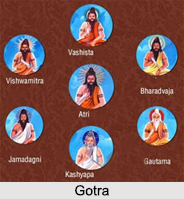
Gotra in Hinduism
In Hinduism, gotra refers to a lineage system tracing descent from ancient sages, primarily through the paternal line. Originating from Vedic traditio...