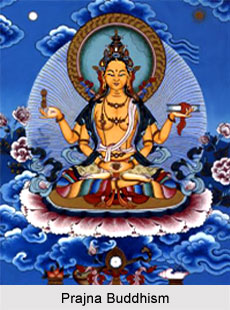
 Prajñ? (Sanskrit) or paññ? (Pali) has been interpreted as "wisdom," "understanding," "discernment," "cognitive acuity," or "know-how." In some sects of Buddhism, it particularly refers to the wisdom that is based on the direct realisation of the Four Noble Truths, impermance, dependent origination, anatta, emptiness, etc. Prajñ? is the wisdom that is able to eradicate afflictions and give rise to enlightenment.
Prajna in the Pali Canon
In the Pali Canon, paññ? (prajna) is outlined in a host of overlapping ways, often focusing on concentrated insight into the three marks of existence (anicca, dukkha, anatta) of all things and the Four Noble Truths.
For example, when expositing upon the Five Spiritual Faculties (faith, energy, mindfulness, concentration and wisdom), the Buddha describes prajna (here interpreted as "discernment") as follows:
"And what is the faculty of discernment? There is the case where a monk, a disciple of the noble ones, is discerning, endowed with discernment of arising & passing away... He discerns, as it is actually present, [the Four Noble Truths]: `This is stress... This is the origination of stress... This is the cessation of stress... This is the path of practice leading to the cessation of stress.` This is called the faculty of discernment."
Likewise, in talking about the Threefold Training of higher-virtue (adhi-sila), higher-mind (adhi-citta) and higher-wisdom (or "heightened discernment," adhi-paññ?), the Buddha describes prajna thus:
"And what is the training in heightened discernment? There is the case where a monk discerns as it actually is that `This is stress... This is the origination of stress... This is the cessation of stress... This is the path of practice leading to the cessation of stress.` This is called the training in heightened discernment."
In delineating the Threefold Training to the Noble Eightfold Path, prajna is traditionally linked with "right view" (samm?-ditthi) and "right resolve" (samm?-sankappa) which the Buddha defined as:
"And what, monks, is right view? Knowledge with regard to stress, knowledge with regard to the origination of stress, knowledge with regard to the stopping of stress, knowledge with regard to the way of practice leading to the stopping of stress: This, monks, is called right view".
"And what is right resolve? Being resolved on renunciation, on freedom from ill will, on harmlessness: This is called right resolve".