 Jhalawar
 is located at a distance of 85 kilometers from Kota. In the year1838 it was established by Zalim Singh. The picturesque city of Jhalawar is located at the edge of Malwa Plateau. This well laid out city was an important trading center for the Rajputana kingdom in the 19th century. Besides being the commercial hub Jhalawar was also the primary city where music, theater and art flourished. The theater house here is located within the palace and is called Bhawani Natya Shala and was built along the western style opera house. The performing arts thrived here because these received patronage from the royal people.
The whole
region is a treasure house of prehistoric cave paintings and formidable forts. In addition to these ancient buildings there are the red poppy fields that add to the picturesque beauty of the place. The lush green fields and those of oranges make
Jhalawar more attractive. During winters the place comes alive with greenery all around. Its beauty is indescribable. Amidst such beauty lies the fort built by Maharaja Madan Singh, now housing government offices. It also houses a government museum that has a collection of sculptures, coins, rare manuscripts, a stone inscription dating back to the 5th century and exquisite statues of Ardhanarishwar, Natraj and Trimurti.
Near Jhalawar stands the ancient city of Chandrawati known for its ancient temples of both Hindu and Jain sects. The symmetry of their architectural elements are quite impressive too. Express buses ply regularly from Kota Central Bus Stand. Jhalawar is also a stop over enroute to Indore or Ujjain in Madhya Pradesh. Taxis or rental cars are also available for Jhalawar.
Transportations are easily available from Kota to arrive at Jhalawar. A two hours bus ride will take the travelers to this ancient town. As far as hotels are concerned the travelers can choose from heritage as well as budget hotels. RTDC Gavdi Talab, Prithvi Vilas Palace, RTDC Hotel Chadrawati, Hotel Dwrika and others are there for the purpose.
Pilgrimage Tourism in Jhalawar District
Pilgrimage tourism in Jhalawar district is full of trips to temples. There are a number of ancient temples located here, dedicated to Hindu and Jain gods. These are remarkable sculptures housing some very old deities of antiquity, such as the 100 year old Parshwanath statue at the Jain Swetambar Nageshwar Parshwanath Temple. The various places of pilgrimage tourism in the district of Jhalawar are discussed below.
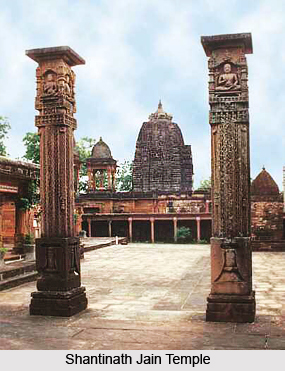
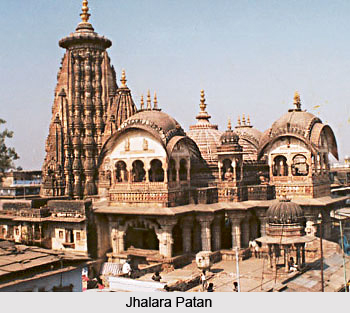
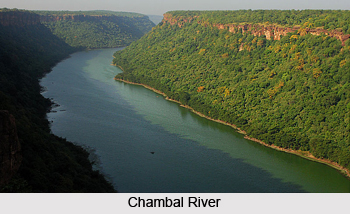
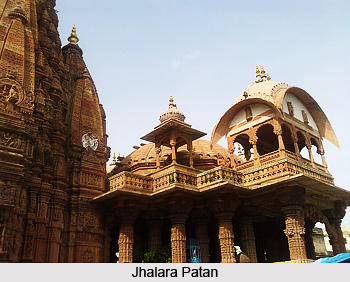
Jhalara Patan is also known as the `city of temple bells.` Situated about 7 Kms away from Jhalawar, the entire township is located within a wall. Founded by Parmara Chandra Sen, grandson of Maharaja Vikramaditya, it is located on the banks of the holy Chandrabhaga River. Colonel James Todd mentions counting 108 temples here. Enclosed within its old walls is the famous 10th century 100-feet high Surya Temple. The temple is full of lovely sculptures. Nearby is the beautiful group of temples on the Chandrabhaga stream which rises from a spring. They belong to the 6th - 14th centuries. The 11th century Shantinath Jain temple and Shri Dwarkadheesh temple (built by Jhala Zalim Singh) are among the other important temples here. Just nearby to Dwarkadhish temple, newly developed Herbal Garden and Choupati are also worth a visit.
 Bhimgarh-Kakuni
: On the banks of the Parwan River are the ruins of an old township with a huge idol of
Lord Ganesha and an 8th century Shivlinga. The temple ruins are well worth a visit. This place can be approached from Khanpur by a road running from it to Aklera. Midway at a distance of 20 Km, tourists find a well-furnished Dak-Bunglow at Taraj village which was a noted game-preserve of former
Kota rulers. At a distance of 10 Km from here stand the famous ruins of old temples dedicated to various dieties of Hindu and Jain believers. Officially Kakuni is in Baran district whereas Bhimgarh is in Jhalawar district.
On the southern fringe of Jhalawar and
Rajasthan lies an ancient Jain Temple of Lord Parshvanatha. The
Jain Swetambar Nageshwar Parshwanath Temple is a marble temple that has been constructed out of the religious endowments made by the pious Jain Community of Malwa (M.P.),
Maharashtra and
Gujarat. It is an important Jain pilgrimage spot with a 1000-year old Parshvanatha statue. Excellent accommodation and meals are available at the dharamshala, 150 Km from Jhalawar.
Situated near the town Khanpur, 34 Kms away from Jhalawar, the
Atishay Jain temple is a 17th century construction. The temple is known for its architectural splendour and religious value. There is a 6 feet tall statute of Lord Adinath here, constructed in the sitting position. Accommodation and meals are available in the temple area at a reasonable price.
Jhalawar district can boast of having the only rock-cut caves in Rajasthan. The ancient
Buddhist caves located in the village Kolvi are of great importance, both archaeologically as well as historically. A colossal figure of Buddha and the carved stupas are some of the highlights of these caves. Similar caves can also be found in nearby villages, which prove the existence of a flourishing civilization several centuries ago and the Buddhist influence in the region. It is located 90-95 Kms from Jhalawar.
Leisure Tourism in Jhalawar District
Leisure tourism in Jhalawar district is a most enjoyable experience. This part of the state of Rajasthan is perhaps the least explored area in the state. What lies unexposed and unexplored is a treasure of history dating back to several centuries. Jhalawar is a unique combination of legends and folklore, of rocky terrain on one side and dense forests and rivers on the other. The entire district and areas around it is a treasure house of wall paintings, formidable forts, forests and exotic wildlife. Discussed below are the most visited places of tourism in the district of Jhalawar.
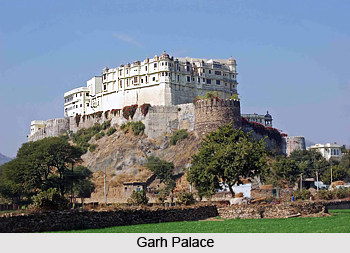
The
Jhalawar Fort (
Garh Palace) is situated in the centre of town, and is among the most famous tourist attractions of
Jhalawar. It was built by Maharajrana Madan Singh in between 1840-45. Later on, his successors added beautiful paintings inside the rooms which can be seen with the permission of the appropriate authorities. The Zenana Khas has some excellent frescoes on both walls and mirrors, prime examples of the Hadoti School of art. This beautiful monument now houses the Collectorate and other offices.
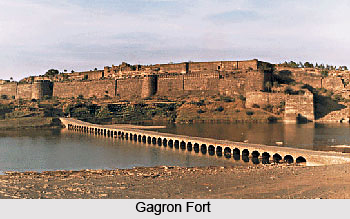
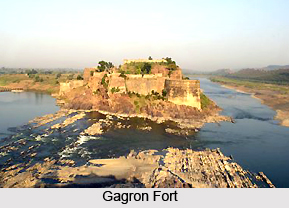
 Gagron Fort
 is a renowned fort located 12Kms away from Jhalawar. The foundation of this magnificent fort was laid in the 7th century and its construction completed in the 14th century. Outside the fort is the Dargah of Sufi Saint Mittheshah, where a fair is held every year during the month of Moharram. Nearby is the monastery of Saint Pipa Ji, a contemporary of
Kabir, the Bhakti Saint. Gagron Fort is perched on a low ridge at the confluence of the Ahu River and the
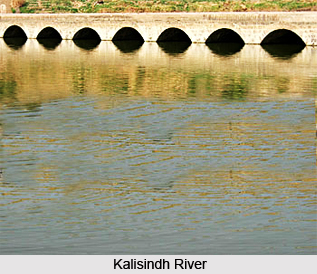
Kali Sindh River. The fort is surrounded by these rivers on three sides. There used to be a moat on the fourth side, thus completing its defenses. Gagron is among the rare forts which are both a van durg and a jal durg - i.e. both forest-protected and water-protected. It is surrounded by forests and has behind it the Mukundarrah range of hills.
Manohar Thana Fort is a well-walled town with a strong fort. The name
Manohar Thana literally means `beautiful outpost`. Manohar Thana was a principal seat of Bhil kings who were supplanted by Hada Rajputs of
Bundi, and occupied a very important strategic position. The fort commands the meeting place of two rivers, Parvan and Kaalikhad. The fort has been made impregnable with double fortifications. There is an outer wall and battlements, inside which runs another circle of walls and battlements. A good Dak-Bunglow has been recently constructed here in the fort with beautiful vegetation around. Manohar Thana fort is located 90 Kms from Jhalawar.
The oldest inscription of the area was found at the
fort of Gangdhar. The fort is a remarkable construction with some marvellously built temples which are well worth a visit. It is located 140 Kms from Jhalawar.
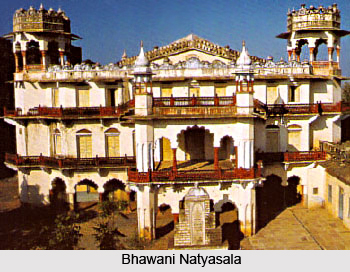
The
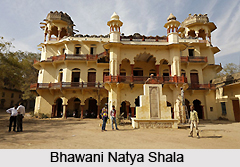
Bhawani Natya Shala was constructed in 1921 by Maharaja Bhawani Singh. It is a unique theatre which was built for the performance of plays and other cultural events. It was a popular
Parsi theatre earlier. It has been recently revived and gives a very good insight into the theatre. It is quite a unique structure and an architectural marvel. Its uniqueness lies in the fact that its deep stage with its underground construction allows the horses, and even the chariots, to appear on stage. Believed to be one of the eight such theatres in the world, in its heyday it was the venue of great plays ranging from Shakuntalam to Shakespeare`s classics.
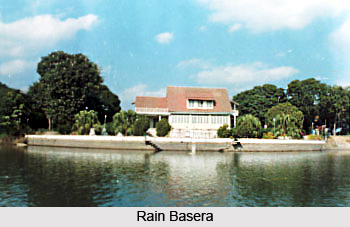
The
Ren Basera, on the Jhalawar-Kota Road, just 6 km short of Jhalawar town is a beautiful wooden cottage located on the banks of Kishan Sagar. Maharaja Rajendra Singh brought it to the Jhalawar from an exhibition held in Lucknow. It was originally constructed by the Forest Research Institute of
Dehradun.
 Bhimsagar Dam
 is located 24 Kms from Jhalawar. This dam has been built on the Ujad River near the ruins of the old capital of Khichi Chauhans-`Mau Borda`. One can find ruins of the palaces, temples and mosques, built in both Muslim and Rajput architectural style. The dam is an excellent picnic spot.
Chhapi Dam is located 54 Kms from Jhalawar. It is a place of antiquity streamed with beautifully carved pillars, torans and some erotic figures in the ruins of temples scattered over an area of 2 Kms. It stands on the bank of river Chhapi. Dense green forests with lush foliage add to the natural beauty of the spot.
The
Government Museum, established in 1915 and located outside the fort palace, is one of the oldest museums of
Rajasthan. It houses rare manuscripts, paintings, coins, and the sculptures and statues of various gods and goddesses are especially noteworthy. Inscriptions from the 5th and 7th century are also seen here. Many idols that have been recovered from ancient ruins are added here. The Ardhnarishvara Natraj, from this museum, was displayed in Moscow, during the Festival of India celebrations.

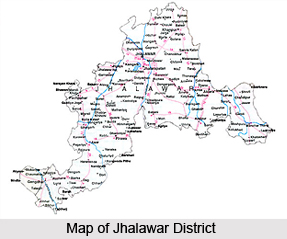 Spread over an area of 6928 sq. km. Jhalawar District is a significant district in the desert state of Rajasthan. It is situated in the southeastern part of Rajasthan at the rim of the Malwa plateau and is also a part of the Hadoti region of Rajasthan. It is the ancient folded mountain region in India, which roughly separates the plains of Hadoti from the Malwa Plateau. The Kota district on the northwest, Baran district on the northeast, the state of Madhya Pradesh in the west and the Mukandra range on the north surround Jhalawar district. The district is the home to many tribes mainly the Meenas and the Bhils. Jhalawar district is well connected to industrial and commercial cities like Indore, Ujjain, Ratlam, Kota and Bhopal.
 The region has a climate, which is similar to that of the Indo -Gangetic Plain with hot dry summers and pleasant cold winters. The district receives the highest rainfall in Rajasthan at an average of 943 mm per year. Besides the irrigation dams and ponds the rainfall is of much help to the farmers. The agricultural productivity in the district is very high and some of the important crops grown here are soyabean, wheat, opium, pulses, gram, jowar, paddy and bajra. Jhalawar district is famous for the production of oranges. Infact it has earned the nickname `Small Nagpur` because it comes next to Nagpur in terms of orange production. The region around Bhawani Mandi, Jhalrapatan and Pirawa sub divisions produce oranges, which are exported to various foreign countries. Other than oranges the district exports other items like synthetic yarns, fiber yarns, Kota stone. The district has a number of small scale industries which includes stone polishing and cutting, vegetable oil, wooden furniture, spices, washing powders and many more. A large-scale industry in the district is the Rajasthan Textile Mills.
 History of Jhalawar district is synonymous with tales of the Hadas, a major branch of the great Chauhan clan of Agnikula Rajputs. Jhalawar is situated in the south-eastern region of Rajasthan, a region widely known as Hadoti (Hadavati), the land of Hadas. In the 12th century A.D., Hada Rao Deva conquered this territory and founded
 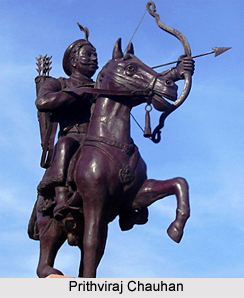 The objective to develop this place as a military cantonment was due to the fact that Maratha invaders passed through this central place from Malwa towards Kota to capture Hadoti states. He recognized the importance of this place and started to develop the place as a military cantonment and township, so that he could use this place to attack and stop Maratha invaders before they can reach to Kota state.
 Jhalawar district is situated in the north-eastern part of Rajasthan along the edge of the
  The climate of Jhalwar district is very much similar to that of the
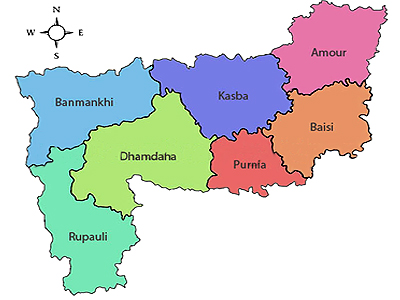
  Administration of Jhalawar district is carried out by the District Collector. Jhalawar district is identified as the 17th district of Rajasthan. Various district level departments and offices are located at the district headquarters. District-level officials work while sitting in Jhalawar. Time-to-time administrative tours are organized to bring up and solve the problems of rural areas. There are Six Sub Divisional Officers (SDOs) who work at the division level to distribute the power at the local level. Jhalawar district has six sub-divisions. These are -
  The rural population of India, which makes up almost three-fourths of the entire population, is characterised by low income levels which is not sufficient to ensure a quality of life that is compatible with physical well being. In order to combat this, District Administration in accordance with Central and State governments is spearheading the frontal attack on rural poverty, through its various programs. These programs endeavour to reach out to the most disadvantaged sections of society, and provide them with means of employment and to improve infrastructure relating to their life-supporting system.
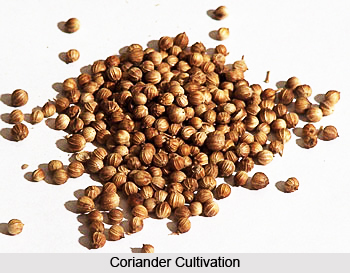 Jhalawar district is very rich in the agricultural arena. Major productions in the district are of soyabean, citrus, opium,
 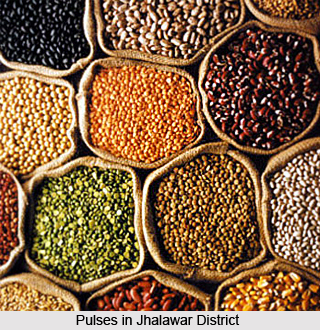 Jhalawar district also ranks number one in the state in area and production of
  District Industrial Centre, (DIC) Jhalawar was established in June, 1978. The objective of DIC is to provide guidance, basic services, and financial services/facilities to entrepreneurs and industrialists and to make and activate plans for industrial development in the district. DIC is serving through various plans, services and facilities to rural / urban industrialists and educated unemployed people for the development of Jhalawar district as an industrial centre. Some of the major plans and schemes run by the DIC are- Single Window System, Griah Udyog Yojana, Pradhan Mantri Rojgaar Yojana (PMRY)/PMEGP (Prime Minister Employeement Generation Programme), Margin Money Scheme, to implement various central government / organization plans and schemes through NSIC, IIRD, NABARD, HESCO, Khadi Gramodyog, NISIET