
Muslim League National Guard, also known as Muslim National Guard that was associated to the Muslim League. It took active participation in the Pakistan movement. The Muslim League National Guard was formed in the year 1931 in the United Provinces as a reaction to the establishment of Rashtriya Swayamsevak Sangh. The primary objective of the organization was to assemble the Muslim youths to cultivate a spirit of sacrifice, discipline and tolerance among them. The Muslim National Guard was renewed at a meeting of the Committee of Action of the Muslim League that was held in the year 1944 at Lahore. The organization was revived and developed in most of the provinces of British dominated India.
The process recruitment and training started soon in Assam. Arsad Ali was appointed as the Commander-in-Chief of Assam at a meeting in the Assam Provincial Muslim League held at Sheikhghat in Sylhet on 1st October, 1944. Ali was vested with the authority to recruit new volunteers all the way through the province. In the year 1946, Badrul Hussain of Kulaura was appointed as the Salar-i-Subah. He recruited former soldiers of Indian National Army into the ranks of the Muslim League National Guard. At the inauguration of a training centre in Faridpur, Huseyn Shaheed Suhrawardy stated that the recruits trained at the centre would operate as the soldiers for the achievement of Pakistan and would protect the Muslims from enemy attacks.
The Muslim League National Guard had the strongest base in Amritsar, Punjab. The base had strength of 8,000 soldiers during the period of partition of India. In March 1947, the provincial headquarters was moved to Amritsar from Lahore. The Coalition Government declared that both the Rashtriya Swayamsevak Sangh and the Muslim National League Guard as illegal and unlawful organizations. The soldiers of these organizations were considered a threat to the state and were not tolerated by the British administration. Ghazarfar Ali protested the decision of the Government and argued that a ban on the Muslim League National Guard was a prohibition on the most significant actions of the Muslim League.
Before the commencement of the Direct Action Day in Calcutta (now Kolkata), the members of the Muslim League National Guard were summoned and assembled at the Muslim Institute on 14 August 1946. During the period of violence in Punjab, the Muslim League National Guards operated closely with the Ahrars and the Khaksars.
Muslim League National Guard
Muslim League National Guard was associated to the Muslim League. It was formed in the United Provinces as a reaction to the establishment of Rashtriya Swayamsevak Sangh.
Recently updated articles in History of India
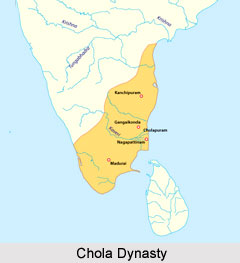
Chola Dynasty
Chola Dynasty is a Tamil dynasty and had longest duration of ruling in parts of South India. Chola dynasty had ruled South India successfully for a ex...
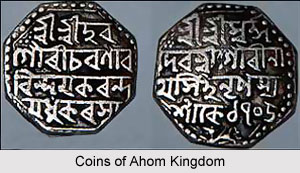
Suhungmung
Suhungmung was the fourteenth ruler of the Ahom dynasty who ruled from the period 1497 to 1539 AD. His reign was significant in terms of expansion of...
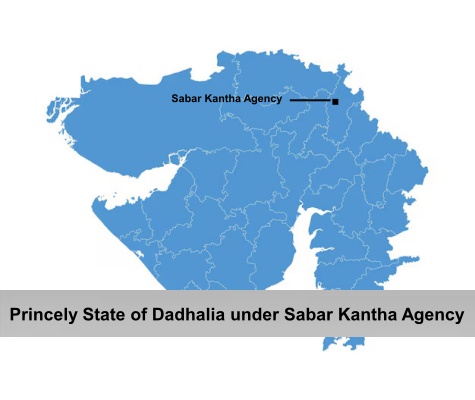
Princely State of Dadhalia
Princely State of Dadhalia was located in the present state of Gujarat. The state covered a total area of 28 sq miles and comprised of 15 villages. Th...
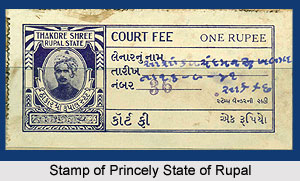
Princely State of Rupal
Princely State of Rupal was a part of the Baroda Agency, a sub division of Western India States Agency. It was under the administrative control of the...
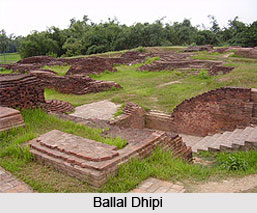
Archaeological Sites of West Bengal
Archaeological sites of West Bengal reveal several aspects of ancient India. Excavations by the Archaeological Survey of India have furnished artefact...
Related articles in History of India

Mughal Architecture during Babur
Mughal architecture during Babur marked the foundation of a new architectural era in India, blending Timurid, Persian, and local influences. His reign...

Architecture during Sayyid and Lodi Dynasty
Architectures during the Sayyid and Lodi dynasty were mainly the tombs and monuments for the dead rulers. It were carefully designed and meticulously...

Brahmanical Sources of Ancient History
Brahmanical Sources of ancient history are contained in the Vedas and they constitute one of the most important literary sources of information about...

Coins of Chola Empire
Coins of Chola Empire were issued in gold, silver and copper and carried the Chola emblem.

Coins of Khilji Dynasty
Coins of Khilji Dynasty had an influential feature that was followed by the other dynasties.