 Provincial Muslim League, also known as the Bengal Provincial Muslim league came into existence with the initiative of the Nawab of Dhaka Nawab Salimullah, a staunch supporter of partition of Bengal. Within Provincial Muslim league two new parties came into existence, namely, Eastern Bengal and Assam Muslim League (EBAML) and West Bengal Muslim League (WBML).The origin of Provincial Muslim League however goes back to the establishment of Muslim League in 1905 along with the political awareness of the Muslims.
History of Provincial Muslim League
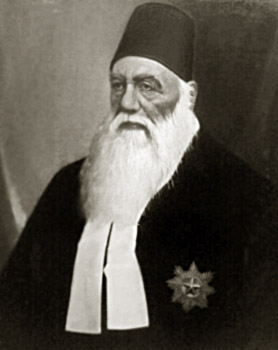
Along with the establishment of Indian National Congress, the Muslims under Sir Sayed Ahmed Khan, had realised the need to reorganise itself into a new educated pro British group. Much before the Partition of Bengal the differences between Indian National congress and the Muslims of India led to the beginning of Aligarh movement under which the small educated group of Muslim community had established few cultural organisations. These organisations were mainly established to propagate English education among the Muslim s in the absence of which the community will be deprived of their basic rights under the colonial rule. Thus until 1905 the main aim of such organisations like Mohammedans Literary Society, Central National Mohammedans Association, and Sir Sayeed`s United Indian Patriotic Association, was to regenerate the Muslims of India on the same lines as were the congress leaders which will help them to participate on equal terms.
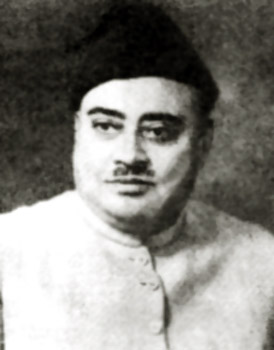 It was in 1905 when the Nawab of Dhaka, Nawab Salimullah, a staunch supporter of partition of Bengal, felt the need to establish the Muslims of India in a strong consolidated party which will give them the political roof to establish. This formed the foundation of All India Muslim League which aimed at looking after the interest of the Muslims, promoting their support to the British government and establishing harmonious relationship with the Hindus and other communities living in India. The immediate aim of Nawab Salimullah was to reorganise the Muslims under one political shade against the strong Hindu annulment for partition of Bengal. While this had been the original political activism of the all India Muslim League, the party remained much in active during 1906 after the Partition of Bengal till it was reorganised by Muhammad Ali Jinnah in1935. Implored by many Muslim leaders, Jinnah came back from London to take over the presidency of All India Muslim league with an aim to contest the general elections under Government of India act of 1935. Accordingly the Muslim league had an astounding performance in the elections where the Muslim league where out of 482 seats the league took away 104 seats with 36 seats from Bengal alone. While Muslim league established itself strongly in Bengal with the government of H.S. Suravardy and Khwaja Nazimuddin in 1943, Bengal provincial Muslim league had established its own working committee.
The Bengal provincial Muslim league in order to have smooth working established two provincial committees. To help the working of Eastern Bengal and Assam Muslim League (EBAML) provincial committee was established. In west Bengal West Bengal Muslim league was formed in January 21 1909. The leadership has worked hard to gain the favour of all India Muslim league in favour of strong anti Congress movement in the east. It was with the success of provincial elections that both the parties got merged into one party known as Bengal Provincial Muslim League which continued till the date of independence. Within two years the league began to loose its popularity and finally got merged into united front.
Thus the Bengal provincial Muslim league and many more parties were relevant in giving the Muslim league a popular colour and re establish it on democratic lines. The working of Muslim league through this provincial administration made it more democratic.