
After the third Round table conference was unsuccessful, the British Government established a Joint Select Committee with the task of formulating new Act for India. The Committee consisted of sixteen members from the House of Commons and House of Lords, twenty representatives for British India and seven members from the small princely states of India. The president of the committee was Lord Linlithgow. The Committee worked for after a year and a half and finally came out with a draft bill on February 5, 1935. The Bill was discussed for a period of forty-three days in the House of Commons and for thirteen days in the House of Lords. The bill was finally signed by King of England in July 1935 and was enacted as Government of India Act of 1935.
The salient features of Government of India act, 1935 are:
•British rulers promised a Federation of India, comprising both provinces and states. The act provisioned for not to go into operation until a specified number of rulers of states had signed `Instruments of Accession`. Since, this did not take place, the central Government continued to function accordingly the Act of 1919 and only the part of 1935 Act went into operation.
•The Head of the central administration was the Governor General and he had immense powers of concerning administration, finance and legislation.
•Without the permission of the Governor General, no finance bill could be placed in the Central Legislature.
•The Federal Legislature consisted of two houses- the Upper House or Council of State and Lower House or Federal Assembly.
•The council of State consisted of two hundred and sixty members. Out of these members hundred and twenty five were to be nominated by the rulers of princely states.
•The Federal Assembly included three hundred and seventy five members. The Central Legislature possessed the right of pass any bill but the bill needed the approval of the governor General before it could be applied as a law. The Governor General had the power to build ordinances.
•Few advisors were nominated to help the Secretary of State for India in the place of the Indian Council, which was abolished.
•The Secretary of State was hindered from interfering in matters that the Governor dealt with, with the help of Indian ministers.
•The provinces were given autonomy with respect to subjects delegated to them.
•Diarchy, which had been established in the provinces by the Act of 1919, was to be established at the Center. However it came to an end in the provinces.
•Two new provinces Sindh and Orissa were created
•Reforms were introduced in N. W. F. P. as were in the other provinces.
•Separate electorates were continued as before.
•One-third Muslim representation in the Central Legislature was guaranteed.
•Autonomous provincial governments in 11 provinces, under ministries responsible to legislatures, would be setup.
•Burma and Aden were separated from India.
•The Federal Court was established in the Center.
•The Reserve Bank of India was established.
Government of India Act of 1935
The Act of 1935 was proposed by a Committee under Lord Linlithgow that suggested various methods for Governing India.
Recently updated articles in History of India
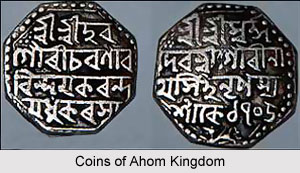
Suhungmung
Suhungmung was the fourteenth ruler of the Ahom dynasty who ruled from the period 1497 to 1539 AD. His reign was significant in terms of expansion of...
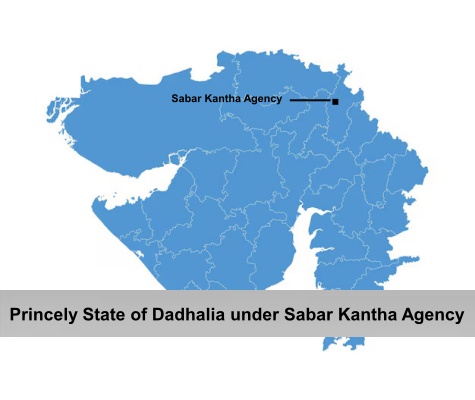
Princely State of Dadhalia
Princely State of Dadhalia was located in the present state of Gujarat. The state covered a total area of 28 sq miles and comprised of 15 villages. Th...
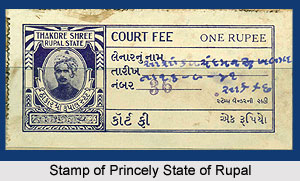
Princely State of Rupal
Princely State of Rupal was a part of the Baroda Agency, a sub division of Western India States Agency. It was under the administrative control of the...
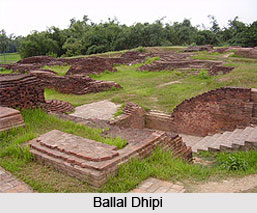
Archaeological Sites of West Bengal
Archaeological sites of West Bengal reveal several aspects of ancient India. Excavations by the Archaeological Survey of India have furnished artefact...

Princely State of Gabat
Princely State of Gabat was one of the native states of India during the Brtish period. Thakors were the native rulers of this state. After India gain...
Related articles in History of India

Mughal Architecture during Babur
Mughal architecture during Babur marked the foundation of a new architectural era in India, blending Timurid, Persian, and local influences. His reign...

Architecture during Sayyid and Lodi Dynasty
Architectures during the Sayyid and Lodi dynasty were mainly the tombs and monuments for the dead rulers. It were carefully designed and meticulously...

Brahmanical Sources of Ancient History
Brahmanical Sources of ancient history are contained in the Vedas and they constitute one of the most important literary sources of information about...

Coins of Chola Empire
Coins of Chola Empire were issued in gold, silver and copper and carried the Chola emblem.

Coins of Khilji Dynasty
Coins of Khilji Dynasty had an influential feature that was followed by the other dynasties.