 Mahalwari System was amongst the three major land revenue systems implemented by the British in India. The British administration in order to consolidate their position, wanted to establish their control over the administrative machinery of India. Therefore the British introduced the system of land revenue, which became the chief source of their income. Land being the important source of income, the British used it as their instrument to control the entire revenue system. Hence they introduced several land revenue schemes to use land as the instrument to strengthen their economic condition in India. Three kinds of land revenue systems were introduced by the British in India- the Permanent Settlement, Mahalwari Settlement and the Ryotwari system.
Meaning of Mahalwari System
The word Mahalwari is derived from the term Mahal, referring to a neighborhood or quarter. Under this system the unit for revenue settlement is the village. The village lands belong jointly to the village community technically called the body of co-shares. The body of co-shares is jointly responsible for the payment of land revenue, though individual responsibility is always there. If any co-sharer abandons his land, it is taken over by the village community as a whole. The village community is the owner of village common land area, including the forestland, pastures etc. However, the Mahalwari system of land revenue was prevalent in the northern part of India.
Origin of Mahalwari System
The north-western provinces and Oudh came under the dominion of the British supremacy at separate times. In 1801, the Nawab of Oudh surrendered the districts of Allahabad to the East India Company. After the second Anglo Maratha war the Company acquired the territory between the Jamuna and the Ganges. These territories were known as Conquered provinces. After the last Anglo-Maratha war, Lord Hastings acquired more territories in Northern India.
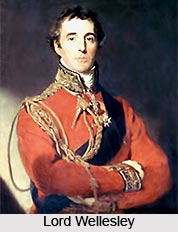
 Lord Wellesley, the first lieutenant governor of the ceded districts, made a land revenue system with the Zamindar and the farmers for three years. According to this land settlement, state demand was fixed higher by 20 lakhs rupees during the very first year over the Nawab of Oudh`s demand. Moreover, another burden of rupees 10 lakhs was added before the third year was out. The company in acquiring the land revenues followed a rigid policy. While the Nawab`s revenue collection varied, according to the actual production in a year, the Company`s demand was realised with rigidity. Similar land revenue settlements were also adopted in the conquered provinces.
Under the Mahalwaari System, the recommendation, the survey of land, preparation of the records of rights in land, settlement of the land revenue, demand in the Mahals, and the collection of the land revenue were done through the village headman or Lambardar. Regulation VII of 1822 gave the legal sanction to these recommendations. Under the Mahalwaari Settlement, the land revenue was fixed on the basis of 80% of the rental value, payable by the Zamindars. In cases where estates were not held by the landlords, but by the cultivators in common tenancy, the state demand was allowed to be fixed at 95% of the rental. The System broke down because of the excessive state demand and rigidity in its working and collection of land revenue.
Development of Mahalwari System
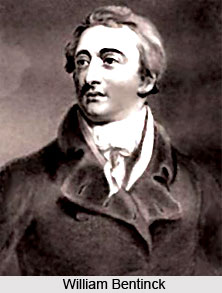
The government of William Bentinck later made a thorough review of the scheme of 1822, by which the Mahalwari system was introduced. The government of Bentinck came to the conclusion that the Regulation of 1822 had caused a widespread misery. The Government of Bentinck after a prolonged consultation passed the regulation of 1833. This regulation had somehow made the terms and conditions of the Mahalwari system flexible. It provided for the simplification of the procedure for preparing estimates of produce and rents. This Regulation also introduced the fixation of the average rents for different classes of soil. This new scheme worked under the supervision of Merttins Bird. Under this new scheme of Mahalwari settlement land in a tract was surveyed, showing field boundaries and the cultivated as well as the uncultivated land. Then the assessment for the whole tract was fixed followed by the setting down of the demand of each village. According to the new schemes, the Mahal powers were given the right of internal adjustments. The State demand was fixed at 66% of the rental value and the Settlement was made for the next 30 years.
Decline of Mahalwari System
The Mahalwari system of land revenue that worked under the scheme of 1833 was completed under the administration of James Thompson. Even the 66 % rental demand formula proved to be very harsh. Consequently Lord Dalhousie issued the fresh directions to the settlement Officers. Under the revised Saharanpur Rules of 1855 the State revenue demand was limited to the 50% of the rental value. But the Settlement Officers evaded the new rules unfortunately. As a result the system proved heavily miserable to the agricultural classes. This created widespread discontent and finally the Mahalwari System failed to create any extensive effect.