
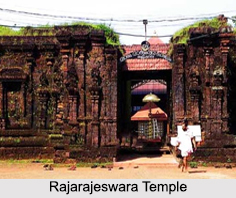
 The Rajarajeswara Temple is an ancient early medieval temple in South India which carried its pride in Chola art and architecture. This temple is dedicated to Lord Shiva and is located at Taliparamba in the Kannur district of the Indian state of Kerala. The temple has some similarities with the Taliparamba Temple of Kerala.
Rajarajeshwara Temple
The Rajarajeshwara Temple is one of the 108 important Shiva temples in the state of Kerala.
Introduction
The Rajarajeswara Temple is an ancient early medieval temple in South India which carried its pride in Chola art and architecture. This temple is dedicated to Lord Shiva and is located at Taliparamba in the Kannur district of the Indian state of Kerala. The temple has some similarities with the Taliparamba Temple of Kerala.History of Rajarajeshwara Temple
 History of Rajarajeswara temple confirms that this temple was rebuilt in Chola era. This temple was structured and installed in the pre historic age by the mythological characters of Purans times.
Lord Shiva worshiped in this sacred temple is known as Rajarajeswara Temple complex. The word Rajarajeswara means "the Emperor of Emperors" The name signifies the supreme transcendental power of Lord Shiva. The devotees address to Mahadeva with such royal appellations as Perumthrikovilappan, Perum-chelloorappan and Thampuraan Perumthrikkovilappan in Rajarajeswara temple.
The Jyothirlingam in Rajarajeswara temple is vibrant with spiritual power that exerts an enriching influence both on the material and spiritual levels of the earnest devotees. The celebrated ancient sage Agastya is associated with the installation of the Jyothirlingam in the shrine.
The mythological legends of Rajarajeshwara Temple reveal the antiquity and the special significance of Lord Shiva. It is a belief to the visitor of Rajarajeswara temple.
The mythological history of Rajarajeswara temple begins with the visit of the Puranic sage Parashurama, one of the incarnations of Lord Vishnu. Seeing there an ancient shrine of vibrant spiritual power in a dilapidated condition, the sage was grief-stricken and wanted to know the history of Rajarajeswara temple.Thereupon, sage Narada appeared there and related to him the story of Rajarajeswara temple. According to Narada Muni, sage Sanaka and others, the sons of the world creator Lord Brahma, churned the disk of the Sun to lessen its fierce heat. They mimed the dust, which was formed while churning, with the divine nectar of immortality, "Amrita" or Elixir, and out of it gave shape to three spirits and Lord Brahma presented them to Goddess Parvati, the consort of Lord Shiva or Mahadeva.
Goddess Parvati presented these Shiva-lingams to three kings who were doing strong austerities to invoke the Goddess, one in the Threta Yuga and the other two Dwapara Yuga. Maandhatha was the king to whom the Goddess presented the Shiva lingam in the Thretha Yuga, and Muchukundam and Shathasoman were the devotees who received the other two lingams in Dwapara, Third Yuga. Goddess Parvati advised each of them to install the idols in such a place where no death of any creature had taken place or any dead body had fallen.
After a long search for such a place, which was very difficult to locate, Maandhatha, the first one to receive the lingam found out a small place as per that description, only that much land which could accommodate a small plate.
Eventually, the Shiva Lingam was disappeared in the earth and later the king Shathasoman, the one who received the third Shiva lingam was also naturally attracted to the same spot and installed his Shiva lingam there. While installing, this Lingam also began sinking into the earth. King Shathasoman there upon prayed to Sage Agasthya for help. The sage appeared and after lighting a ghee lamp prostrated before the Shiva lingam twelve times; when he begun the thirteenth prostration, the Lingam got firmly fixed on the earth. Therefore the number of prostration the Sage Agasthya performed for his purpose came to be known as twelve and a half. Thus with the installation of the third Shiva lingam has sacred spot became spiritually vibrant threefold. Hearing this incident from Narda, Parashurama and Narada decided to renovate the temple for the welfare of mankind. Later during Chola era, the temple was again renovated for the mass.
Legend of Rajarajeswara Temple
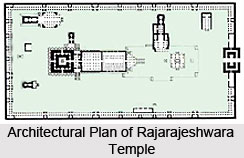
As per legends, the Rajarajeswara Temple was supposedly renovated by Sage Parashurama, long before the Kali Yuga commenced. Several centuries ago it was renovated by the Mushika dynasty kings. Later, the Rajarajeswara Temple was rebuilt into its present form in the early 11th century, during the Chola rule. The quadrangular sanctum has a two- tiered pyramidal roof; in front of the sanctum is the namaskara mandapam, but the temple has no kodi maram or flagstaff, unlike others in Kerala. This temple is regarded as one of the ancient Shakti Peethas. The mythology confirms that the head of Sati, wife of Lord Shiva, fell here after Shiva`s tandavam.
Architecture of Rajarajeswara Temple
During the Chola Period, the Rajarajeswara Temple had the tallest "shikhara" amongst the temples of its time. Rajarajeshwara Temple has a top of about 90 tonnes. On entering the eastern gate of the temple, the devotee circumambulates the whole central shrine before stepping inside. Towards the northern side there is a small shrine of a guardian deity called Yakshi. Usually a Yakshi is considered to be a female spirit with malevolent propensities, but the Yakshi installed here represents a prosperity-giving and benevolent spiritual power. The figure of Yakshi is a life-size wooden sculpture of unique charm. The Yakshi is represented as looking intently into a mirror. After worshiping this guardian deity, the devotees proceed towards the front of the central shrine and worship the mount of Lord Shiva, Lord Rishabha, the bull, outside the central shrine facing Lord Shiva. Near Rishabha is the Balikkallu of huge proportions, made out of granite with many figurines and intricate carvings.
Customs in Rajarajeshwara Temple
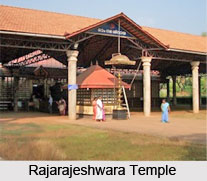 Customs of Rajarajeshwara Temple shows the sacred performances of Koodiyattam and Chakyar Koothu. This place is considered as one of the most sacred part in South India. It is because; this temple has its origin form the mythological era of Indian history.
Rajarajeshwara Temple is considered as most sacred for performing Koodiyattam and Chakyar Koothu. Whenever a new Koodiyattam is being directed, it is first performed at Rajarajeshwara Temple.
Koodiyattam Dance in Rajarajeshwara Temple
Only the Mani family of Chakyars solely possess the right of performing Koodiyattam in Rajarajeshwara Temple. The legendary Koodiyattam and Chakyar Koothu maestro, Natyacharaya Vidushakaratnam Padma Shri Mani Madhava Chakyar had performed here for many decades. The title "Vidushakaratnam" was awarded to him from Rajarajeshwara Temple.
Veerashringhala in Rajarajeshwara Temple
One of the greatest appreciation or award that an artist-scholar can get is the "Veerashringhala" or Golden Bracelet from Rajarajeshwara Temple. This Golden Award is given by the unanimous approval of the scholar body of Rajarajeshwara Temple. Guru Mani Madhava Chakyar is the youngest and last person to get the Virasringhala from here.
Offering to the God in Rajarajeshwara Temple
Ghee in small pots is offered to the presiding deity Lord Shiva or Mahadeva and is placed on steps leading to the sanctum of Rajarajeshwara Temple. These are called Neyyamrithu in Malayalam language. The men are allowed to enter Rajarajeshwara Temple at any time, but woman are allowed only after 8 PM.
Entering in Rajarajeshwara Temple
Only the males are allowed to enter the temple complex of Rajarajeshwara Temple. Though it is not practised as widely as it was in the earlier days, it is still a religious custom among many local Hindu women to visit three prominent temples in Taliparamba when they are pregnant. Apart from Rajarajeshwara temple, the other two temples are Sri Krishna at Trichambaram and another Shiva temple, Kanjirangad Sri Vaidyanatha Kshetram, in Kanjirangad, about 6 km from Taliparamba. It is believed that Lord Shiva at Rajarajeshwara temple assures the child a high status, Sri Krishna of Trichambaram bestows it with good nature and mental qualities and the deity at Kanjirangad temple gives the child long life.
Recently updated articles in Temples of India
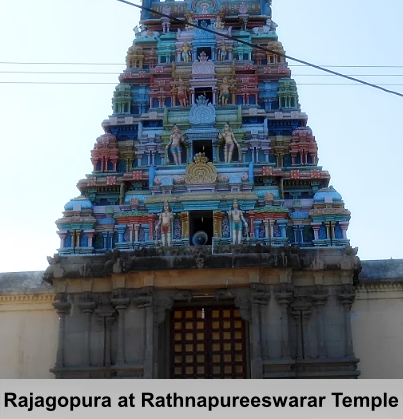
Rathnapureeswarar Temple
Rathnapureeswarar Temple in Tiruvarur district, Tamil Nadu, is a revered Shaivite shrine among the Paadal Petra Sthalams. Dedicated to Lord Shiva, it...
Gayatri Temple, Sirmaur
Gayatri Temple is located in Sirmaur district, Himachal Pradesh. Gayatri Temple is a sacred shrine that belongs to the medieval age.
Thousand Pillars Temple
Thousand Pillars Temple, Andhra Pradesh possesses 1000 pillars built by the Kakatiya ruler Rudra Deva during 1163 AD and is adorned with beautiful scu...
Triloknath Temple, Mandi District
Triloknath Temple is built in the Shikhara style of architecture, situated in Mandi, HP.

Shiv Temple at Mooni, Jammu & Kashmir
Ideally seated at the Billawar taluk of Kathua, Shiv Temple is a holy shrine.
Related articles in Temples of India
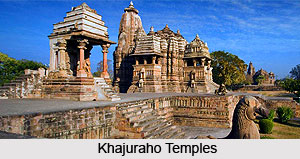
Khajuraho Temples
Khajuraho Temples are known the world over for their beauty and architectural construction. This group of temples is situated in the central Indian st...
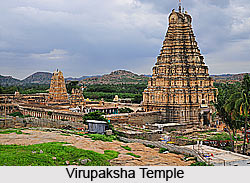
Temples In Hampi
Temples in Hampi are the manifestations of rich religious beliefs and architectural and sculptural abundance.
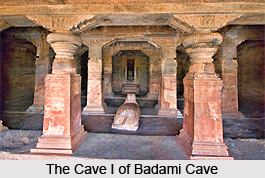
Badami Cave Temples
The Badami Cave Temples, an exemplary production of Indian architecture, are situated in the town of Badami.
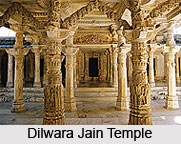
Temple Architecture During Rajput Period
Temple architecture during the Rajput period was inclined to the aspect of Bhakti. Rajput kings encouraged this art which is reflected in the grandeur...
Medieval Temples of India
Medieval temples of India vary from each other due to the style and architecture. The impact of the prevalent kingdom is prominent in the style of bui...