
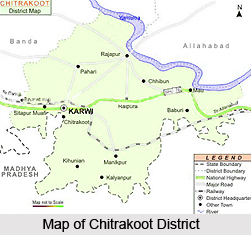
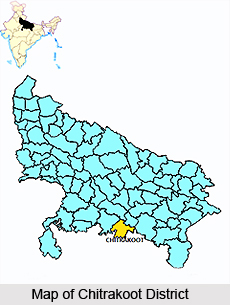
 Chitrakoot District, an administrative district of Uttar Pradesh, is a part of Chitrakoot Division. It lies between latitude 24 degree 48 minutes to 25 degree 12 minutes north and longitudes 80 degree 58 minutes to 81 degree 34 minutes east. Chitrakoot District is bounded in the north by Kaushambi, in the south by Satna (Madhya Pradesh) and Rewa, in the east by Allahabad and in the west by Banda. Total area of Chitrakoot District is 345291 sq kms. Farming is the main business of Chitrakoot District and majority of the people depend on it. However, some small scale industries also exist in the district. Distance covered by Chitrakoot District from east to west is 62 kms and from north to south is 57.5 kms.
Chitrakoot District
Chitrakoot District is one of the very popular tourist attractions of Uttar Pradesh as it is considered as Lord Rama’s birth place. Mostly people in this district are dependent on farming and other agriculture associated activities.
Introduction
Chitrakoot District, an administrative district of Uttar Pradesh, is a part of Chitrakoot Division. It lies between latitude 24 degree 48 minutes to 25 degree 12 minutes north and longitudes 80 degree 58 minutes to 81 degree 34 minutes east. Chitrakoot District is bounded in the north by Kaushambi, in the south by Satna (Madhya Pradesh) and Rewa, in the east by Allahabad and in the west by Banda. Total area of Chitrakoot District is 345291 sq kms. Farming is the main business of Chitrakoot District and majority of the people depend on it. However, some small scale industries also exist in the district. Distance covered by Chitrakoot District from east to west is 62 kms and from north to south is 57.5 kms.History of Chitrakoot District
 History of Chitrakoot district in Uttar Pradesh dates back to the time since it first found its mention in the Valmiki Ramayana. The epic describes it as a sacred place inhabited by a huge variety of flora and fauna and great sages. Two great sages namely Valmiki and Bharadwaj have spoken very highly of Chitrakoot and according to Indian mythology it was advised to Lord Rama to take refuge in this place during exile as the place has the property of relieving a person from worldly desires and soothing the mind for focussing and achieving the highest goals of life. The charm of the place had also been admitted by Lord Rama himself. Chitrakoot has also found a favoured place in the Ramopakhyan and the narrations of pilgrimage sites in Mahabharata. Brihat Ramayana and Adhyatma Ramayana also testify the enchanting natural beauty and spiritual aura of Chitrakoot. In fact Brihat Ramayana has about sixteen sections dedicated to the narrations of the place. The entire Indian literature associated with Lord Rama has prominently described the beauty of the place. Chitrakoot has also found significant place in the compositions of Sanskrit and Hindi poets.
Mahakavi Kalidasa in his epic named Raghuvansa has also wondrously described this place. He called Chitrakoot as `Ramgiri` owing to its associations with Lord Rama. In his composition Meghdoot he had portrayed it as the place of exile. Tulsidas, the renowned poet of Hindi, has cited this place in almost all of his major works including Vinay Patrika, Dohawali, Kavitawali and Ramcharit Manas. His work Vinay Patrika contains a number of verses expressing a deep bond between the writer and the place. Tulsidas has also spent a long period of his life in Chitrakoot where he continually worshipped Lord Ram and craved for his `darshan`. Rahim, an eminent poet and a friend of Tulsidas, had also spent his time in Chitrakoot. Also known as Abdur Rahim Khankhana, he was a saint, soldier, statesmen, scholar and poet and was one amongst the Nav-Ratnas of Akbar. He also took refuge in Chitrakoot for a brief period of time. Beetak literature of the Pranami sect states that Mahamati Prannath who was a saint and poet had written two books Bara Kayamatnama and Kayamatnama in this place.
The place attained the status of the district of Uttar Pradesh on 6th May 1997 with the name Chhatrapati Shahuji Mahraj- Nager and constituted Mau and Karwi Tehsils. This was carved out of Banda district. Later on 4th September 1998 the name of the district was changed to Chirakoot.
Geography of Chitrakoot District
The main rivers of Chitrakoot District are Yamuna River, Mandakini River, Gunta River, Bagein River, Ohan River, Balmiki River and Bardaha River. There are many mountains in Tehsils Karvi and Mau of the district. Main mountains are Madfa Pahar (this mountain is situated in Karvi Tehsil), Chitrakoot Parvat Mala and Balmiki Pahar. In Chitrakoot District, mainly five types of soils are found namely Kankirili Soil, Kabar Soil, Balui Soil, Rakad Soil and Padua Soil. The district has there main seasons; winter, summer and rainy.
Administration of Chitrakoot District
Administrative set-up of Chitrakoot District includes two Tehsils; Karwi and Mau. Further, there are five Development Blocks in Chitrakoot District, and these are Chitrakoot Dham Karwi, Ramnagar, Mau, Manikpur and Pahadi. Deputy Commissioner is the head of the administration of Chitrakoot District.
Ramayan Mela, Chitrakoot Mahotsava and Diwali Mela are some of the main fairs organised on different occasions in the district.
Ramayan Mela, Chitrakoot Mahotsava and Diwali Mela are some of the main fairs organised on different occasions in the district.
Recently updated articles in States of India
Bandare Waterfalls, Meghalaya
Bandare Waterfalls in South Garo Hills, Meghalaya, is a secluded natural attraction surrounded by dense subtropical forests and rugged mountain terrai...
History of Thissur District
Early History of Thissur District explains flourishing of the port cities. Now these port cities are transformed into archaeological sites.
Tippi Orchid Research Centre, Arunachal Pradesh
Tippi Orchid Research Centre in Arunachal Pradesh is renowned for its rich collection of exotic and endangered orchids. Surrounded by lush rainforest...
Tourism in Nashik District
Pilgrimage tourism in Nashik district involves visiting the various places of Hindu and Jain worship located here. Some of the holiest sites for Hind...
Mangadu, Kerala
Mangadu in Kerala’s Kollam district is a significant megalithic site known for its urn burials, cist burials, menhirs, and stone circles. Excavations...
Related articles in States of India
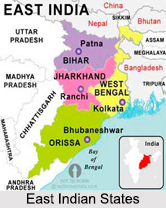
East Indian States
East Indian States comprises of Bihar, Jharkhand, West Bengal, Odisha and also the Union Territory of Andaman and Nicobar Islands. It defines the cult...
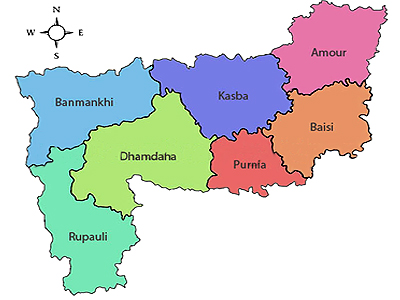
Purnia District in Bihar
Purnia District is located in Bihar and extends from River Ganga to Nepal. The district has a rich Hindu history and glorious past.
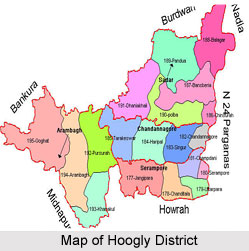
Hooghly district
Hooghly District along the bank of the river Hooghly is one of the principal trading ports of West Bengal.
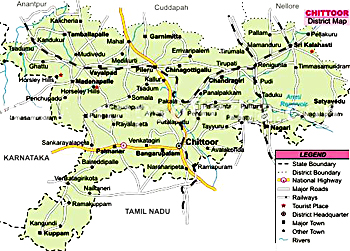
Geography Of Chittoor District
Geography of Chittoor district is spread along the topography of the land which is divided into two natural divisions; Chittoor has a dry and healthy...
Districts of West Bihar
Districts of West Bihar is comprised of medieval monuments that were built by the different governors of Mughal era.