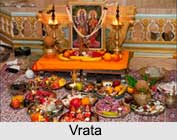
 Vrata is performance of any Hindu ritual voluntarily over a particular period of time. The purpose of performing a Vrata is to appease a deity and for fulfilment of the wishes of the Vrati (the performer of the vrata). The whole process of the Vrata is performed with a "Sankalpa" or religious resolve, which is done on an auspicious day according to the Hindu almanac.
Etymology of Vrata
The term Vrata means "religious vow" in Sanskrit. The word Vrata is rooted in the Vedic concept of rta or rita, which mean order and regularity. "Vr," means will, rule, discipline and "rta", means order. Vrata means orderly conduct or discipline. Thus to Hindus, the term Vrata denotes a religious practice to carry out certain obligations to achieve divine blessing for fulfilment of one or more desires.
Significance of Vrata
According to Hindu scriptures, a person can achieve his/ her desires and get divine blessings through Vrata. The objects may be varied like recovering lost health and wealth, getting offspring, divine help and assistance during difficult period in one"s life. In ancient India, Vratas had important significance in the life of individuals and still in the modern times a number of Hindus practice a number of Vratas.
Performance of Vrata
A Vrata consists of several actions, which include complete or partial fasting on certain or specific days, a pilgrimage or `Tirtha` to a particular space, a visit or "Darshan" and Puja to a particular temple or many temples, recitation of mantras and prayers, performing puja or havans, etc.
Rules to Perform Vrata
Vrata signifies a set of rules and disciplines, which guides the whole process in order to preserve the sanctity of the ritual system. The rules are enough liberalized to embrace a large segment of the society as much as possible.
The rules can be summarized as follows:
1. During the period of Vrata observation, one should keep oneself clean and pure, maintain chastity, speak the truth, practice patience, avoid non-vegetarian food and religiously observe all the rituals connected with that Vrata.
2. Once a new Vrata is undertaken, it should never be left unfinished nor a new one can be started before completing one. But one cannot start a Vrata during the "Ashaucha" caused by a birth or death in the family.
3. People, who are too old or too sick to perform a Vrata, can ask other close relative to perform a Vrata on behalf of them.
4. Once the decision is taken to perform a Vrata, it can be commenced only as per the auspicious time, place and mode as directed in the Holy Scriptures.
Types of Vrata
Vrata can be of numerous types and variety depending on how they evolved. There are certain Vratas based on Purana stories like:
•"Kayika Vrata"
•"Vachika Vrata"
•"Manasa Vrata"
•"PayoVrata"
Vratas based on Time like:
•"Dina Vrata"
•"Vara Vrata"
•`Paksha Vrata`
Vratas based on certain deities like:
•"Satyanarayan Vrata" for Lord Vishnu
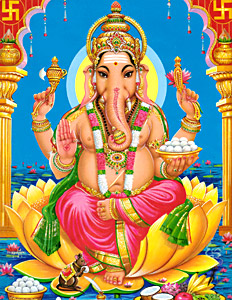
•"Vara Siddhi Vinayaka Vrata" for Lord Ganesha
•"Swarna Gouri Vrata" for Devi Parvati
Each and every Vrata have specific time and mode to observe, as well as there are many interesting stories associated with each Vrata.