 Guru Ghasidas Tiger Reserve is located in the Indian state of Chhattisgarh. More specifically, this Tiger Reserve is situated to the north west of the Koria District near the Dhorgi village in Bharatpur Tehsil. It can also be stated as being located between two important tiger reserves. They are Bandhavgarh Tiger Reserve and Palamau Tiger Reserve. The former is located in Madhya Pradesh, while the latter is situated in Jharkhand. It has been named after the reformist hero of the region, Guru Ghasidas.
History of Guru Ghasidas Tiger Reserve
Guru Ghasidas National Park was established in the year 2000. Prior to the formation of this National Park, the park area was named as the Sanjay Reserve. It was located in the state of Madhya Pradesh, when it was not divided to form a separate state called Chhattisgarh. At the time when Madhya Pradesh was divided, a large part of the then Sanjay National Park eventually came under the jurisdiction of the newly formed state of Chhattisgarh. More specifically, Chhattisgarh was formed on 1st November, 2000 and 60% of the reserve area came under the Koriya district of Chhattisgarh. The Government of Chhattisgarh then took the initiative to establish the Guru Ghasidas National Park in the year 2000. It can also be said that the Sanjay Reserve received a new name of Guru Ghasidas National Park, as it was established in the Sanjay Reserve area itself which came to be newly located in Chhattisgarh. The objective behind this step of establishment of a National Park was the protection of different species of plants, trees, birds and wild animals in the state of Chhattisgarh.
In the year 2010, the Wildlife Institute of India surveyed the Guru Ghasidas National Park. According to the report of the survey, this National Park had considerable diversity, although the then prey population in the habitat was reported as low. It was therefore suggested that under Project Tiger, good management and protection would make the area capable of protecting the tiger population along with the Sanjay-Dubri Tiger Reserve. Jairam Ramesh, the then Minister of State (Independent Charge) for Environment and Forests, consequently came up with a proposal to the Chief Minister of Chhattisgarh, Raman Singh in June, 2011. This proposal comprised of the declaration of the Guru Ghasidas National Park as a Tiger Reserve.
An in-principle approval was then given by the National Tiger Conservation Authority (NTCA) for the establishment of the Guru Ghasidas-Tamor Pingla Tiger Reserve in Chhattisgarh. The NTCA had taken a final proposal from the Chhattisgarh State Administration to fulfill the above mentioned purpose.
Geography of Guru Ghasidas Tiger Reserve
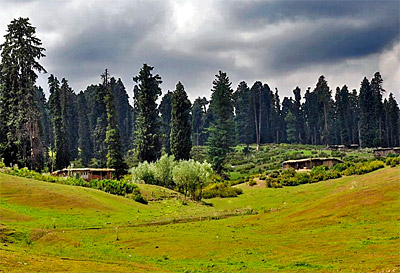
Guru Ghasidas Tiger Reserve is spread over an area of about 1440 square kilometers (555.98 sq miles). This Tiger Reserve comes under tropical climate zone. This climatic zone is characterized by hot and humid weather. Places falling under this zone receive immense rainfall. This is because of the active vertical uplift or convection of air. Some periods are even marked by thunderstorms occurring on a daily basis. Large portion of the equatorial belt comes under the category of tropical climate zone. This Tiger Reserve is enveloped by different forests and water bodies.
Flora of Guru Ghasidas Tiger Reserve
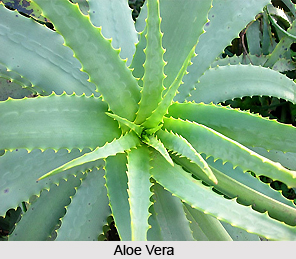
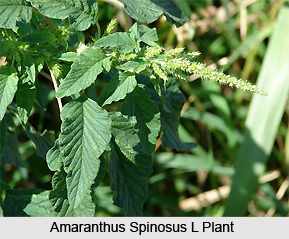
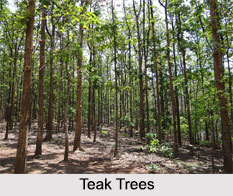
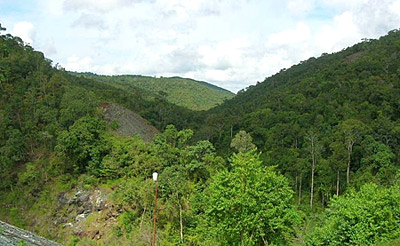
Guru Ghasidas Tiger Reserve is a home to different species of plants and trees. Mixed deciduous forest with teak, sal and bamboo trees comprise the vegetation of this tiger reserve.
Fauna of Guru Ghasidas Tiger Reserve
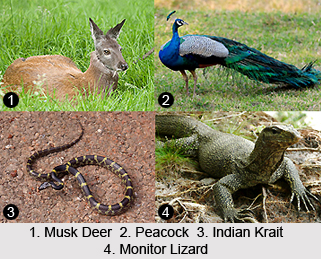
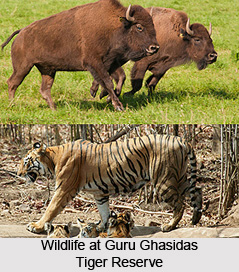
Guru Ghasidas Tiger Reserve is a home to different species of birds and wild animals. As per the estimations of ornithologists, near about 309 species of birds are residing in the park. Important bird species housed in the reserve area are golden hooded oriole, racket-tailed drongos, Indian pitta rufus-treepie, lesser adjutant, red-headed vulture, cenareous vulture, Indian white-rumped vulture, Egyptian vulture and Nightjars. This park also welcomes migratory bird species. The species of wild animals sheltered in the park are tiger, porcupine, spotted deer, sambar deer, wild boar, neelgai, monkey, bison and striped hyena. Dogs are known to be a common species of this reserve. Monitor lizard can be stated as an example of the reptiles sheltered in this Tiger Reserve.
Visiting Information
The period from November to May is generally considered to be the best time to plan a tour to Guru Ghasidas Tiger Reserve. The nearest airport to Guru Ghasidas Tiger Reserve is Jabalpur Airport in Madhya Pradesh. This airport is located at a distance of approximately 250 km (155.34 miles) from the tiger reserve. The nearest railway station to the Tiger Reserve is the Jaora Railway Station in Madhya Pradesh. This railway station is located at a distance of approximately 20 km (12.42 miles) from the tiger reserve. This tiger reserve is approximately 220 km (31.06 miles) away from Baikunthpur, headquarters of the Koria district of Chhattisgarh. As far as roadway is concerned, Guru Ghasidas Tiger Reserve has roads which form good connection with all the places in Chhattisgarh. These roads are known to be motorable by taxis, both from the nearest airport and the nearest railway station. Sidhi Bus Station in Madhya Pradesh is located at a distance of approximately 60 km (37.28 miles) from the tiger reserve. This reserve has rest houses to accommodate its visitors, for which they are advised to contact the authorities of the reserve.
Related Articles:
Indian National Parks
Tiger Reserves in India
Indian Wildlife Sanctuaries
Indian Flora and Fauna
Eco Parks in India
Bird Sanctuaries in India