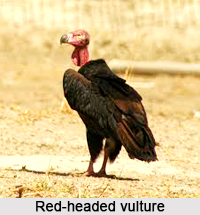
 Red-Headed Vulture is an Indian bird with a scientific name "Sarcogyps calvus" is also known as the Asian King Vulture, Indian Black Vulture or Pondicherry Vulture (though there are unrelated species in the New World which share the names king vulture and black vulture).
Concentration of Red-Headed Vulture
Red-Headed Vulture is mainly found in the Indian Subcontinent, with small disjunct populations in some parts of Southeast Asia.
Structure of Red-Headed Vulture
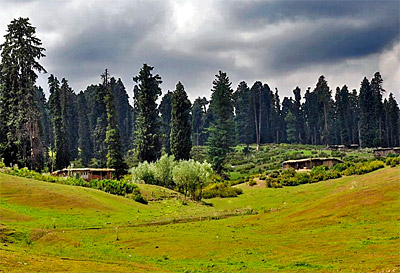
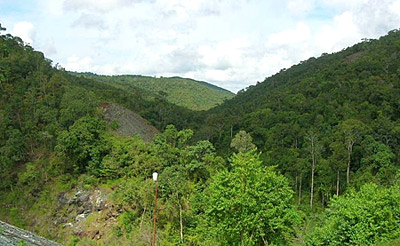
Red-Headed Vulture is a medium-sized vulture of 76 to 86 cm (30 to 34 in) in length, weighing 3.5-6.3 kg (7.7-13.9 lb) and having a wingspan of about 1.99-2.6 m (6.5-8.5 ft). It has a prominent naked head: deep-red to orange in the adult, paler red in the juvenile. It has a black body with pale grey band at the base of the flight feathers. The sexes differ in colour of the iris: males have a paler, whitish iris, whilst in females it is dark brown. This is a species of Old World vulture found in the Indian Subcontinent. It has no subspecies. This gaudy-faced vulture was historically abundant, range widely across the Indian Subcontinent, and also eastwards to south-central and south-eastern Asia, extending from India to Singapore. Today the range of the Red-headed Vulture is localized primarily to northern India. It is usually in open country and is cultivated in semi-desert areas. It is also found in deciduous forests and foothills and river valleys. It is usually found up to an altitude of 3000m from sea level.
Declining Population of Red-Headed Vulture
Red-Headed Vulture is declining, but only slowly. In 2004 the species was uplisted to Near Threatened from Least Concern by the IUCN. The widespread use of the NSAID Diclofenac in veterinary medicine in India has caused its population to collapse in recent years. Diclofenac is a compound now known to be extremely poisonous to vultures. The red-headed vulture population has essentially halved every other year since the late 1990s, and what once was a plentiful species numbering in the hundreds of thousands has come dangerously close to extinction in less than two decades. Consequently it was uplisted to Critically Endangered in the 2007 IUCN Red List.