
Government of India Act of 1909 is also known as Morley- Minto Reforms. After Lord Curzon`s partitioning of Bengal, terrorism invoked in the land of Bengal and it was an absolute necessity to restore stability of the British Raj. So to crack down the terrorist act in Bengal, John Morley, the Liberal Secretary of State for India and The Earl of Minto, the Conservative Governor-General of India together came to a common opinion that a dramatic step was required. This Act also gave security to the loyal followers of Indian upper classes and the upcoming westernized section of the population.
They together produced the Indian council act of 1909 (Morley-Minto Reforms) though the reforms did not meet the demands of the Indian National Congress of `the system of government obtaining in Self-Governing British Colonies`.
Importance of the Government of India Act 1909 is as follows:
The law allowed the Indians to take part in the election of the various legislative councils in India for the first time. The majority of this council was appointed by the British Government. And also the constituency was limited to specific classes of Indian nationals.
The introduction of the electoral from Indians was though against the intent of Morley, but could effectively establish the groundwork for a parliamentary system. Burke and Quraishi remarked: "To Lord Curzon`s apprehension that the new Councils could become `parliamentary bodies in miniature`, Morley vehemently replied that, `if it could be said that this chapter of reforms led directly or indirectly to the establishment of a parliamentary system in India, I for one would have nothing at all to do with it`. But he had already confessed in a letter to Minto in June 1906 that while it was inconceivable to adapt English political institutions to the `nations who inhabit India...the spirit of English institutions is a different thing and it is a thing that we cannot escape, even if we wished...because the British constituencies are the masters, and they will assuredly insist.. .all parties alike.. .on the spirit of their own political system being applied to India.` He never got down to explaining how the spirit of the British system of government could be achieved without its body."
The Muslim leaders of India demanded the laws to be conditioned and they would have to face Hindu majority and expressed serious concern and protested against the law. They demanded the law to be `first past the post` type.
As a result of this the minority Muslim community was allotted reserved seats in Municipal and District Boards, in the Provincial Councils and in the Imperial Legislature.
The number of reserved seat was more than their percentage in the relative population (25 percent of total Indian population).
Only Muslims should vote for Muslim candidates (Separate Electorate).
These concessions for Muslim community brought about a constant conflict during the years 1909-47. British rulers generally encouraged communal difference through these reserved seats, as the Muslim candidates did not have to appeal for Hindu votes and vice versa. As later on British Government transferred more powers to Indian politicians through the acts of 1919 and 1935, this Hindu-Muslim divisibility increased furthermore which hindered the natural harmony that prevailed in India before.
Government of India Act of 1909
The Government of India Act of 1909, also known as Morley-Minto Reforms, allowed Indians to take part in legislative elections. To crack down the terrorist act in Bengal it was originated.
Recently updated articles in History of India
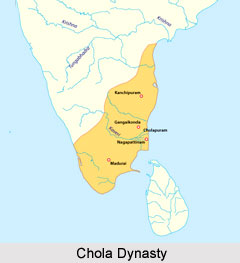
Chola Dynasty
Chola Dynasty is a Tamil dynasty and had longest duration of ruling in parts of South India. Chola dynasty had ruled South India successfully for a ex...
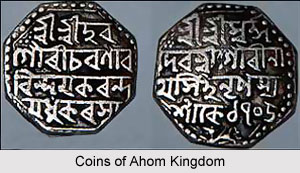
Suhungmung
Suhungmung was the fourteenth ruler of the Ahom dynasty who ruled from the period 1497 to 1539 AD. His reign was significant in terms of expansion of...
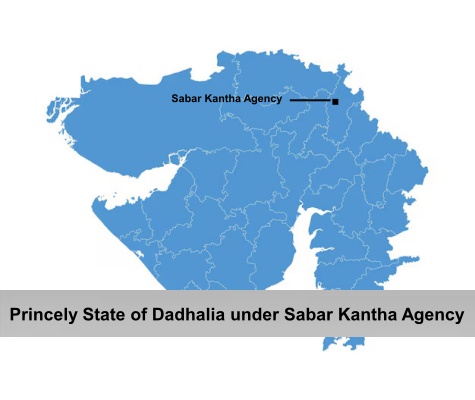
Princely State of Dadhalia
Princely State of Dadhalia was located in the present state of Gujarat. The state covered a total area of 28 sq miles and comprised of 15 villages. Th...
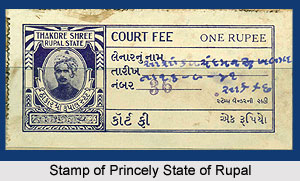
Princely State of Rupal
Princely State of Rupal was a part of the Baroda Agency, a sub division of Western India States Agency. It was under the administrative control of the...
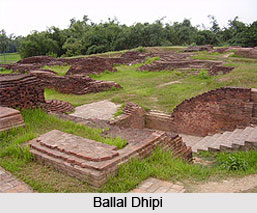
Archaeological Sites of West Bengal
Archaeological sites of West Bengal reveal several aspects of ancient India. Excavations by the Archaeological Survey of India have furnished artefact...
Related articles in History of India

Mughal Architecture during Babur
Mughal architecture during Babur marked the foundation of a new architectural era in India, blending Timurid, Persian, and local influences. His reign...

Architecture during Sayyid and Lodi Dynasty
Architectures during the Sayyid and Lodi dynasty were mainly the tombs and monuments for the dead rulers. It were carefully designed and meticulously...

Brahmanical Sources of Ancient History
Brahmanical Sources of ancient history are contained in the Vedas and they constitute one of the most important literary sources of information about...

Coins of Chola Empire
Coins of Chola Empire were issued in gold, silver and copper and carried the Chola emblem.

Coins of Khilji Dynasty
Coins of Khilji Dynasty had an influential feature that was followed by the other dynasties.