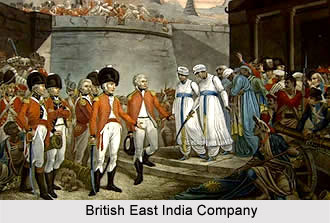
 The Bengal Presidency initially comprised the regions of east and west Bengal. A colonial region of British India, the Presidency comprised undivided Bengal (present day Bangladesh), the states of West Bengal, Assam, Bihar, Meghalaya, Orissa, and Tripura. In later times, during its peak height, the Presidency gradually annexed the princely states of Uttar Pradesh, Uttarakhand, Punjab, Haryana and Himachal Pradesh and portions of Chhattisgarh, Madhya Pradesh and Maharashtra, including the provinces of North West Frontier and Punjab in Pakistan and Burma (present day Myanmar). Penang and Singapore were also regarded as a part of the Presidency administratively, until they were merged into the Crown Colony of the Straits Settlements in 1867. Calcutta was declared a Presidency Town of the East India Company in 1699. However, the outsets of the Bengal Presidency proper can be dated back to the treaties of 1765 between the British East India Company and the Mughal Emperor and Nawab of Oudh. The treaties had placed Bengal, Meghalaya, Bihar and Orissa under the administration of the Company.
The Bengal Presidency, in contradiction to those of the Madras Presidency and Bombay Presidency, ultimately incorporated all the British territories north of the Central Provinces (Madhya Pradesh), from the mouths of Ganga River and Brahmaputra River to the Himalayas and Punjab.
However, Bengal Presidency did not live long to see the light of the day. The reason behind it can be attributed to the Partition of Bengal, 1905. Lord Curzon had employed extreme cunning and shrewd measures to accomplish his task, which later came to criticised as the `Divide and Rule` policy. After incredible protests from the part of the commoner, voicing that it was a decision by the rulers to exhibit nepotism and separate the Hindu and Muslim communities, Curzon`s decision was reversed. Bengal was reunited in 1912. Later however, Bengal Presidency was further subdivided into Orissa and Bihar. The ultimate divide, completely ruined the Presidency and its administrative strength, remaining only as a titular name. The history of Bengal presidency thus unfolds the administrative tactics of British imperialism.