 Muslims are scattered all over India, sharing various common interests to nurture towards a safe future. They pray to one and same Allah, follow more or less the same Shariat laws, observe similar rituals and share similar cultural traits. Though Islam had accentuated upon social equality, but Indian Muslims slowly moved towards social gradations. Generally, they are divided into two so-called groups: Ashraf ("noble" or upper caste) and Ajlaf ("rough" or lower caste) Muslims. Though not as rigid as the early Hindus generally behaved, yet, Muslims do maintain a caste-like feature. In fact, Muslims and the Islamic religion did pass through an extensive phase in Indian renaissance, which had every societal group during those times in pre-independent India. Muslim renaissance is also traced to the middle periods during 18th century, however, which are laced with some drawbacks. Muslims never tried to mobilise their masses for solemn social causes. There were some lukewarm attempts towards renaissance, but most of them developed into religious movements leaving aside their original goals.
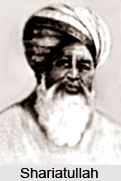
Muslim renaissance commenced with the establishment of The Tariqah-e Muhammadiya (Muhammadan Way) Movement, founded by Syed Ahmad Barelwi Shahid (1789-1831). He was deeply touched by the religious and political debasement of Muslims. Tariqah-e Muhammadiya was not a simple revivalist movement. It was directed against superstitious beliefs and lack of knowledge. The Movement was based on nationalism and was directed against ruthless British dominance. Although they stood in opposition to modern education, but this was chiefly due to extreme detestation towards the British. Shariatullah was another Islamic member, who had launched the Faraizi Movement in Bengal, in response to Muslim renaissance. Peasants were organised under Faraizi banner to oppose the oppression of zamindars.
Next in line to Muslim renaissance, was the Deoband Movement, an offshoot of the Tariqah-e Muhammadiya. So infectious was its motto that it attracted youths not only from India, but also from other countries. One distinct domain that is noticed here is, all these movements had kept the Muslims preoccupied with religion and unfortunately failed to address their social and political aspirations.
 Tablighi Movement was started by Maulana Ilyas (1886-1994) in 1927 amongst the Meos of Mewat region, south of Delhi. This movement was built in response to Arya Samaj`s drive of Shuddhi, which was aimed at converted Muslims to bring them "back" to the Hindu fold. Maulana Ilyas then had given the slogan: "Aye Musalmano, Musalman bano" (Muslims, become Muslims). Ilyas began reforming the Islamic followers through six basic articles: recitation of the first Kalimah (there is no god but Allah and Muhammad is His messenger), Namaz (offering five-time daily prayers) Ilm (acquiring knowledge), Dhikr (remembrance of Allah), Ikram-e-Muslim (respect for Muslim), Ikhlas-e-Niyat (faithful intention) and Tabligh (spreading the message of Allah). Tablighi Jamat did held enormous gatherings of Muslims, but there was barely any other issue discussed except religion. Muslim renaissance, in this manner was forced to fade away under religious complications. Unfortunately, the movement kept distance from politics, leading to a negative attitude amongst its followers towards foremost issues confronting the Muslim community.
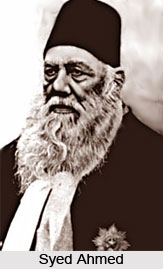
The Aligarh Movement was a modernistic movement launched by Syed Ahmed Khan which led to social changes among Indian Muslims. Muslim renaissance had been boosted to some extent by this very luminous man, trying to share a common objective. Syed Ahmed Khan had started a journal called Tahzib-ul-Akhlaq for popularising his ideas and message. In due course of time, he established M.A.O. College in 1875, which is has presently been named as Aligarh Muslim University. M.A.O. College used to impart western thoughts and European learning, together with dissemination of Islamic heritage. This movement was aimed wholly towards educational upliftment of Indian Muslims. Most of these movements were inspired by the gradual debasement witnessed in the Muslim community.
Another movement, called Tulu-e-Islam, also had received much attention in Muslim renaissance achievements.. This movement was initiated by Ghulam Ahmad Pervez of Punjab. In 1938, he had started publishing a journal, Tulu-e-Islam. However, Parvez was severely disgraced because of his rejection of Hadith as a significant source of legislation in Islam. Its main object was to unify Muslims as a whole, leaving aside geographical boundaries. Some other organisations like Jamiat-ul Ulama, Jamaat-e Islami and Ahrar-e-Islam too engrossed themselves in reclaiming the Muslim community.