
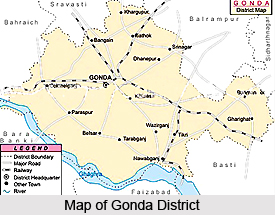
 Gonda District lies between 26 degree 47 minutes and 27 degree 20 minutes north latitude and 81 degree 30 minutes and 82 degree 46 minutes east longitude. This administrative district of Uttar Pradesh is bounded by Balrampur District in the north, by Bahraich District in its west, by Basti District in its east. In the south it is separated from Barabanki District and Faizabad District by Ghaghara River.
Gonda District
Gonda District in Uttar Pradesh is popular for its religious places. Gonda town, district headquarter, is located close to Ayodhya, Lord Rama’s birth place.
Introduction
Gonda District lies between 26 degree 47 minutes and 27 degree 20 minutes north latitude and 81 degree 30 minutes and 82 degree 46 minutes east longitude. This administrative district of Uttar Pradesh is bounded by Balrampur District in the north, by Bahraich District in its west, by Basti District in its east. In the south it is separated from Barabanki District and Faizabad District by Ghaghara River.History of Gonda District
 History of Gonda District suggests that this territory formed part of the ancient kingdom of Kosala. As per historical accounts, initially the district was part of Awadh province in reign of Mughals. Gonda District was controlled by the ruler of Awadh till its annexation in February 1856. Awadh was annexed by the British government and Gonda was separated from Bahraich. During the British rule a commissionery was constituted for the administration of this region. Gonda was its headquarters. At the time of independence there were three Tehsils namely Gonda Sadar, Tarabganj and Uttraulla in the district.
Further, the history of Gonda District states that on 1st of July 1953, Tehsil Uttraulla was bifurcated in two Tehsils namely Balrampur and Uttraulla. Three new Tehsils were constituted in the year 1987 as Tulsipur, Mankapur and Colonelganj. Later on in the year 1997, Gonda District was bifurcated in two parts and Balrampur District was created including three Tehsils of north part. On the border district of Gonda and Shravasti lies a vast area of ruins known at the present day as Sahet Mahet represents the ancient site of Shravasti which covered the region comprising of both the districts. The ancient history of both these districts therefore, is the history of Shravasti and region around it. It was the capital of Uttar Kosala.
Medieval history of Gonda District states that the first Muslim invasion of the region north of Ghaghara River took place in second quarter of 11th century under Syed Salar Masood. The rulers of Gonda and adjoining parts were much perturbed to find a foreigner in their country but soon they formed a league, and decided to offer united resistance to Masood. From this time onwards Gonda and Bahraich seem to have always been held singly owing to its isolated position due to river Ghaghara.
According to the history of Gonda District, the region is historically and geographically linked with Bahraich from times immemorial. In the second half of the 13th century Gonda was included in the government of Bahraich by the early Muslim rulers and hence it has no independent history of its own. Further, there is no specific reference about the district till the reign of the Tughlaqs probably on account of its inclusion in the government of Bahraich. District of Gonda provided a free passage to Sultans of Delhi who usually marched through these districts on way to the eastern parts of their empire. Gonda District did not find mention in historical records till the reign of Ghiyas-ud-din Tughlaq.
In 1394, the district came under the sway of Khwaja Jahan Malik Sarwar, the founder of the Sharqi dynasty of Jaunpur. From earliest days of Muslim domination till the advent of Akbar, the history of Gonda district is primarily the history of local clans. During the early phase of his period the whole of Gonda was ruled by aboriginal Dom, Tharu Tribe, Bhar, Pasi and the like. The district formed an integral part of the empire of Akbar (1556-1605). With the annexation of the province of Awadh by the East India Company in February 1856, Gonda became a separate district in the Gonda-Bahraich Commissionership. Annexation passed off quietly, although the Gonda raja exhibited strong disapproval of the measure and was with difficulty persuaded to leave his fort at Gonda and meet the district officer.
In the Non Cooperation Movement launched by Mahatma Gandhi people from this district actively participated. The stage for national activities was already set in the district. The rural and urban populace of the district shared its due in the various activities of the Non-cooperation movement. After the non-cooperation movement the district of Gonda remained sensitive throughout in catching vibrations of political activities pervading throughout the country. On October 9, 1929, Mahatma Gandhi visited the district along with Jawaharlal Nehru. The non-cooperation movement which was abruptly suspended by Gandhiji in 1922 was revived in the Congress session of 1929. Thus, it is proved by the history that Gonda District had played a great role in the country`s freedom struggle.
Geography of Gonda District
Geography of Gonda District includes no mountains or plateaus as such. The general slope of the district is from west to east. It can be divided into two physiographic divisions namely Uparhar and Tarhar. Gonda District has an irregular shape. There are several rivers in the district, which have got immense significance in the development of the region. The drainage system of Gonda District comprises Ghaghara River, Saryu, Terhi, Manwar, Bisuhi and Kuwana rivers. There are various lakes too in Gonda District; prominent ones are Banki, Kodar, Aranga, Parwati and Pathri. Banki is situated in the west near Dubaha Bazar. Gonda District being a plain district has a tropical monsoon climate. There are three seasons, summer, rainy and winter. Summer is from March to June. The average temperature of the summer season is nearly 30 degree Celsius. Hot wind blows in May and in early June. Rainy season is from July to October. November to February constitutes the winter season. Gonda District is quite rich as far as its vegetation is concerned. Gonda District mainly has loamy soil which is highly fertile.
Tourism in Gonda District
 Tourism in Gonda District offers visits to various historical and religious sites. These places are worth exploring and they attract travellers from all parts of the country. Gonda District is mainly popular for its religious sites. Moreover, the visitors can also get a glimpse of the deep history associated with the district.
Some of the main attractions of Gonda District are as follows -
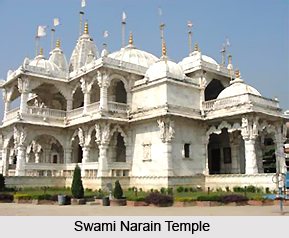
Swami Narain Chhapia : It is situated at a distance of 50 kms from the district headquarters. The chief interest of this place is the temple of Swami Narain. This place is famous as Birth place of Saint Sahjanand. A large number of devotees visit this place especially in the month of Kartika on Ramnavami.
Paska (Sukar Khet): This place is situated the river bank of Saryu about 45 kms south-west from district headquarters. It is considered as an ancient religious site. A large number of devotee`s takes holy dips in Saryu here for `Mukti`. Paska is also related with Tulsidas and known as his `Guru Bhumi`.
Varahi Dev: About 6 kms in east from Paska another ancient place of Varahi Devi known as Uttari Bhawani is situated in Tarabganj Tehsil. An old temple of Bhagwati`s attract a large number of devotees here, especially on the occasion of Navratri. The place is known as a part of Suker Jhet. The image of Adi Shakti Varahi is related with Shakti of Varha in Paska.
Prash: This place is in north of Saryu and situated in Tehsil Tarabganj. The place is related with ancient Saint Parashar, grand son of Vashishtha and son of Sakti. A temple in his memory is situated here.
Tirrey Manorama: At 21 km north of Gonda city this holy place is situated. Big fair is organized here on Kartik Purnima every year.
Prithvi Nathan Mahadeo: At a short distance in south of Kharagupur old temple of Lord Shiva is situated. Legend relates it with Mahabharata. This area was then known as Pancharayan. The present temple was reconstructed by Maharaja Man Singh of Ayodhya.
Jhali Dham: This place is known as place of devotion and situated at one km from Prithvi Nathan Mahadeo. This is a shrine of a famous saint. This shrine is the main attraction of the place.
Parvati Mahadeo: The place is related with history of Ramayana. It is situated in village Mahadeo on bank of Parvati Jheel.
Colonelganj: Colonelganj is city board and tehsil headquarter. The old name of place was Sakraura. It was a village of no particular importance till the year 1780. Later on the suppression were maintained here till its annexation. The place was selected as the military headquarter during the freedom struggle of 1857.
Gonda: The divisional headquarter Gonda was originally a forest area. The city consists of glorious history of freedom struggle of 1857.
Other important places of interest in Gonda District are Wazirganj, Nawabganj, Rauza Peer and Sri Nagar Math.
Recently updated articles in States of India
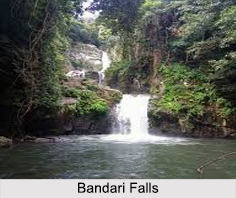
Bandare Waterfalls, Meghalaya
Bandare Waterfalls in South Garo Hills, Meghalaya, is a secluded natural attraction surrounded by dense subtropical forests and rugged mountain terrai...
History of Thissur District
Early History of Thissur District explains flourishing of the port cities. Now these port cities are transformed into archaeological sites.
Tippi Orchid Research Centre, Arunachal Pradesh
Tippi Orchid Research Centre in Arunachal Pradesh is renowned for its rich collection of exotic and endangered orchids. Surrounded by lush rainforest...
Tourism in Nashik District
Pilgrimage tourism in Nashik district involves visiting the various places of Hindu and Jain worship located here. Some of the holiest sites for Hind...
Mangadu, Kerala
Mangadu in Kerala’s Kollam district is a significant megalithic site known for its urn burials, cist burials, menhirs, and stone circles. Excavations...
Related articles in States of India
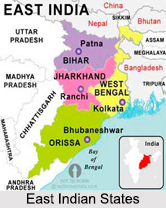
East Indian States
East Indian States comprises of Bihar, Jharkhand, West Bengal, Odisha and also the Union Territory of Andaman and Nicobar Islands. It defines the cult...
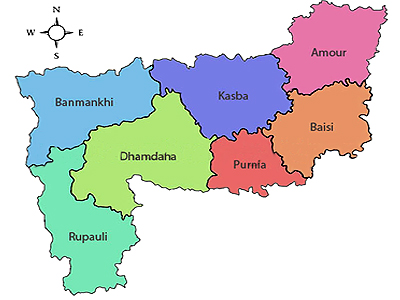
Purnia District in Bihar
Purnia District is located in Bihar and extends from River Ganga to Nepal. The district has a rich Hindu history and glorious past.
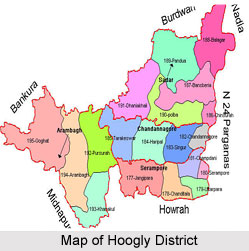
Hooghly district
Hooghly District along the bank of the river Hooghly is one of the principal trading ports of West Bengal.
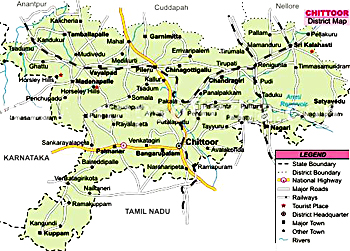
Geography Of Chittoor District
Geography of Chittoor district is spread along the topography of the land which is divided into two natural divisions; Chittoor has a dry and healthy...
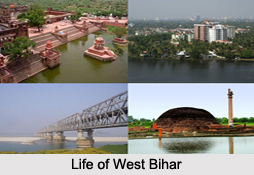
Districts of West Bihar
Districts of West Bihar is comprised of medieval monuments that were built by the different governors of Mughal era.