
Famines in India became a frequent event mostly during the supremacy of the British in the country. During the British rule under the East India Company, India suffered in from twelve famines and four severe scarcities. The most significant amongst those was the Great Famine of Bengal of 1769-70, which claimed a large toll of lives. The state government did not adopt any relief measures. Rather the company`s servants made enormous profits from this scarcity. The years 1781-82 were the period of extreme crisis in Chennai; in 1784 severe famines afflicted the whole of Northern India. However, during the Chennai famine, the state provided relief to the famine affected areas.
During the year 1803, famine in North western Provinces, including Oudh, the state granted remissions of the revenue, gave loans and advances to the landowners, offered a bounty on all grains imported to Varanasi, Allahabad, Kanpur and Fatehgarh. The Guntur Famine of 1833 took a heavy toll of lives. In the year 1837, there was a severe famine took places in the Upper India. However, the work of relieving the helpless and the infirm was left to the charitable public. Under the East India Company no measures were adopted to formulate any general system of famine relief or prevention. However the provincial governments and the Districts officers tried to improve the conditions. They made various experiments to provide relief to the famine afflicted areas, such as the storage of grain by the government, penalties on hoarding, bounties on imports, advancing loans for the sinking off wells etc.
The economic developments of the latter half of the 19th century like the extension of railways and other means of communications and transport, growth of foreign trade etc changed the character of the economic problem in India. The states were made aware about their responsibility for the expansion of the irrigation facilities, enactment of the agrarian legislation and adoptions of preventive measures as well as formulation of famine relief policy to meet possible famines. Under the British Crown, ten severe famines took palace in India. These famines occurred in the areas of Delhi and Agra in the year 1860-61. During this time the British authorities thought it necessary to enquire into the causes, area and intensity of the famine as well as took measures to cope with the distress.
The famine of 1865 followed by a famine the following years affected Orissa, Chennai, northern Bengal and Bihar. In these years, Orissa became the most affected one. During the severe famine in Orissa, the Government adhered to the principles of free trade and the law of demands and supply. The Government left the work of relief to the charitable voluntary agencies. Since the voluntary agencies could not work like the government they could not provide adequate relief and as a result the Orissa famine claimed a heavy toll of lives. The Orissa famine proved a turning point in the history of the Indian famines. Followings the severe calamity of the Orissa Famine a Committee was appointed under the chairmanship of George Campbell. The Committee decided that the government was expected provide adequate support and relief and take adequate steps to prevent deaths in the famine affected areas. In 1868, when the severe calamity took places in Northern and Central India the worst affected areas were Rajputana and central India. The government following the recommendations of the Committee, adopted measures to relieve the distress.
The great famine of 1876-78 was perhaps the most grievous calamity experienced since the beginning of the 19th century. The calamity affected Chennai, Mumbai, Uttar Pradesh and Punjab. Due to this famine extensive areas were depopulated and large tracts went out of cultivation. This time also the government took reluctant efforts to help the famine stricken, which was more than ineffective and insufficient.
Between the years 1880 and 1896, two famines and five severe scarcities took place. The great famine affected the provinces greatly. The relief operations were conducted with a fair measure of success, except in the central Province. The Government offered extensive relief and support. Following the famine of 1896 and 1897, another calamity came in 1899-1900. This
time also the efforts of the British administration were inefficient.
The Great famine of Bengal took place in 1942-43. The Bengal Famine of 1943 was perhaps the most dangerous calamity under the British. The famine of Bengal took the character of an epidemic. The root causes of the famine was the series of crop failures that Bengal experienced from the year 1938 .The conditions of the World war II was also responsible for the terrible famine in Bengal. The movement of trade and food grains was dislocated. According to the historians, the famine of Bengal was mostly man-made than caused by the natural causes. The opportunists, to create famine and to make enormous profits out of this, had exploited the situation of World War II. Here also, the government relief proved inadequate and the Government of India wanted the Provincial Government to undertake and organise the famine relief.
Thus the British Government of India Gradually exploited the economy of India. The evil effects of the World War II also created a vacuum. Thus regular famines were an inevitable feature of India during the 19th and the 20th centuries.
Famines in India
Famines in India mostly occurred during the British Rule and the aids provided by the British Government proved insufficient and ineffective to help the affected.
Famines in India
Famine in Western India
 The Bundelkhand district of Agra Province had gone through rough patches of drought in the autumn of 1895 as a result of poor summer monsoon rains. When the winter monsoon failed too, the provincial government declared a famine early in 1896 and began to coordinate relief works. However, the summer monsoon of 1896 brought only scanty rains and soon the famine had spread to the United Provinces, Central Provinces and Berar, portions of the Bombay and Madras presidencies and of the provinces of Bengal, Punjab and even Upper Burma. The native states affected were Rajputana, Central Indian Agency and Hyderabad. The famine mostly affected the pan British Indian territory. Of the total area of 307,000 square miles affected, 225,000 square miles lay in British territory; similarly, of the total famine-afflicted population of 67.5 million, 62.5 million lived in British territory.
In the year of 1896, the monsoons of Western India similarly failed to make any watery impact and the subsequent 1896-97 drought placed three and a half million Indians on famine relief by the end of the year. The famine occurred mainly in Bombay and in segments of western India, parts of Rajputana, central India and the south-east region of Punjab. Relief measures included relief work projects, poor houses and the remission and suspension of land revenue.
Although large-scale relief was offered throughout the famine-stricken regions according to the Provisional Famine Code of 1883, the mortality, both from starvation and accompanying epidemics, was extremely high. Approximately 1 million people were believed to have died as a result of the famine.
In January 1897, the Indian Charitable Relief Fund was established in Calcutta and subsequently received gifts from other parts of India and throughout the world for famine relief. In December of that year, Lord Elgin appointed the Indian Famine Commission with Sir James B. Lyall (1838-1916) as its chairman. The Commission reviewed the existing Famine Codes in terms of the ongoing famine experiences in pan Western India.
In October 1898, the Famine Commission`s report affirmed the present Code`s practices and updated aspects of the public works relief projects. Additional provisions were recommended for the communities of weavers, forest-tribes and aboriginal hill tribes.
Famine in South India
 Due to ruthless atmospheric conditions, India experienced a devastating famine that left 6 to 12 million people dead. Stray incidents started popping up from every corner of the country; each day turned into dismay. British rule had gradually turned more merciless. Amongst all such commotion, a terrible bout of famine struck parts of South India in 1877. The losses that natives had to suffer had taken a whole lot of time for the English masters to put things into place like before. Although, there were still some clemency retained in selected Viceroy-Generals of the Raj, which came to vital use in times like these. And, one such example was Lord Lytton.
In January, the Government of India appointed Sir Richard Temple (1826-1902) as Commissioner to Madras for the purpose of minimising the expenditures of the Madras Government. At the same time, relief measures for those suffering from the famine were also ensured by Temple. In August, the famine extended to other parts of South India like Madras, Central Provinces, United Provinces and even Punjab, impacting a population of approximately thirty-six million Indians.
Between the period of 17th August to 27th September, Lord Lytton toured Madras and Mysore to personally investigate the extent of the famine and to coordinate with the Duke of Buckingham (1823-1889), Governor of Madras, on relief measures.
In May 1878, Lord Lytton appointed a Famine Commission with Sir Richard Strachey (1817-1908) as President and Sir Charles A. Elliott (1835-1911) as Secretary. The Commission was charged to investigate the impact of the famine on vital statistics, to suggest the character of future relief programmes, to outline criteria for complimentary relief, to clarify the Government`s role in the supply and distribution of food and to project the expected benefit of railway and irrigation projects. A Famine Insurance Fund was developed which laid aside 1,000,000 pounds a year. A sum of 500,000 pounds was allocated to railway construction and other public works projects and 250,000 pounds to irrigational measures.
In July 1880, the Famine Commission issued its report determining the principles and practices to be employed during future famines. An estimated five to six million Indians died as a result of this horrific famine in South India and other adjoining states. These plans were to be brought into action during the Famine of 1896 with positive results.
Recently updated articles in History of India
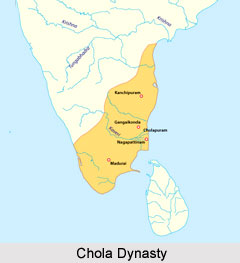
Chola Dynasty
Chola Dynasty is a Tamil dynasty and had longest duration of ruling in parts of South India. Chola dynasty had ruled South India successfully for a ex...
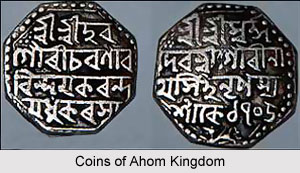
Suhungmung
Suhungmung was the fourteenth ruler of the Ahom dynasty who ruled from the period 1497 to 1539 AD. His reign was significant in terms of expansion of...
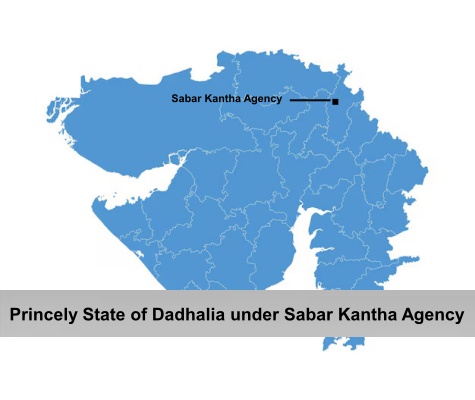
Princely State of Dadhalia
Princely State of Dadhalia was located in the present state of Gujarat. The state covered a total area of 28 sq miles and comprised of 15 villages. Th...
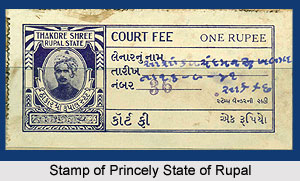
Princely State of Rupal
Princely State of Rupal was a part of the Baroda Agency, a sub division of Western India States Agency. It was under the administrative control of the...
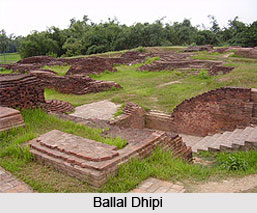
Archaeological Sites of West Bengal
Archaeological sites of West Bengal reveal several aspects of ancient India. Excavations by the Archaeological Survey of India have furnished artefact...
Related articles in History of India

Mughal Architecture during Babur
Mughal architecture during Babur marked the foundation of a new architectural era in India, blending Timurid, Persian, and local influences. His reign...

Architecture during Sayyid and Lodi Dynasty
Architectures during the Sayyid and Lodi dynasty were mainly the tombs and monuments for the dead rulers. It were carefully designed and meticulously...

Brahmanical Sources of Ancient History
Brahmanical Sources of ancient history are contained in the Vedas and they constitute one of the most important literary sources of information about...

Coins of Chola Empire
Coins of Chola Empire were issued in gold, silver and copper and carried the Chola emblem.

Coins of Khilji Dynasty
Coins of Khilji Dynasty had an influential feature that was followed by the other dynasties.