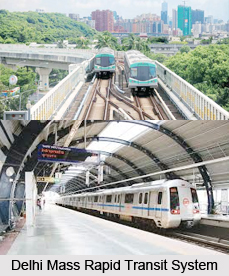
 Delhi Metro has redefined Delhi transportation system and also the urban life of Delhi. It is one of the major contributions in Delhi from Metro Railways in India for carrying smooth life.
Concept of Delhi Rapid Transit
The concept of a mass rapid transit for New Delhi first materialized from a traffic and travel characteristics study. It was carried out in Delhi in 1969. Over the next several years, many official committees by a variety of government departments were commissioned to study the issues related to technology, route alignment and governmental jurisdiction. In 1984, the Delhi Development Authority and the Urban Arts Commission came up with a proposal for developing a multi-modal transport system, which would consist of constructing three underground mass rapid transit corridors as well augmenting the city`s existing suburban railway and road transport networks.
Operation of Delhi Metro
Delhi Metro operates from the national capital of India, Delhi and is under the supervision of the Delhi Metro Rail Corporation Limited (DMRC). DMRC is an Indian corporation that was formed on March 5, 1995. The Delhi Metro was launched on December 24, 2002 and became the second underground rail system in India after the one in operation in Kolkata.
Network of Delhi Metro
Delhi Metro is India`s first modern civic transportation system, which has revolutionized travel by providing a swift, dependable, secure and cosy means of transport. This network consists of six lines with a total length of 189.63 kilometres (117.83 mi) with 142 stations of which 35 are underground, five are at-grade and rest are elevated. The Delhi Metro has a blend of prominent, up-grade and underground tracks.
Speed of Delhi Metro
The trains travel at a speed below 80 km/hr. and stop for 20 seconds at each station. The train service operates from six in the morning till eleven at night. A single train consists of four coaches and can carry up to 240 seated and 400 standing passengers. All the trains have air-conditioned coaches loaded at a temperature of 20-22 degree Celsius.
Delhi Metro Police
A new department Delhi Metro Police has been set up that exclusively looks after the law and order inside the Metro. Metro police is present in every station for the security of the passengers. High end close circuit camera monitors all the stations. Emergency communication system is also provided between the passengers and the driver in every coach.
Service Offered by Delhi Metro
The stations of Delhi Metro have Automated Teller Machines (ATM), food outlets, cafes and convenience stores. The ticket facilities are divided into three categories -Smart card, Tourist card and token. The Metro stations of Delhi have been decorated with murals by local art college students.