
The latter half of the 19th century , witnessed a developing trend in the Indian Agriculture. The emergence of the commercialization in the Indian Agriculture was the marked feature in the latter parts of the 19th century. So far agriculture had been away from the business enterprise. Now agriculture began to influence by the commercial consideration. Under the commercialization of Agriculture, certain specialized crops were s grown. The sole aim for the productions of such crops was not for consumption in the village, rather these were used for sales in the national and even in the international markets. Commercial crops like cotton, jute, groundnuts, oilseeds, sugarcane, tobacco, etc were more remunerative than food grains. Again the cultivation of crops like condiments , spices, fruits and vegetables could make a widespread commercial transactions. However the historians have opined that the trends of commercialization reached in its highest level of developments in the plantation industry i.e. tea, coffee, rubber etc, which were produced for selling in the wider market.
Agriculture as a medium of business transaction was not a sudden outcome. Rather certain factors were responsible for the commercialization and specialization of agricultural market. The spread of money economy , the replacement of custom and tradition by competition and contract, the growth of internal and external trade, the emergence of a unified national market etc was responsible for the commercialization of agriculture.
However to the Indian peasants, commercialization seemed a forced process. To meet the excessive land revenue demands of the state and by the high rates of interest charged by the moneylenders, forced the peasants to participate in such process of commercialization. By this process of commercialization, the cultivator had to rush a part of their harvest into the market and sell it in the prices whatever it fetched. Under this circumstances, many poor farmers had to buy back those crops which they s had sold at lowers prices during the harvest time. Further the Indian agriculture was influenced by the widely fluctuating Indian prices. The cottons boom of the year 1860 pushed up the prices but mostly benefited the hosts of intermediaries. This resulted in terrible famine. However the modernization or commercialization in agriculture did not increase the production level in the country. Rather it brought economic disruption in the country.
The British rulers of India did not conceive of India as an industrialized country. Rather the British rulers deliberately followed policies to de-industrialize India. Their sole motive was to convert India and preserve it as an agricultural farm providing raw materials to industrializing Britain. However, compulsions of maintaining Imperial control over the country. It is thorough economic exploitation, which led Britain to construct roads, railways, telegraph lines, posts, irrigation system, etc. However the constructions of modern industries provided the material basis for the beginnings of the modern industry in India. Lord Dalhousie touched on the commercial benefits from railways construction. The constructions of railways in India stimulated the growth of a numbers of others industries. The same years lord Dalhousie penned his minute on Railways. The railways system thus became the forerunner of the modern industries in India. It was the railways, which introduced the colonial method of state policy about industrialization.
Commercialization of Indian Agriculture
The latter half of the 19th century did witness a total commercialization in the Indian agricultural scenario.
Recently updated articles in Geography of India
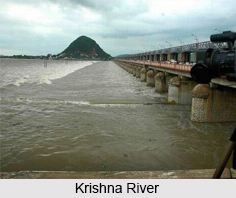
Krishnaveni River
The Krishnaveni River, presently known as the Krishna River, is one of India’s major rivers. Originating in the Western Ghats of Maharashtra, it flows...

Wakal River
The Wakal River is an important tributary of the Sabarmati River, originating in Rajasthan’s Aravalli Range and flowing through Rajasthan and Gujarat....
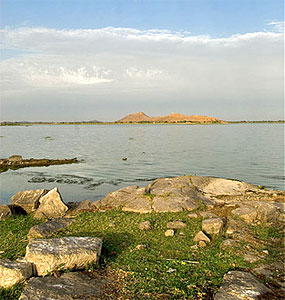
Pahuj River
Pahuj River is an important tributary of the Sindh River that flows through the Indian states of Madhya Pradesh and Uttar Pradesh. Originating in the...
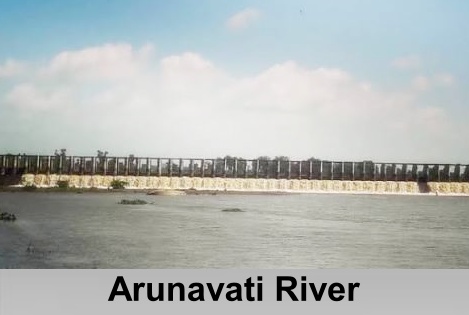
Arunavati River
Arunavati River is a seasonal right-bank tributary of the Tapi River, flowing through parts of Madhya Pradesh and Maharashtra. Originating in the Satp...
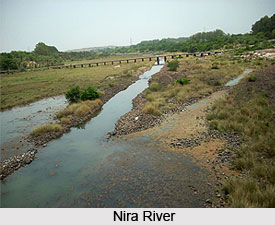
Nira River
Nira River is an important tributary of the Bhima River flowing through Maharashtra. Originating in the Western Ghats, it traverses Pune, Satara, and...
Related articles in Geography of India
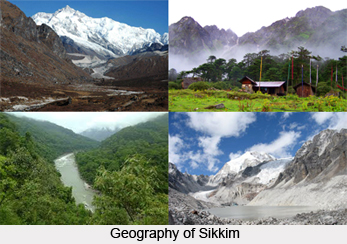
Geography of Sikkim
Geography of Sikkim is characterised by a vast array of magnificent hillock that extends from one corner of the state to the other.
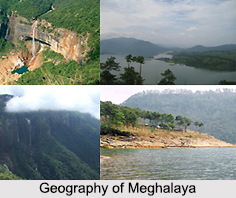
Geography of Meghalaya
The suitable climate, highland plateaus, rivers and the flora and fauna together forms the geography of Meghalaya.
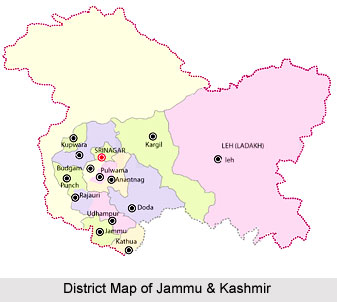
Geography of Jammu & Kashmir
Jammu and Kashmir is encompassed by valleys. Some of the dominant valleys of the state are Kashmir Valley, Tawi Valley, Chenab Valley, Poonch Valley,...
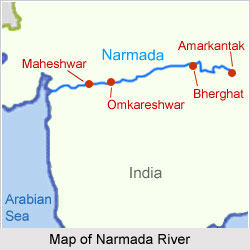
Narmada River
Narmada River is regarded as the 5th longest river of India and the life line of Madhya Pradesh. Narmada River basin spreads over an area of about 98,...
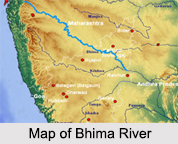
Bhima River
The Bhima River is the largest tributary of the Krishna River and is significant in the western and southern Indian states.