
The administrative system of Aryans was headed by the king who played the pivotal role. The tribal kingdom (rashtra) consisted of tribes (jana), tribal units (vish) and villages (grama). The nucleus was the family known as kula which was governed by the eldest male member as its head or kulapa. The king was assisted by the elder members of the tribe and by the village headmen.
The purohita or chief priest acted as the priest, astrologer, and adviser had an important role to play. Even the senani or military commander was responsible for the administration system. These two people remained much closer to the king. Spies and messengers were also employed by the king who was endowed with the duty to secretly obtain information about its enemies for the king. The administrative system also had other members like the charioteer, the treasurer, the steward, and the superintendent of dicing who acted under the king.
The Aryans were divided into three social classes when they first came to India. The three major divisions were the warriors or aristocracy, the priests, and the common people. There was no consciousness of caste. Professions were not hereditary hence children had their free choice of occupations. There were also no rules that limited marriages within certain classes or taboos with whom one could eat. The three divisions simply facilitated social and economic organization. The first move in the direction of caste discrimination was taken when the Aryans treated the Dasas as beyond the social pale. It was probably done because of the fear of the Dasas and the fear that by assimilating with them would lead to a loss of Aryan identity. Apparently the distinction was largely based on that of colour as the Dasas were darker and of an alien culture. The Sanskrit word for caste is varna which literally means colour. The colour element of caste was stressed upon throughout this period. This system eventually became deep-rooted in north-Indian Aryan culture. Initially the division was between the Aryans and the non-Aryans. The Aryans were the dvija or twice-born castes, the first being physical birth and the second their initiation into caste status. The caste system consisted of the Kshatriya (warriors and aristocracy), the Brahmin (priests), and the Vaishya (cultivators); the fourth caste, the Sudras who were the Dasas and those of mixed Aryan-Dasa origin.
Administrative System of Aryans
Administrative system of Aryans was governed by the king who had other members assisting him in his work.
Recently updated articles in History of India
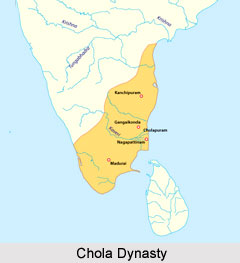
Chola Dynasty
Chola Dynasty is a Tamil dynasty and had longest duration of ruling in parts of South India. Chola dynasty had ruled South India successfully for a ex...
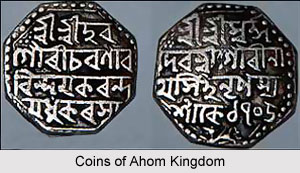
Suhungmung
Suhungmung was the fourteenth ruler of the Ahom dynasty who ruled from the period 1497 to 1539 AD. His reign was significant in terms of expansion of...
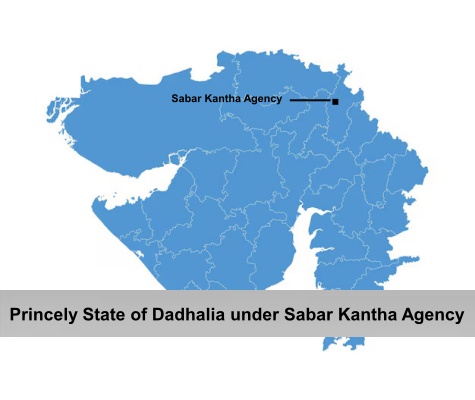
Princely State of Dadhalia
Princely State of Dadhalia was located in the present state of Gujarat. The state covered a total area of 28 sq miles and comprised of 15 villages. Th...
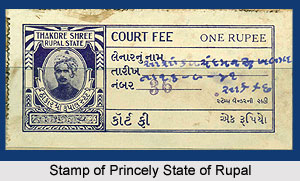
Princely State of Rupal
Princely State of Rupal was a part of the Baroda Agency, a sub division of Western India States Agency. It was under the administrative control of the...
Archaeological Sites of West Bengal
Archaeological sites of West Bengal reveal several aspects of ancient India. Excavations by the Archaeological Survey of India have furnished artefact...
Related articles in History of India

Mughal Architecture during Babur
Mughal architecture during Babur marked the foundation of a new architectural era in India, blending Timurid, Persian, and local influences. His reign...

Architecture during Sayyid and Lodi Dynasty
Architectures during the Sayyid and Lodi dynasty were mainly the tombs and monuments for the dead rulers. It were carefully designed and meticulously...

Brahmanical Sources of Ancient History
Brahmanical Sources of ancient history are contained in the Vedas and they constitute one of the most important literary sources of information about...

Coins of Chola Empire
Coins of Chola Empire were issued in gold, silver and copper and carried the Chola emblem.

Coins of Khilji Dynasty
Coins of Khilji Dynasty had an influential feature that was followed by the other dynasties.