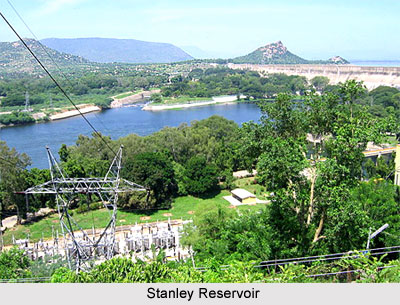
 Stanley Reservoir is one of largest fishing reservoirs in the entire south India. The source of water is the River Kaveri. The water of Stanley Reservoir is hold back by the Mettur Dam. The total capacity of Stanley Reservoir is more than 90,000,000,000 cubic feet.
The Stanley Reservoir is one of the largest of its type in India and was completed in 1934. While, creating this reservoir two villages were submerged. However, all of whose inhabitants were relocated to Mettur. The total length of the dam is approximately 1700 meters. The Mettur Hydro Electrical power project stands adjacent to this reservoir and is also quite massive. The dam, the park, the major hydroelectric power stations and hills on all sides, altogether make Mettur a pictorial attraction.
This article is a stub. You can enrich by adding more information to it. Send your Write Up to content@indianetzone.com