Chola Dynasty

The Chola dynasty was one of the most powerful Tamil dynasties of South India, ruling from the fertile Kaveri River valley. Renowned for its military strength, naval supremacy, administrative efficiency, temple architecture, and flourishing trade, the Cholas established an extensive empire that influenced South Asia and Southeast Asia.

Introduction

Chola DynastyThe Chola dynasty was a prominent Tamil dynasty that originated in Southern India and, at its height, ruled over an extensive maritime empire known as the Chola Empire. Inscriptions of Emperor Ashoka of the Maurya Empire tracing back to the 3rd century BCE has one of the earliest references of the Cholas. The great epic of ancient India- “Mahabharata” has also mentioned Chola Empire. The dynasty reached the peak of its power and imperial expansion under the rule of Medieval Cholas in the mid-9th century CE. As one of the Three Crowned Kings of Tamilakam, alongside the Cheras and Pandyas, the Chola dynasty continued to rule over various territories until the 13th century CE.

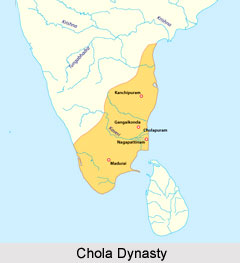
The administrative center of the Chola dynasty was situated in the fertile valley of the Kaveri River. The empire witnessed the height of its power from the latter half of the 9th century to the beginning of the 13th century. Cholas successfully unified peninsular India, south of the Tungabhadra River, and maintained it as a single political entity for approximately three centuries, between 907 and 1215 CE. Under the leadership of Rajaraja I and his successors, including Rajendra I, Rajadhiraja I, Rajendra II, Virarajendra, and Kulothunga Chola I, the Chola Empire emerged as a major military, economic, and cultural powerhouse in South Asia and Southeast Asia.

Origin of Chola Empire

The origin of Chola Dynasty is shrouded in mystery. Historians have had various views regarding its origin. The most accepted theory is that Cholas is the name of a ruling family or clan of ancient times. The origin can be traced through various sources, including ancient Tamil literature of the Sangam period, oral traditions, religious texts, temple inscriptions, and copperplate records. The Cholas are also mentioned in the Edicts of Ashoka, inscribed between 273 BCE and 232 BCE, as one of the neighbouring kingdoms to the south of the Mauryan Empire. Although Cholas were not under Ashoka's political control, they maintained friendly relations with him. Further references to the Chola kingdom, its towns, ports, and commercial activities can be found in the “Periplus of the Erythraean Sea” (Periplus Maris Erythraei). Additionally, the “Mahavamsa,” a Buddhist chronicle written during the 5th century CE, describes several conflicts between the inhabitants of Sri Lanka and the Cholas during the 1st century BCE.

History of Chola Dynasty

There are four periods attributed to the history of the Chola Dynasty. They are the early Cholas of the Sangam period, the period between the decline of Sangam Cholas and rise of medieval Cholas, then the period of medieval Imperial Cholas under Vijayalaya, and finally the later Chola dynasty under the rule of Kulothunga Chola I which continued from the third quarter of the 11th century till the decline of the Chola Empire. 

Early Cholas:
Chola DynastyThe Sangam literature contains several legends concerning mythical Chola kings. According to these accounts, King Kantaman, believed to have been a contemporary of the sage Agastya, was responsible for bringing the Kaveri River into existence through his devotion. Another legendary account attributes the establishment of Kaveripoompattinam, present-day Poompuhar in the Mayiladuthurai district, to King Kanthan. Among the Chola rulers mentioned in Sangam literature, Karikala and Kocengannan are particularly prominent. The Mahavamsa also records that a Chola prince named Ellalan invaded the Rajarata kingdom of Sri Lanka and conquered it in 235 BCE with the assistance of an army from Mysore. Uraiyur, presently known as Tiruchirapalli was one of their oldest capitals. Kaveripattinam also served as an early Chola capital. 

Interregnum Cholas: Not much information is available about the transitional period of approximately three centuries between the end of the Sangam age (c. 300 CE) and the emergence of Pandyan and Pallava dominance. During this period, an obscure dynasty known as the Kalabhras invaded the Tamil country, displacing the existing ruling dynasties, and established its authority. Their rule eventually came to an end in the 6th century CE, when they were overthrown by the Pallava and Pandyan dynasties. 

The fate of the Cholas during the subsequent three centuries remains largely undocumented, as their presence in the Tamil region declined almost entirely. However, a branch of the dynasty, known as the Telugu-Cholas, is believed to have emerged in the Rayalaseema region towards the close of the 5th century CE. Following the Kalabhra invasion and the growing influence of the Pallavas, the Cholas are believed to have migrated from their ancestral capital of Uraiyur to the Telugu-speaking regions, where they served as Pallava feudatories from at least 540 CE. The dynasty remained subordinate for approximately three centuries, until Vijayalaya Chola ascended to power and re-established Chola independence by overthrowing the Pallavas and Pandyas. 

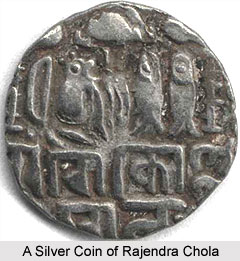
Medieval Imperial Cholas: Imperial Chola Empire was founded by Vijayalaya around 848 CE. He is believed to be a descendent of the early Cholas who apparently started off as a vassal of the Pallava king. With the conflict between Pallavas and Pandyas, Vijayalaya occupied Tanjore and made his capital. Their home land was called Cholamandalam which included modern Tanjore, Trichinopoly and the Pudukottai state. Kaveri River was the heartland of the Chola dynasty. 

During the early 10th century, Aditya I, the second ruler of the Chola dynasty, defeated the Pallava and Pandya dynasties, bringing Tondaimandalam and Kongu Nadu under Chola control. His son, Parantaka I, further expanded the kingdom by defeating the Rashtrakuta dynasty in the Battle of Vallala and securing victories over the Pandyas. 

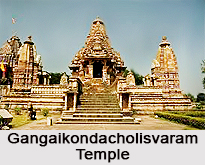
Under the leadership of Rajaraja I and his successor, Rajendra I, the Chola dynasty expanded into a powerful imperial empire during the 11th century. This period also witnessed remarkable architectural achievements, including the construction of the Brihadeeswarar Temple. Rajendra I extended Chola authority into Odisha and defeated the Pala dynasty of Bengal, advancing in northern India. He established a new capital named Gangaikonda Cholapuram. 

Rajendra I also launched a successful military expedition against the Srivijaya kingdom in Southeast Asia, contributing to the decline of its power. Furthermore, he completed the conquest of the Rajarata kingdom in Sri Lanka and strengthened diplomatic relations with China by sending three missions in 1016, 1033, and 1077. During this period, the Western Chalukyas made several unsuccessful attempts to engage the Chola emperors in warfare. 

During the reign of Kulothunga Chola III, the Cholas supported the Hoysalas under Veera Ballala II, who was the son-in-law of the Chola monarch, in their efforts to bring about the decline of the Western Chalukya dynasty. With Hoysala assistance, the Cholas defeated the Western Chalukyas in a series of conflicts against Someshvara IV between 1185 and 1190. Despite these military struggles, the Chola Empire maintained its stability until 1215. 

Throughout this period, the Pandya dynasty emerged as the strongest opponent of the Cholas, repeatedly attempting to regain independence over its traditional territories. Meanwhile, Vengi remained largely autonomous under Chola protection. The Cholas also maintained control over the eastern coast through several feudatory states, including the Telugu Cholas of Velanati and Nellore. These subordinate rulers supported the Cholas in their successful military campaigns against the Chalukyas and collected tribute from the Kannada kingdoms, thereby strengthening Chola political and military influence in the region. 

The Cholas were engaged in continuous conflicts with the Sinhala kings of the Rohana kingdom in Sri Lanka, who repeatedly attempted to overthrow Chola occupation of the Rajarata region and reunify the island under their rule. Despite these efforts, the Cholas maintained firm control over the region until the reign of the later Chola ruler, Kulottunga I. 

Later Cholas:

In 1070 CE, Kulothunga Chola I, the son of Ammanga Devi and Rajaraja Narendra, ascended the Chola throne, marking the beginning of the Later Chola dynasty. The dynasty was governed by several capable rulers, including Kulothunga Chola I, his son Vikrama Chola, and subsequent successors such as Rajaraja Chola II, Rajadhiraja Chola II, and Kulothunga Chola III. During their reigns, the Cholas undertook military campaigns and extended their influence over regions such as Kalinga, Ilam, and Kataha. 

However, the Later Chola rulers, from the reign of Rajaraja Chola II in 1218 CE to the last emperor, Rajendra Chola III, were comparatively less powerful than their predecessors, who had ruled between 850 and 1215 CE. Around 1118 CE, the Cholas lost control of Vengi to the Western Chalukyas and Gangavadi to the Hoysala Empire. The decline of Chola power became more pronounced following their defeat at the hands of Maravarman Sundara Pandya II in 1215–1216 CE. Subsequently, the Cholas also lost control of the island of Lanka as the resurgence of Sinhala power brought an end to their dominance in the region.

Rulers of Chola Dynasty

Chola DynastyKing Vijayalaya is believed to have found the Chola dynasty that the history remembers even today. Vijayalaya captured Thanjavur and established the majestic row of the medieval Cholas. The second Chola King Aditya I, who caused the demise of the Pallavas, defeated the Pandyas of Madurai thereby occupying large parts of the Kannada region. The later Chola dynasty saw rulers like  Parantaka Chola I, Kulothunga Chola I, his son Vikrama Chola, other successors like Rajaraja Chola II, Rajadhiraja Chola II and the great Kulothunga Chola III. 
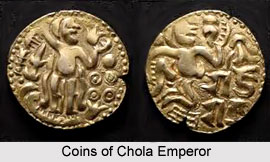
King Parantaka Chola I is believed to have ruled from 907 to 955CE. Parantaka conquered Sri Lanka and once defeated even the powerful Rashtrakutas. His influence includes the whole Tamil country up to Nellore in Andhra Pradesh. Uttama Chola (born Madurantaka) was the Chola Emperor from 973 to 985 CE. Madurantaka Uttama Chola is believed to have reigned after Aditya II. 

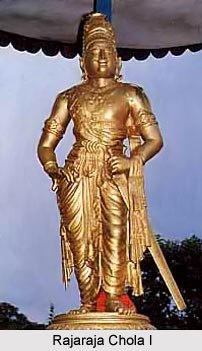
Rajaraja Chola I and Rajendra Chola I extended the Chola kingdom to the island of Sri Lanka in the south to the Godavari-Krishna basin in the north, up to the Konkan coast in Bhatkal, the entire Malabar Coast in addition to Lakshadweep, Maldives and vast areas of Chera territory. The kingdoms of Deccan and the eastern coast were subordinates of the Cholas. Rajaraja Chola I was called the greatest of all Chola Rulers because the empire expanded to its largest under his rule. 

The Western Chalukyas were one of the main enemies of the Cholas. Cholas always controlled the Chalukyas successfully in the western Deccan. Chola rulers like Kulothunga I and Vikrama Chola were also capable of keeping the Chola empire intact. The wars against the Chalukyas were mainly fought in Karnataka, Vengi, Kakinada and Anantapur. Cholas had to deal with Kadambas, Hoysalas, Kalachuris, and the Chalukyas. 

The Cholas under Kulothunga Chola III even had alliance with Hoysalas. Marital and political alliances with the Eastern Chalukyas began during Rajaraja’s rule following his invasion of Vengi. The Cholas lost Srilanka to the Sinhalas.

Overseas Invasions Under Chola Empire

During the reigns of Rajaraja Chola I and his successors, Rajendra Chola I, Virarajendra Chola, and Kulothunga Chola I, the Chola Empire undertook extensive military and naval expeditions across the Indian Ocean. In the 11th century, Chola forces invaded Sri Lanka, the Maldives, and several territories in Southeast Asia, including parts of present-day Malaysia, Indonesia, and southern Thailand, which were under the influence of the Srivijaya Empire. Rajaraja Chola I initiated several naval campaigns that resulted in the conquest of Sri Lanka, the Maldives, and the Malabar Coast. 

In 1025 CE, Rajendra Chola I launched a major naval expedition against the ports of the Srivijaya Empire and the Burmese kingdom of Pegu. According to Chola inscriptions, his forces captured or plundered 14 locations, which have been identified as including Palembang, Tambralinga, and Kedah. A second major invasion was undertaken by Virarajendra Chola, who conquered Kedah, in present-day Malaysia, from the Srivijaya Empire during the latter part of the 11th century. 

However, the Chola invasions did not result in the establishment of direct political administration over Srivijaya, as these expeditions were relatively brief and primarily aimed at acquiring its wealth and resources. Nevertheless, the attacks significantly weakened Srivijaya's regional dominance and facilitated the emergence of several independent kingdoms. Although the invasions did not lead to permanent Chola occupation or major geographical changes in the region, they had far-reaching consequences for maritime trade. Tamil merchants gradually expanded their commercial activities into territories traditionally dominated by Malay traders, while Tamil merchant guilds increased their influence across the Malay Peninsula and the northern coast of Sumatra.

Administration of Chola Dynasty

The entire kingdom of Cholas was administered under one government. The highest commander of the kingdom was the king. He was a kind dictator. He issued oral commands to responsible officials. The king was assisted by a strong officialdom in implementation of orders. There was no legislative system as such. Local self-government played an important role in the administration set up of the Chola kingdom. Certain amount of autonomy was enjoyed by the villages. Every village was an entity governed by itself. Minor disputes were settled by the village heads. Crimes were punished by fining the offenders or property confiscation. Through royal courts, justice was meted out at village Panchayats. The feudal chiefs were kept away from governmental activities. The Cholas possessed a competent navy and army. The coasts were controlled by its navy. The army had many trained soldiers to protect its borders. 

Chola Dynasty

Military Under Chola Dynasty

The Chola military was highly organized and well-structured, comprising both land forces and naval units that played a significant role in protecting and expanding the empire across South India and Southeast Asia. 

Royal Army: The royal army, known as the Kaikkolaperumpadai, consisted of infantry, cavalry, and war elephants. The king was protected by an elite corps of highly trained and loyal personal guards called the Velaikkarar. In addition, the Padimagalir, a group of women bodyguards, were responsible for protecting and attending to the king. The Cholas also maintained military cantonments known as Kadagams, which served as centres for soldier training and the organization of military regiments. Inscriptions from the period mention approximately seventy military regiments, reflecting the strength, discipline, and extensive organization of the Chola standing army. 

Royal Navy: The Chola navy played a crucial role in establishing and maintaining the empire's maritime dominance along the Malabar and Coromandel coasts, enabling the Cholas to control important sea routes and commercial networks. Owing to its naval supremacy, the Bay of Bengal was often referred to as the "Chola Lake". The powerful naval forces facilitated overseas military expeditions, strengthened the empire's influence across Southeast Asia, and safeguarded maritime trade.

Economy of Chola Dynasty

As the villages were self-governing, the economy was also prosperous. The villagers made their own clothes and produced their own food. There were other professionals to cater to extra requirements of the village. Lands were based on ownership and its tax was paid by the entire village. The manufacturers under the Chola kingdom produced high quality textiles, metals, pottery, spices, precious stones, pearls and ivory, that were exported to foreign countries. Chola kingdom had greater access to the sea and was the centre for sea trade as they were located in South India. The merchant guilds were an important part of the economy and operated from major towns. They specialized in procurement of goods and its distribution. They formed a vital part of the economy as there was an increase in internal and external demand for goods.

Society Under Cholas

Stability characterized the kingdom of the Chola dynasty. The people, thus, led a contented life. However, famines were common accompanied with other natural disasters during the rule. According to the inscriptions, it is indicated that the people were educated and literacy was a part of the society. Father figure or elderly in the family passed on their skills to their sons and this was usually a vocational form of education. The masses conversed in Tamil language.

Chola Dynasty

Art and Culture Under Cholas

South India reached new heights under the rule of the Cholas. Majestic temples and stone sculptures were made. Cholas also contributed to Dravidian style of building temples. Airavateswara temple at Darasuram was built during the rule of the Cholas. Even the temples of Thanjavur and Gangaikondacholapuram are examples of architecture of the Cholas. The temple at Gangaikonda Cholapuram was the creation of Rajendra Chola. Many temples of Lord Shiva and Lord Vishnu were built during this time.

Literature of Chola Period

The age of the Cholas was the golden age of Tamil literature. Devotional literature was widespread especially pertaining to Lord Shiva and Lord Vishnu. Jain and Buddhist authors also thrived during this rule. Jivaka Chintamani by Tirutakkatevar and Sulamani by Tolamoli are among famous authors. Kamban’s Ramavatharam is a great epic in Tamil literature. Devotional religious literature was a major characteristic of the Chola period.

Religion of Chola Period

Cholas were mainly followers of Hinduism. They were not influenced by the augment of Hinduism and Jainism. Cholas did build many temples of Lord Shiva which does make everyone believe that they were followers of Shaivism. However, many temples of Lord Vishnu had also been constructed under the Cholas. In fact, Chola king Sundara was a devotee of Lord Vishnu. Parantaka I and Sundara Chola built temples for both Shiva and Vishnu and also gave many endowments. However, Rajaraja Chola I patronised Buddhists, and did provide the requirements for the construction of Buddhist monastery in Nagapattinam.

Decline of the Chola Empire

The decline of the Chola power began with the rise of Pandyan Empire in 1215 AD -1216 AD. The Pandyas routed out the Cholas completely. Thus, the Chola empire was completely surpassed by the Pandyan empire and they declined by the end of the 13th century.

Overall it can be ascertained that the rule of the Cholas had brought about a major change in all spheres of life. It had introduced new rules in administration and economy. Architecture was given a new shape in this age with many majestic temples being built of Lord Shiva and Lord Vishnu. Tamil literature gained a major importance during the reign of the Chola rulers.

Recently updated articles in History of India

Chola Dynasty
Chola Dynasty Thumbnail

Chola Dynasty

The Chola dynasty was one of the most powerful Tamil dynasties of South India, ruling from the fertile Kaveri River valley. Renowned for its military...

Suhungmung
Suhungmung Thumbnail

Suhungmung

Suhungmung was the fourteenth ruler of the Ahom dynasty who ruled from the period 1497 to 1539 AD. His reign was significant in terms of expansion of...

Princely State of Dadhalia
Princely State of Dadhalia Thumbnail

Princely State of Dadhalia

Princely State of Dadhalia was located in the present state of Gujarat. The state covered a total area of 28 sq miles and comprised of 15 villages. Th...

Princely State of Rupal
Princely State of Rupal Thumbnail

Princely State of Rupal

Princely State of Rupal was a part of the Baroda Agency, a sub division of Western India States Agency. It was under the administrative control of the...

Archaeological Sites of West Bengal
Archaeological Sites of West Bengal Thumbnail

Archaeological Sites of West Bengal

Archaeological sites of West Bengal reveal several aspects of ancient India. Excavations by the Archaeological Survey of India have furnished artefact...