 India, the land of color, joy, beauty and dream can be best silhouetted through Indian paintings. If one wants to appreciate India, then Indian paintings must be observed if one wants to appreciate Indian paintings it is the whole India which needs to be observed. Like India, Indian paintings are also vast, diverse, historic and unique. Indian painting with its sheer dynamism showcases the artistic elegance of the country. Be it the murals of Ajanta, Ellora, the Buddhist palm leaf manuscripts, the Jain texts or the Mughal, Deccan and Kangra discipline of miniature painting, there is one common theme between all of them; a classical demonstration of the innocence of art, beauty and truth.
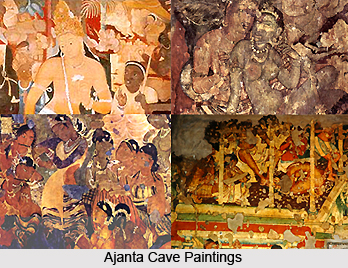
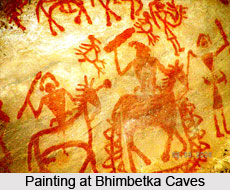
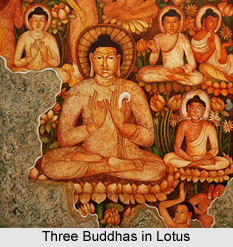
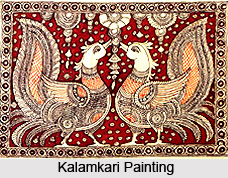
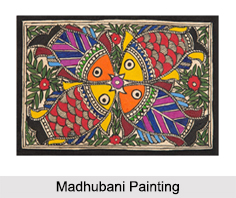
Indian painting has evolved from the hinterlands and has remained immortal in the annals of history. The rock painting that was discovered in Bhimbhetka and other places are known to exist from pre-historic times. Some of them even go back to the late 5500 BC, while some are even older. The Indian paintings are the great sinews of beauty, art and culture. They further emerged through the pages of history and after more than a few millennia, around in 7th century; India witnessed the magnificent engraved pillars and the fine painting of Ellora in Maharashtra state. The Indian paintings portray the plethora of events from the Buddhist literatures including the palaces of kings and the noble class. But these paintings have not survived through the ages. The colours used for these paintings are prepared from minerals. The tradition of painting in India is therefore as old and varied as the land itself. Started since the prehistoric times, traditional painting in India gained dimension with time. The different forms of traditional painting in India are therefore vivid and lively, bold and vigorous whilst reflecting the refined and sophisticated artistry of Indian painting. Some traditional paintings like Warli, Madhubani and Patachitra are globally commended.
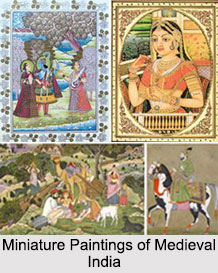
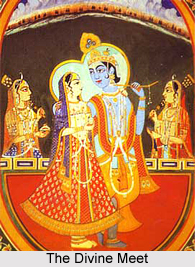 The Indian painting can be broadly classified as wall paintings and miniature. The different types of paintings fall under this two broad category but again they can be classified depending on their evolution, emergence and style. Almost all of the ancient paintings are engraved on the wall of caves and temples. Miniature paintings are paintings made on small canvasses of clothes and papers. Dash of color, intricate design and delicate brushwork marks the miniature painting, an illustrative of the Indian painting.. With a rich history dating back to the 6-7th century Miniature Painting in India conveyed reality with its sheer subtleties. The different schools of Indian miniatures like the Pala, Orissa, Jain, Mughal, Rajasthani and Nepali did not grow after isolation. The 11th century Pala miniatures were the earliest to arrive. Their most important contributing factor was the symbolic use of colour. This type of art mainly evolved in the medieval age especially narrating the royal life and this form of art is popular until now.
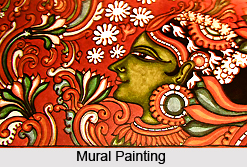
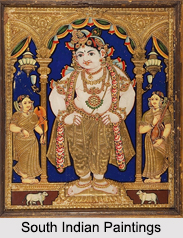
Apart from the miniature paintings Dravidian mural paintings are also matchless examples of Indian painting. These are the unique frescos drawn on the walls of temples and churches in South India, predominant in Kerala. The themes of the paintings are largely drawn from mythology and legends. These paintings are largely found in the churches, palaces, and temples constructed between the 9th to 12th centuries AD when this art form enjoyed majestic support.
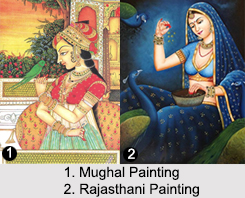
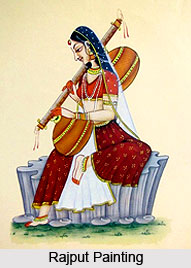
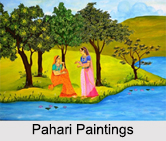
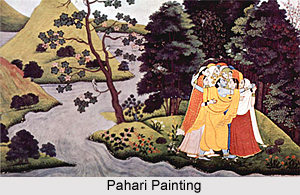 The history of Indian painting is thus vivid and unfurls the tale of invasions, love, Court life and that of the perfumed palaces. The creative surge of the Rajput school for the very first time offered that evolutionary energy for the rich speciation which yielded amidst the Basholi style of painting, in the then India. Styles then became homogeneous. In the 12th century AD, the Sarigeeta Ratnakara, an important treatise first mentioned the presiding deity of each raga. This distinctly gave rise to a whole new concept in Indian painting and later named as Ragamala painting. The Ragamala paintings were thus created by all the major schools of painting of the medieval age such as the Mughal, Pahari, Deccani and Rajasthani. It was after a brief period Mughal paintings developed in the 16th to 18th centuries during the reign of the Mughal emperors. A distinct blend of Indian, Islamic and Persian styles hallmarked the Mughal paintings with its entire originality.
Right after the Mughal painting the Deccani school of Painting made Indian painting rich, vivid and illustrative. The Deccani School of painting got inspiration from the Mughal School and evolved its own unique and very characteristic style. Pale green, mineral-coloured backgrounds with figures placed squarely in the foreground marks the Deccani school of painting as an expression of subtleties through brushwork.
The colonial period further offered that contemporaneity to Indian painting whilst making the aspects which were larger than life, rather realistic. Indian paintings then brought out the verve of India amidst those bold brushworks. The unspoken truths, the never mouthed verities and above all the unedited realities of life all found a distinct dimension in those famous Indian paintings.
Cornificius rightly says that `picture is a poem without words` and the Indian artists are true poets. They have propelled Indian painting into the world of art and culture. Some of the famous Indian painters who not only gained accolades in India but also known internationally, are Amrita Shergill, Jamini Roy, Raja Ravi Varma, MF Hussain and Tyeb Mehta. Raja Ravi Varma is one of the greatest Indian painters and his place in Indian painting is etched in gold.
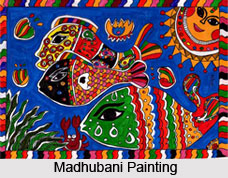 Indian paintings in ancient age involve the multiple forms of classical paintings, which developed in various parts of the country. The cave paintings of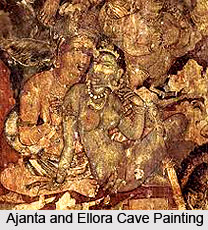
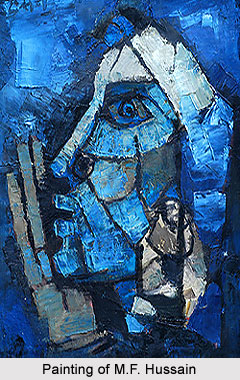 Modern Indian Painting constitutes various types of painters. In the recent times however, there have been a lot of women painters who have come along and have established themselves in the field of art and paintings. One of the famous names among the Indian women painter is Amrita Shergil. She is also called India`s Frida Kahlo and today is also considered an important personality of 20th century India. The legacy of
 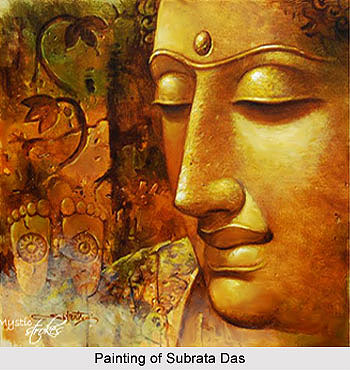 Paintings in India got a huge boost during the liberalization periods in the early 1990s.
Artists from various fields started to bring different types and styles of work. Art work started to spread and was not only confined to academic traditions but also went well beyond that. Artists introduced new concepts which have hitherto not been seen in Indian art.
Paintings in India got a huge boost during the liberalization periods in the early 1990s.
Artists from various fields started to bring different types and styles of work. Art work started to spread and was not only confined to academic traditions but also went well beyond that. Artists introduced new concepts which have hitherto not been seen in Indian art. 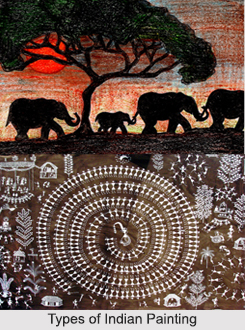 •
•  •
•