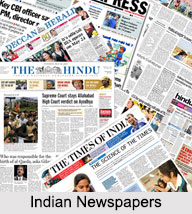
 Indian media started with the development of press, with prime focus on propagating news and on the views about contemporary events. Indian media is an epitome of diversity and variety in Indian tradition and cultural scenario. During the British period, James Augustan Hicky started the first newspaper in India namely, Bengal Gazette. The year was 1780 and in the era of freedom struggle and Indian Independence, Indian Press was used as a vehicle for propagating nationalist ideologies. Eminent leaders like Mahatma Gandhi and Bal Gangadhar Tilak founded newspapers and thus ennobled the history of Indian media. At the time, the focus was primarily on bringing out political issues to light.
Evolution of Indian Media
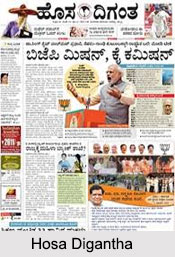
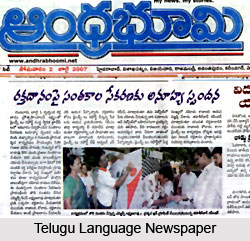
The post independence period marked the evolution of Indian media. Indian Press, also known as Print Media was becoming more and more commercial and competitive in approach, sharply deviating from its idealistic approach of the pre- independence era.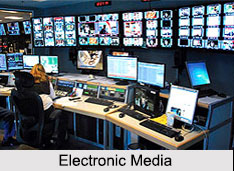 Especially the early 1990s was remarkable in the field of Indian Media. It has been observed that in those years economic and financial policy issues were getting due importance, primarily because of the economic liberalization that took place. A broad spectrum of subjects related to the fields of entertainment, culture and sports was being focused upon. Largely depending on revenues from advertisements, the press was captured by huge business motives. Another remarkable development was the growth of leading Hindi and regional language newspapers, sufficing the demands of all sections of people in various regions like Andhra Pradesh, Gujarat, Punjab and West Bengal. Ultimately, the circulation of newspapers increased to a great extent, giving a boast to Indian Media.
Advent of Electronic Media
Indian media further evolved with the introduction of electronic media namely, radio and television. At the time, films also stepped forward in entertaining the audiences to their hearts content. Radio broadcasting commenced in 1927, and was labeled as a suitable and cheaper medium to reach a large number of people, especially those residing in the remote regions. Some of the important programs were focused upon distance education, social services and health and hygiene. There were special programs for military personnel, farmers etc. With the introduction of FM channels, new programs started entertaining people, thus, increasing the popularity of radio in leaps and bounds.
Television made its beginning in the country as a modest pilot project in September, 1959. Thus, began the audio-visual era in Indian media. Doordarshan, the National Television Service in India, started operating through transmitters of varying powers in order to make television signals available to over 87 percent of India`s population. Initially, television started for the purpose of developing communication as a vehicle of social change and national cohesion, by upholding progressive values and also involving Indian communities in free dialogue. The Satellite Instructional Television Experiment (SITE) was introduced in 1975, with the noble aim of promoting special education programs in 2400 villages in 6 Indian states. Television gradually steered away from its initial goal and broadcasted programs mainly to entertain audiences. Indian media reached its zenith with the advent of cable television. The Gulf War coverage by CNN in the year 1991 was a defining moment in the beginning of a new era in television broadcasting in India. 5 new television channels belonging to the Hong Kong based STAR TV gave Indians a fresh breath of life. These were MTV, STAR Plus, BBC, Prime Sports and STAR Chinese Channel. Zee TV was the first privately owned Indian channel to broadcast over cable. By 2001-2003, other international channels such as Nickelodeon, Cartoon Network, VH1, Disney and Toon Disney were introduced in India. In 2003, news channels flourished in Indian subcontinent.
With the advent of computer and internet technology, emerged the aspects of digital journalism. Digital journalism stands for online journalism. Here, internet is used to distribute editorial content, instead of publishing the content through print or broadcast.