
 Ashoka was the 3rd ruler of the notable Maurya Dynasty and was one of the most powerful kings of the Indian subcontinent in primordial times. He lived from 304 to 232 BCE. Ashoka ruled form 268 BCE to 232 BCE and became a model of kingship in the Buddhist tradition. He was the last major emperor of the Mauryan Dynasty of India. Ashoka is remembered as one of early history`s most cruelly aggressive rulers of the province. Though, later he turned to be a follower of Buddhist non-violence concept after witnessing the destruction of his attack against the Kalinga area.
Ashoka - Mauryan Emperor
Ashoka was the 3rd king of the Maurya Dynasty. He was the grandson of the initiator of the Maurya Dynasty, Chandragupta Maurya.
Introduction
Ashoka was the 3rd ruler of the notable Maurya Dynasty and was one of the most powerful kings of the Indian subcontinent in primordial times. He lived from 304 to 232 BCE. Ashoka ruled form 268 BCE to 232 BCE and became a model of kingship in the Buddhist tradition. He was the last major emperor of the Mauryan Dynasty of India. Ashoka is remembered as one of early history`s most cruelly aggressive rulers of the province. Though, later he turned to be a follower of Buddhist non-violence concept after witnessing the destruction of his attack against the Kalinga area.Early life and Career of Ashoka
 Ashoka Priyadarshi, ascended the Magadhan throne in the 273 B.C. Ashoka was one of the greatest monarchs in the Indian history and his consecration initiated a new epoch in the history of ancient India. Ashoka reigned over most of present-day India after a series of millitary conqest. Stabilizing his empire in Magadha Ashoka expanded his Empire from Afganistan to the parts of Persia in the west and to the present boundaries of West Bengal and Assam in the east and also to the distant south upto Mysore. Ashoka with his sheer sophistication introduced the measures for the spiritual and the material welfare of his subjects and left an imperishable mark in the ancient history of India. However the information regarding Ashoka`s early life and achievement is limited to the literary and the epigraphic records of the contemporary era.
The inscriptions of the rock edicts and the epigraphic records of the contemporary era do not throw much light on the early life and career of Ashoka. Hence the scholars and the historians depend on the records of the Buddhist texts to etch out the details about the early life and career of Ashoka Priyadarshi. The principal source about the childhood and gradual development of Ashoka are the Buddhist text of Divyavadana and Mahavamsa. These Buddhist texts narrates that after the death of Bindusara disorder and anarchy crept up the society and there was a severe fratricidal struggle among the sons of Bindusara for the throne. Ashoka, in his early youth was involved in this struggle and is said to have killed ninety-nine of his brothers who are the possible successor of the throne of Bindusara. He appeared only the life of Tishya, who was his younger brother. Ashoka walked through the blood of his brother to the throne of Magadha. In the early years of his career, Ashoka had a violent and tyrannical disposition and hence he was popular among his subjects with he title of Chandasoka.
However the story regarding the early life and the beginning of his career as a king have been refuted by the scholars. They have put forward several statements in support of their views. According to the scholars, apart from the Buddhist texts, there was no such independent evidence, supporting the fact of the fratricidal struggle for the throne. Secondly in the Rock Edict V, Ashoka had expressed his deep love and anxious care for the family establishments of his brothers existing in the capitals and in the countries. The scholars at the same time pointed out that the Rock Edict V dated back to the thirteenth year of Ashoka`s reign. This indicates that some of Ashoka`s brother was still living and responsibly holding the charge of the provinces under Ashoka. Unless Ashoka was anxious about his family he would not have mentioned about his brother in the rock edicts. Dr. Bhandarkar has aptly pointed out that the Buddhist text emphasized the greatness of Buddhism and tried to point out that how Chandasoka converted into Dharmasoka. It was however concluded that there was probably a contest between the sons of Bindusara over the claim of the Magadhan throne and Ashoka succeeded at least against the claim of his stepbrother Susima.
 The career of Ashoka as the king of Magadha was however initiated before the four years after his consecration. The Ceylonese chronicles provide several information regarding Ashoka`s career as the king of Magadha. The historians opine that if the Ceylonese sources are true then Ashoka`s coronation was delayed probably due to the struggle for the throne of Magadha. But the scholars at the same time pointed out that there is no existing evidence in support of this "gratuitous assumption" of struggle for the throne. From the rock edicts of Ashoka it is revealed that he dated the chronology of his reign from the time of his coronation. Depending on this fact, Dr Bhandarkar has rejected the theory of "four years gap" approached by the Ceylonese texts. Eggermott however made a critical analysis of the Ceylonese texts and holds that since the Ceylonese texts maintained different chronological patterns and contained several versions, it could not provide any authentic verification about the reign of Ashoka as a king. Henceforth the Ceylonese texts are less reliable to the historians in the modern days.
The historians after a prolonged controversy regarding the early life of Ashoka have unanimously opined that when Ashoka was a prince, he was appointed as the Governor of Taxila and he performed his responsibility competently. At that time he subdued successfully the rebellion of the Taxilian people. He conquered the khasa country situated between the Jhelum and Kashmir. When Bindusara fell ill Ashoka came to Pataliputra and being the most competent son ascended the throne of Magadha with the title Devanampiya Piyadasi Ashoka. Neither the contemporary manuscripts nor his own inscriptions throw much light to the ancestral parentage of Ashoka. However a group of historians have opined that Ashoka was the son of the Brahmi wife of Bindusara. Dharma or Subhadrangi, the Brahmin wife of Bindusara had two sons- Ashoka and Vigatasoka. Yet the modern scholars do not support the view and they hold a different view that Ashoka was the son of a Greek Queen of Bindusara. Later the interpreters of ancient history has opined that if the source of the modern scholars are to be believed then it may be inferred that Ashoka must be of mixed descendants and contested for the throne. The modern interpreters have also said that Ashoka`s close relation with the Greeks and his leanings towards Buddhism may be due to his mixed ancestry.
The Buddhist traditions depict that in his early life, before being a king Ashoka was appointed as the viceroy of Ujjaini. In this course of time he fell in love with Devi, the daughter of the merchant of Vidisha. Ashoka married her and had two children Mahendra and Sanghamitra by her. Later becoming a king he married again and as the Allahabad Pillar inscription depicts, Ashoka had many wives. Furthermore the Allahabad Pillar inscription narrated the story of Ashoka`s second wife Karuvaki and son Tivra. According to Dr Bhandarkar, Ashoka in his early life enjoyed the closeness with different women and had a number of concubines in different provinces under him. However there is no authentic historical document supporting the fact that Ashoka had many sons by his different wives. About the sons of Ashoka, his own inscriptions are the principal yet authentic sources. Ashoka`s inscription refers to four of kumaras (princes) who are appointed as the viceroy of three provinces namely Ujjaini, Toshila, Taxila and one Aryaputra (the crowned prince) as the viceroy of Suvarnagiri.

Ashoka`s own rock edicts are the principal surviving documents of his reign. In the Rock edict VI he depicted his own private life. According to Ashoka himself, when he was freed from the royal duties he used to sit in the dining table and enjoyed the company of the inmates of the royal palace or harem. Sometimes he used to visit the stud and enjoyed the horse ride. Rock edict VII narrated that Ashoka enjoyed the Vihara Yatra and hunting excursion, which was abolished in the subsequent years when he turned out to be a Buddhist. It is again known from the Rock Edicts I that Ashoka was very fond of meat and pea-owls. This is later corroborated by the statement of Buddhaghosa that in the 4th Century B.C, people of Maddhyadesa was very much fond of meat and peafowl.
Before embracing Buddhism as his religion, Ashoka`s career was marked with mighty conquest and the valiant warfare. Moreover he was a benevolent king and worked for the welfare of his subjects. Before being a Buddhist, he maintains the principles of tolerance and benevolence and he was popular among his subjects. Ashoka arranged festivals and or Samajas and sought to enlist the attachment of the people in order to provide them entertainment. During the festivals the people were provided with sumptuous dishes and were entertained with music, dancing, wrestling etc. In the subsequent years, Ashoka became the advocate of non-violence and abolished the sumptuous dish of the Samajas where meat was the principal food. Moreover he introduced several administrative reforms including the release of the prisoners in every year of his coronation, in order
Ashoka, the great is often ranked among the greatest monarch of ancient India. As the historical records depicting his early life and career suggest, Ashoka, before embracing Buddhism was a mighty conqueror and a sophisticated solicitor of the welfare of the people.
Ashoka"s Introduction to Buddhism
Emperor Bindusara called back Ashoka from the exile and sent him to Ujjain as the place started witnessing a brutal disturbance. At the age 18, Ashoka was sent to Ujjain as a viceroy. Ashoka was injured in the following battle at Ujjain and was treated by Buddhist monks and nuns. It was in Ujjain that Asoka first came to know about the life and teachings of Buddha.
Following Bindusara"s death in 272 B.C., Ashoka defeated and killed his brothers, including Sushima. Ashoka left his first wife Devi in Ujjain itself, when he was called back in Pataliputra again. Among all his brothers, he only saved his younger brother Vithashoka.
Following Bindusara"s death in 272 B.C., Ashoka defeated and killed his brothers, including Sushima. Ashoka left his first wife Devi in Ujjain itself, when he was called back in Pataliputra again. Among all his brothers, he only saved his younger brother Vithashoka.
Legacy of Emperor Ashoka
When Ashoka ascended the throne in 272 BC, he had to wait for many years for his coronation in 269 BC to become the 3rd ruler of the Mauryan Empire. He was supported by his father"s ministers, particularly by Radhagupta. Ashoka was continually at war in the first 8 years of his supremacy, growing his empire across the Indian subcontinent. The blood-spattered war at Kalinga left over around 100,000 soldiers and civilians dead and more than around 150,000 were exiled. This major killing of humans shocked Ashoka so much that he promised never to fight again and started practicing non-violence.
Personal Life of Ashoka
According to the legends, Ashoka is believed to have had five wives namely; Devi, Kaurwaki, Asandhimitra, Padmavati and Tishyarakshita. He is believed to have had four sons and two daughters.
Edicts of Ashoka
 The Rock Edicts of Ashoka are the inscriptions containing King Ashoka`s ideals and philosophy written over rocks, which are present all over North India. The Ashokan Rock Edicts are basically a collection of 33 inscriptions that are carved on the pillars of Ashoka or on the big boulders or on caves. The ancient rock edicts are not modified in anyway and are preserved in the way they were carved originally.
The rock edicts of India are found in many places of northern India as well as Pakistan. Ashoka was a great follower of Budhhism and these edicts support his effort to spread Budhha`s word in different places of his sovereign. According to the information provided by the rock edicts of Ashoka Buddhism spreaded as far as Mediterranean as well as Srilanka outside his monarch. Many Buddhist monuments and temples were constructed during this period in order to promote this peaceful religion and make the world aware of Lord Buddha`s teaching and philosophy.

The rock edicts declare emperor Ashoka`s faith in the concept of Dharma or Righteousness. The inscriptions not only focus on religious aspects but also on social and moral concepts. However rock edicts do not mention the Four Noble Truths or the Eight Fold Path to Nirvana. The probable cause behind this Ashoka wanted to remain simple in his approach to Budhhism and wanted to connect with the common men.
Ashoka describes himself in the rock edicts as `Beloved of Gods` and `King Priya-darshi`. An inscription discovered in the year 1915 on a rock edict confirmed the identification of king Priya-Darshi with Ashoka. The language used in these edicts is mainly Pali. But they are also written in different other languages as they were spread through a vast region. As for example the inscriptions found on the eastern part of India were written in Magadhi Language, using the `Brahmi` script. In the western part of India the language used is closer to Sanskrit, which used the `Kharoshthi` script. The edict 13 was written in Greek language and the other bilingual edict written in Greek and Aramaic.

The Major Rock Edict of Ashoka is found out of the town of Junagadh on the Saurashtra peninsula in the state of Gujrat in India. The edict is high up on a large, domed mass of black Granite stone on Girnar hills. The difficulty in climbing the hills allows only few Jain monks or pilgrims to visit the edict. This neatly etched rock edict is inscribed with `Brahmi` script.
The different places where Ashoka`s Rock Edicts were found are-Allahabad-Kosam, Bairat, Barabar hill caves, Broach, Brhmagiri,Delhi-Meerut, Dhauli, Gavimath. Girnar,Gujjara, Jatinga-Rameshwar, Jaugada, Kalsi, Kandanar, Lampaya, Lauriya-Araraj, Lauriya-Nandangarh, Mahasthan, Mansehra, Maski, Nigali-Sagar, Palkigundu, Pataliputra, Rajula-Mandagiri, Rampurya, Rummindei, Rupanath, Sahasram, Sanchi, Sarnath, Shahbazgarhi, Siddapur, Sohgaura, Sopara, Suvarnagiri, Tamralipti, Taxila,Ujjain, Yerragudi.
Contribution of Ashoka in Indian Sculpture
Ashoka is said to have built 84,000 stupas to store the remnants of Lord Buddha and also as places of meditation, across South Asia and Central Asia for Buddhist monks. He directed the construction of a sculpture of 4 lions standing back to back which is known as the Lion Capital of Ashoka. It is situated as the Ashoka pillar at Sarnath, Uttar Pradesh. It is the national emblem of India. Ashoka is also said to have overseen the structure of "viharas"- Nalanda University and Taxila University, stupas - Dhamek stupa, Bharhut stupa, Sanchi, Sannati stupa, Butkara stupa, Barabar Caves and Mahabodhi Temple. The Ashoka Chakra (the wheel of Ashoka) is a representation of the Dharmachakra which was created by Ashoka in his reign.
After ruling over the Indian subcontinent for a period of approximately 40 years, Ashoka died on 232 BC, at the age of 72. After his death, his empire lasted just 50 more years.
After ruling over the Indian subcontinent for a period of approximately 40 years, Ashoka died on 232 BC, at the age of 72. After his death, his empire lasted just 50 more years.
Successors of Ashoka
 Successors of Ashoka could not maintain the integrity of the previous rulers of the Mauryan Empire. An obscurity settles on the Mauryan Empire post reign of Ashoka. Tivara, the only son of Ashoka according to inscriptions, is not heard of again. The Puranas, the Avadanas, and the Jain accounts give different accounts. Similarly later writers like Kalhana of Kashmir and Taranath of Tibet give different stories of what happened post reign of Ashoka.
It is assumed that the empire was divided among the surviving sons of Ashoka. According to the Puranas altogether nine Mauryas ruled for a period of 137 years. Dasaratha is a name that has been confirmed who is ignored in the Buddhist and Jain accounts. Sampadi is well known both in Buddhist and jaina literature. He was the son of Kunala according to Divyadana and was established on the throne of Magadha by the ministers of state under strange circumstances. It is believed that Ashoka had promised hundred crores to the Sangha of which he had paid only ninety-six crores by the end of his reign. Therefore he handed the kingdom over to them instead of the balance of four crores. The ministers managed to raise the money and redeemed the kingdom over which they set Samprati. According to Jain accounts make Samprati the immediate successor of Asoka. It also says that after his conversion to Jainism by Suhastin he did everything for Jainism that Ashoka did for Buddhism like building temples and endowing liberally and spreading the faith in non-Aryan lands.
Kalhana, historian of Kashmir narrates the story of Jalauka, a son of Ashoka and his successor in Kashmir. IT is believed that he freed his country from Greek invasion. Salisuka is a name attested by the Vayu and Vishnu Puranas as well as by the `Yugapurana` section.
There is little definite knowledge of what actually happened after the close of Ashoka`s rule. Descendants of Mauryan family are heard of centuries after the fall of the Mauryan Empire. Hiuen Tsang has mentioned in his book Purnavarman as a descendant of Ashoka. The Mauryas of Konkan had their capital at Puri, situated on the Elephanta Island near Bombay. They were subjected to the Chalukyas of Badami in the sixth century A. D. The reminiscence of Mauryan rule persisted in Kuntala for quite time. It is alluded to in Kannada inscriptions of the eleventh century from Karnataka.
Sources of history of Ashoka
 Ashoka ranks among the greatest kings of the history. As remarked by H. G. Wells, "Amidst the tens and thousands of the names of monarchs that covered the columns of history, the name of Ashoka shines above like a star". Ashoka proved fully worthy of his heritage; he was a man of unbounded energy and gave himself without stint to the tasks of perfecting the administration of his empire and ensuring happiness of his subjects. The range of his sympathies was wide and he was by no means unwilling to adopt foreign models of administration and art of the growing needs and tastes of his country.
For the knowledge of the history of the reign of Ashoka the sources can be divided into two classes. As for example the two can be named as literary sources, and archaeological sources.
Literary sources : Sinhali texts, `Dipavamsa` and `Mahavamsa`, `Dtvyavandan` by Buddha Ghosh, `Ashokavadanmala`,`Arya-manju-sri-mula-kalpa`, `puran`, `Rajtaringini` are the main literary works which give us valuable detailed information about the reign of Ashoka. Moreover, the writings of Chinese travellers Fabian, Huen tsang and Itsing add some more knowledge about Ashoka as well.
Archeological sources: : Ashoka`s own inscriptions are the most important archeological source to know the history of his period. Ashoka issued these inscriptions for the propagation of `Dtiamma.` Girinar inscription of Rudradharama Nagajuni Guha inscription etc. throw a great light on the history of Ashoka.
Recently updated articles in History of India
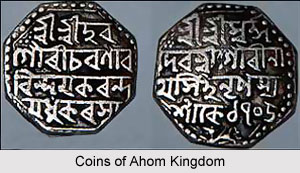
Suhungmung
Suhungmung was the fourteenth ruler of the Ahom dynasty who ruled from the period 1497 to 1539 AD. His reign was significant in terms of expansion of...
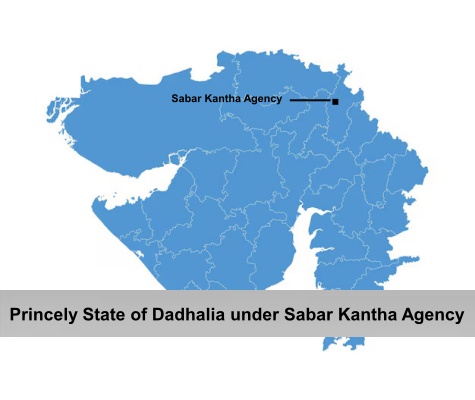
Princely State of Dadhalia
Princely State of Dadhalia was located in the present state of Gujarat. The state covered a total area of 28 sq miles and comprised of 15 villages. Th...
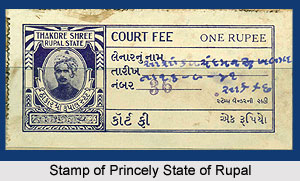
Princely State of Rupal
Princely State of Rupal was a part of the Baroda Agency, a sub division of Western India States Agency. It was under the administrative control of the...
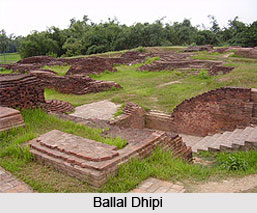
Archaeological Sites of West Bengal
Archaeological sites of West Bengal reveal several aspects of ancient India. Excavations by the Archaeological Survey of India have furnished artefact...

Princely State of Gabat
Princely State of Gabat was one of the native states of India during the Brtish period. Thakors were the native rulers of this state. After India gain...
Related articles in History of India

Mughal Architecture during Babur
Mughal architecture during Babur marked the foundation of a new architectural era in India, blending Timurid, Persian, and local influences. His reign...

Architecture during Sayyid and Lodi Dynasty
Architectures during the Sayyid and Lodi dynasty were mainly the tombs and monuments for the dead rulers. It were carefully designed and meticulously...

Brahmanical Sources of Ancient History
Brahmanical Sources of ancient history are contained in the Vedas and they constitute one of the most important literary sources of information about...

Coins of Chola Empire
Coins of Chola Empire were issued in gold, silver and copper and carried the Chola emblem.

Coins of Khilji Dynasty
Coins of Khilji Dynasty had an influential feature that was followed by the other dynasties.