 Ancient history of India is hugely magnificent, affluent and diverse. The rich tradition of verbal account makes India the subcontinent whose history is deep buried in the antiquities of 5000 years. Though, nothing was recorded about the ancient period, yet historians traced about the existence of several ancient civilisations through the innumerable sources of history and archaeology. In the year 1922 archaeological exploration brought forth the survival of the two ancient cities of Mohenjodaro and Harappa. In addition to that various other evidences such as, the remains of Homo erectus and fossils of various ages proved that India was inhabited between 200,000 to 500,000 years ago.
Stone Age
The saga of the Ancient History of India begins with Stone Age. Stone Age is a broad prehistoric time period. In this period human beings used stone for tool making. Though, at that period of time there was no geographical demarcation, yet the archaeological records depicts that 75,000 years ago, there was human presence in the Indian subcontinent. The remains of the Homo erectus in Hathnora in the valleys of Narmada in Central India indicate that India was inhabited since the Middle Pleistocene era, The Mesolithic period also saw the permanent settlements in the Rock Shelters of Bhimbetka in modern Madhya Pradesh, India. Neolithic culture also emerged in South Asia, that was evident from the Mehrgarh findings in present day Balochistan, Pakistan and in the Gulf of Khambat in India are found. It is also augmented that the late Neolithic cultures were dominant in the Indus Valley region between 6000 and 2000 BCE and in southern India between 2800 and 1200 BCE.
Bronze Age
Bronze Age in India started with the Indus Valley Civilization. This civilization is known by the name of the two of its great cities -Harappa and Mohenjodaro. It points out the Indus Valley Civilization as one of the oldest known civilizations of ancient India beside the three earliest urban civilizations along with Mesopotamia and Ancient Egypt. According to the Ancient History of India, Bronze Age is the timeline when the human being started using bronze for the purpose of tool making. This age began in India around 3300 BCE. The remains of the great civilisation are found in modern day India, in the cities of Gujarat, Haryana and Rajasthan as well as in Pakistan, Sindh and Punjab. This ancient Indian civilisation developed techniques of metallurgy and introduced copper, bronze, lead and tin to the country.
Aryans in India
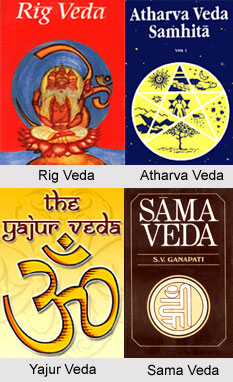
History in India is a crossroads of cultures from China to Europe. The first group to invade India was the Aryans, who came out of the north in about 1500 BC. The Aryans brought with them strong cultural traditions that, miraculously, still remain in force today. It was the Aryans who migrated from the Northwest into the Indian subcontinent and settled in the Saptasindhu region whilst adapting the existing Indian culture. It was the 2nd century BC and in the ancient history of India the period is known as the Vedic civilisation. Aryans lived in tribes and they spoke Sanskrit language, which was a part of Indo-European group of languages. Aryans started to intermingle with the locals.
 Ancient Dynasties of India
History of ancient India during this time witnessed the rise of major kingdoms known as the Mahajanapadas. There are sixteen Mahajanapadas spread across different parts of Indian sub continent. In the 6th Century B.C, India presented her chronic disintegration in political arena. Some of these states had monarchical and others had republican constitutions. Unfortunately, the paucity of materials prevents us to present a connected history of the states. These states were not lagging in civilization. They became the birthplace of heterodox creed like Buddhism and Jainism. At first these 16 states engaged in warfare, later the monarchical power came into existence.
The Emergence of Protestant Hinduism
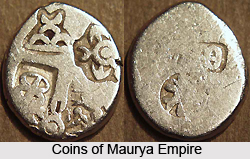
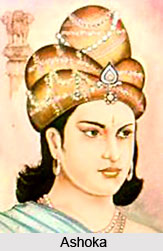
The births of Mahavira and Gautama Buddha in the 6th century BC heralded a new religious movement in India. Mahavira propagated Jainism whose message was asceticism, austerity and non-violence; Gautama Buddha, preached that `Nirvana` was to be attained through the conquest of self. The political map of ancient India was made up of myriad kingdoms with fluctuating boundaries. The third century BC in the timeline of ancient India heralded the reign of the Maurya Empire. Chandragupta, Bindusar and Ashoka were the famous kings of the Maurya dynasty. It was Ashoka who himself converted into Buddhism, and it is in his reign that Buddhism spread to other parts of Asia. During the Mauryas, Hinduism took the shape that fundamentally informs the religion down to the present day.
The Golden Age in Indian Monarchical Civilization
The 4th and the 5th centuries A.D., Gupta Empire flourished almost inevitably. The ancient history of India witnessed the Gupta period as the Golden Age in Indian timeline with an overall development of Hindu culture and political administration. With the downfall of Gupta Empire in the 6th century North India almost inevitably reverted back to small republics and small monarchical states. It was the time of chaos. Harshavardhan, the son of Prabhakar Vardhan, ruler of Thaneshwara united the small republics from Punjab to Central India, and crowned himself as the king in April 606 AD at the age of only 16 years. After the death of Harshavardhan, India again witnessed the emergence of smaller kingdom and the whole of India was divided into several smaller kingdoms. The mutual bickering and distrust among the kings and nobles resulted into anarchy and chaos. India once again passed into the hands of invaders.
A Conglomeration of East and West
The ancient Indian history witnessed various eras, regimes and ages where the landmarks of each era, the achievements of each age, the legacy of the regime are worthy paved the way of further development. India was the meeting ground of the Oriental and the Occidental, hence was an invader`s paradise. No matter how many Greeks, Persians, Chinese nomads, Arabs, Portuguese, British and other invaders had their way with the land, local kingdoms invariably survived their ravage, living out their own sagas of conquest and collapse. All the while, these local kingdoms built upon the roots of a culture well established since time immemorial. India has always been simply too big, too complicated, and too culturally subtle to let any one empire dominate it for long.