History of Indian Architecture - Informative & researched article on History of Indian Architecture
  Indianetzone: Largest Free Encyclopedia of India with thousand of articles Indian Monuments


in  
Art & Culture | Entertainment | Health | Reference | Sports | Society | Travel
Forum  | Free E-magazine
Indian Monuments : Indian Monuments l Palaces of India l Indian Buddhist Sites l Arts in India l Historical Buildings in Rajasthan l Indian Historical Monuments l World Heritage Monuments in India l Indian Religious Monuments l Indian Regional Monuments l Indian Monasteries
Home > Art & Culture > Indian Monuments > Arts in India > Indian Architecture > History of Indian Architecture
History of Indian Architecture
History of Indian Architecture dates back to Indus Valley period till the phase of the colonial architecture.

History of Indian architecture can be categorised into ancient, medieval and modern. It begins with a past that dates back to 2500 B.C. which is the era of the Indus valley civilisation. A number of foreign invasions and indigenous factors have contributed to the modification of the architecture of India and the last being after the colonizers invaded India. The ancient period dates till the Gupta dynasty. The medieval era deals with the advent of the Muslim architecture till the colonization. The colonial architecture falls under modern architecture of India.

Ancient Indian Architecture
In terms of architecture Indus valley was quite urban in nature. The town planning skills applied in the architecture of Indus valley was done keeping in mind the climate. The architecture of the great bath, the granary and the drainage system persists in the Hindu tradition even today. The other buildings consisted of houses, markets, storerooms, and offices; many of these structures consisted of a brick ground-storey with one or more additional floors in wood. One of the major reasons for the decline and decay of the architecture of the Indus valley civilisation is the invasion of the Aryans from the North West.

With the invasion of the Aryans, the Dravidians were pushed down in the south. So the majority of the architecture of the Dravidians is found in the south Indian states of Tamil Nadu, Kerala, Andhra Pradesh and Karnataka. Considering the background of these Aryans, it is not surprising that the architecture of the Vedic Period was neither monumental nor permanent nor concentrated in urban development. With the disappearance of the Indus culture and its cities, the new Indo-Aryan population was largely distributed in small settlements located in the plains and forests. Wood, bamboo and thatch were being used as building materials. This method of construction in bamboo and thatch was practiced by the Dravidians long before the intrusion of the northern invaders. The epics of Ramayana and the Mahabharata were written in this period which refers to the architectural monuments like shrines, tombs and palaces. In south India a number of rock-cut tombs of the Vedic Period have been found at Mennapuram and Calicut in Malabar. The architecture of the Aryans is referred to as the Nagara style architecture. The architecture of the epic period inspired the later Hindu and Buddhist architecture.

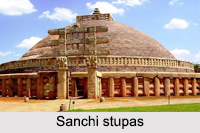
The invasion of Alexander the great marked the foundation of the Maurya Empire. There is an evident western impact in the buildings and palaces of this era. The excavations of Pataliputra revealed that at one time it was completely surrounded by massive poles of teak beams held together by iron dowels which represents the extraordinary craftsmanship. Buddhism was the dominant religious force during this era. The major architecture of this period is based on Buddhist thought for example the Stupas at Sanchi, monolithic rail at Sarnath and pillars of Bodh Gaya. The architectural carving of the facade of the Lomas Rishi cave is completely Indian.

The Sunga dynasty emerged after the Mauryas and the architecture of this period has large part of decoration of the stone railings and gateways that now surround the Buddhist Stupa or relic mound. Examples of these monuments are Sanchi stupas in Bhopal, Bharhut in Nagod State, and Amaravati on the Krishna River. At Bharhut and elsewhere the gateways are imitations in stone of the wooden portals of early Indian towns. Most prominent in the embellishment of the railing are the carvings of Yakshas and Yakshis. There are also floral motifs, busts of turbaned Rajas, Jataka tales, and scenes from the life of Lord Buddha.

The Andhra period is also marked with Buddhist architecture. The great Stupa at Sanchi, which was originally a foundation laid by Ashoka was enlarged under the patronage of the Andhra Dynasty. The architecture of the Andhra dynasty continued to flourish till the first century A.D.
Architecture under the Kushanas is characterised with the use of ivory and imported glass. The architectural monuments like the Stupas and monasteries of this era is adorned with relief friezes carved in dark schist, portraying figures in classical poses with flowing Hellenistic draperies. The reliefs of the Yakshis carved in this period are more sensuous and erotic than those at Sanchi. The Stupa in Gandhara marks the gradual elaboration of the primitive types known at Sanchi and Bharhut. This elaboration takes the form of the all-over sculptural ornamentation of base, drum, and hemispherical dome. The most famous Stupa in Gandhara, a veritable Buddhist wonder of the world, was the great tower raised by King Kanishka in Peshawar.

Both Hindu and Buddhist architecture flourished under the reign of the Gupta dynasty. In the Gupta Period the chaitya-hall makes its appearance as a free-standing temple of permanent materials. The temple at Chezarla, built entirely of brick, is in reality a chapel of modest proportions measuring approximately twenty-three feet in length by nine in width. The facade of the building presents the characteristic chaitya-arch form of the rock-cut chaitya-halls which at one time probably depicted a Buddhist subject in relief. Among the characteristics of Gupta temple architecture is the flat roof with spouts to drain off rain-water. The Vishnu temple at Deogarh is an example of architecture of Gupta Dynasty. Thus architecture during the Guptas was all about extensive details and sophisticated ornamentations. Architecture of the Gupta period continued under the Pala and Sena rulers. In the monasteries of Nalanda depicts the Gupta architectural style. The Mahabodhi shrine and the ruins of Paharpur in Bengal are also the architectural evidence of the Pala and Sena period.

Down in the south the great period of Dravidian structural architecture culminated under the Chola Dynasty, which became paramount in power over all India as far north as the Ganges. The rulers of the Chola dynasty were mainly devotees of Lord Shiva and the architectural monuments of this period are mainly temples dedicated to Lord Shiva. The Rajrajeshwara temple is one hundred and eighty feet long and has a tower rising one hundred and ninety feet in the air. The elevation comprises a pyramidal structure rising from a square base about fifty feet high and surmounted by a domical finial. It has an impressive tower the form of which is that of the Dravidian sikhara. The architecture at Vijayanagar consisted of groups of small structures rather than single large temples. The final chapter of Dravidian architecture is the building activity of the Nayak Dynasty of kings who were established with their capital at Madurai in the seventeenth century. The temples of this last Dravidian dynasty, exemplified by the shrine at Tiruvannamalai and the Great Temple at Madurai are distinguished first of all by a great expansion of the temple precinct. The architecture under the Chalukya dynasty in south India comprises temples of Pattadakal, Aihole and Badami. Religions like Hinduism, Jainism and Buddhism influenced the architectural patterns of these temples.

The cave temples of Badami has plain exterior but extremely beautifully carved interior. The reign of Western Chalukyas was an important period in the development of Deccan architecture. Their architecture served as an abstract connection between the Badami Chalukya architecture of the 8th century and the architecture of the Hoysalas popularised in the 13th century. The towers over the temple attract attention for its elaborate carvings and ornamentation. Among the architecture of the Hoysalas the most notable are the Chennakasava temple at Belur, the temples at Arasikere and Belavadi, and the Hoysaleswara temple at Halebidu.

Medieval Indian Architecture
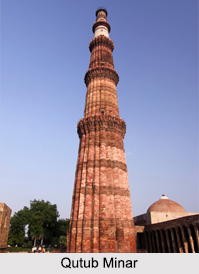
The history of the medieval Indian architecture commences with the invasion of the Delhi sultanates. Architecture of India witnessed a massive change after introduction of the indo- Islamic architecture in the vista of Indian architecture. The architecture of these Muslim invaders was quite similar to the indigenous architecture for instance both temples and mosques had open courtyards in front of them. The Qutub Minar, Siri fort and the Alai Darwaza are among the exquisite architectural evidence of this period. The Muslim invaders introduced the use of arches and tombs in architecture. The period of Tughluq dynasty in history has been marked as the time of ecstasy and rediscovery for Islamic architectures. Firoz Shah Tughlaq who ruled Delhi from 1351 to 1388 was a great patron of Islamic architecture and built the fifth city of Delhi, named as Ferozshah Kotla. The Sayyid and Lodhi rulers who succeeded the Tughlaqs were keen on more lavish styles of architecture and the Lodhis introduced the new concept of the double dome. They also pioneered a new type of embellishment, most possibly borrowed from Persia, enameled tiles, which went very well with grey sandstone. The sultanates of Delhi were succeeded by the Mughals whose architecture was a blend of indo-Islamic and Persian architecture.

Mughal architecture attained its zenith during the reign of Emperor Akbar. The magnificent city of Fatehpur Sikri is a remarkable example of the architecture of the Mughals. The most impressive building of Fatehpur Sikri is the Jami masjid. The southern entrance of this mosque is the Buland Darwaza. The Hindu architecture during Akbar is manifested in the palaces of Jodha Bai and in the resident of Birbal. Features of Hindu architecture vanished under Jahangir`s reign and the prominent architecture during his rule are the mosque at Lahore, the Shalimar gardens and the tomb of Itmad- ud- Daula. Shah Jahan`s reign was noted for the elegance and refinement in architecture. Built in white marble the Taj Mahal is the most exquisite creation of Shah Jahan. The Agra fort constructed by Shah Jahan continues to evoke a sense of ecstasy and wonder. Mughal architecture met its end under the reign of Aurangazeb. The most outstanding architecture by him is the Badshahi mosque. The Zinat-al-Masjid and the tomb of Roshanara Begum are among the other architectural monuments.

Modern Indian Architecture
History of architecture in modern India began with the advent of the colonizers. Colonization of India had a massive impact in the architectural style. The buildings and monuments that were constructed during that age were influenced by the Dutch, Portuguese, French and English architecture. Initially the colonizers gained control over the classical prototypes and their architecture was known as indo- Saracenic architecture. The Mutiny Memorial church at Kanpur and the Lat garrison church in New Delhi are among the important colonial architecture. The colonizers built many cathedrals which were of the Portuguese- Gothic style.

(Last Updated on : 10/05/2011)
  More Articles in Indian Architecture
 
History of Indian Architecture Architecture In Deccan Architecture Under Hoysala Dynasty
Architecture Of Jammu And Kashmir Architecture Of Delhi Architecture Of Himachal Pradesh
Architecture Of Punjab Architecture Of Uttar Pradesh Architecture Of Agra
Architecture Of North India Architecture In Central India Architecture In East India
Architecture In South India Indian Architecture during the Rule of Sher Shah Suri Religious Influences On Indian Architecture
Indo-Saracenic Architecture in IndiaIndo-Saracenic Architecture in India Neo-Classical Architecture in India Shilpa Shastras
Jain Architecture in India Nagara Style of Architecture  
Recently Updated Articles in Indian Monuments
  • Allahabad Fort
    Allahabad Fort is located on the banks of the Triveni Sangam. This Fort was built by Akbar in 1583. Currently the fort is occupied by the Indian Army.
  •  
  • Jama Masjid
    The Jama Masjid is Delhi`s famous mosque depicting beautiful Islamic style of architecture.
  •  
     
  • Modern Indian Art
    Modern Indian Art consists of various form of art, and ever since independence it has come a long way.
  •  
  • Kittur Chennamma Fort
    Kittur Chennamma Fort of Karnataka lies on the Pune Bangalore Highway in a small town of Kittur.
  •  
  • Madras School of Arts
    Madras school of arts was set up in the year 1850 by the British Empire. It believes in creating new ideas.
  •  
    E-mail this Article | Post a Comment
    RSS Feeds
    Forum
    Forum on Indian Monuments

    Free E-magazine
    Subscribe to Free
    E-Magazine on Indian Crafts
     
     
    History of Indian Architecture - Informative & researched article on History of Indian Architecture
    Sitemap
    Contact Us   |   RSS Feeds
    Copyright © 2008 Jupiter Infomedia Pvt. Ltd. All rights reserved including the right to reproduce the contents in whole or in part in any form or medium without the express written permission of Jupiter Infomedia Pvt. Ltd.
