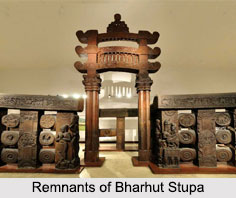
 Bharhut Stupa is a site of historical significance in India. It is situated between Jabalpur and Allahabad in the erstwhile Nagod state of Madhya Pradesh. It was built in 3rd century BCE and in 1873 the place was discovered by Sir Alexander Cunningham. The remains no longer exist in the site now and some of the remains of the stupa are preserved in the Indian Museum in Kolkata. They contain numerous birth stories of the Buddha"s previous lives or Jataka tales.
History of Bharhut Stupa
According to historians, the Bharhut stupa may have been first built in the 3rd century BCE by the Maurya King Ashoka. It is also predicted that many works of art were added during the Sunga period, with many friezes from the 2nd century BCE. Alexander Cunningham visited Bharhut in the year 1873 and in the next year, he excavated the site. The excavation work was continued by his assistant J. D. Beglar who recorded the work through various photographs.
Architecture of Bharhut Stupa
The railing of the stupa is carefully decorated and carved with intricate designs. These railings, posts, gateways and capping stones are all fashioned in beautiful red sandstone and once surrounded a stupa. The remarkable precision of the livelihood and carvings, decorative themes and narrative scenes testify the rich Indian and Buddhist art, culture and tradition. Many carvings of the Bharhut are Yakshis which protrude in the past relief; they stand in the attitude of devotion upon Ganas or the clutch of the tree.
In Bharhut Stupa, other carved panel epitomizes the Buddhist narratives. Buddha has been represented in the form of symbols. The dream of Maya, the heavenly celebration of Buddha"s enlightenment, the worship of Buddha"s throne, the Bodhi tree, naha king worshipping the wheel and the stupa in worship are some of the symbols of Buddhist religious celebration. The railing medallions display a variety of lotus design, sometimes incorporating in Yaksha busts. Some of the other themes include scenes of everyday village life, Lakshmi bathed by deer, peacock and elephants.
This article is a stub. You can enrich by adding more information to it. Send your Write Up to content@indianetzone.com