


 Archaeological Survey of India or the ASI serves as one of the best sources of Indian History. It is an agency in the Government of India belonging to the Department of Culture. The organisation is responsible for archaeological studies and the preservation of cultural monuments in India. Archaeological Survey of India is responsible to preserve and protect the monuments which are of National and International Importance. The organisation falls under the Ministry of Culture. Archaeological Survey of India or the ASI serves as one of the best sources of Indian History. It is an agency in the Government of India belonging to the Department of Culture. The organisation is responsible for archaeological studies and the preservation of cultural monuments in India. Archaeological Survey of India is responsible to preserve and protect the monuments which are of National and International Importance. The organisation falls under the Ministry of Culture.
Archaeological Survey of India at present administers 3636 monuments and it has been declared to be a national importance and it falls under the provisions of the Antiquity and Art Treasure Act 1972. History of Archaeological Survey of India Archaeological Survey of India was founded in 1861 by the British colonial administration, Sir Alexander Cunningham. He was provided support by the then Viceroy Lord Canning. The head-office of Archaeological Survey of India was located at the Railway Board building in Shimla in the year 1944 when Mortimer Wheeler was the Director-General. After independence, it came under the Ancient Monuments and Archaeological Sites and Remains Act of 1958. However, the Archaeological Survey of India is actually the present form of the Asiatic Society of British archaeologist Sir William Jones. Aims and Objectives of Archaeological Survey of India Archaeological Survey of India is designed to preserve and maintain the ancient monuments, archaeological sites and remains of national importance. The works and mission of Archaeological Survey of India is divided into 29 circles within the whole country. The organisation carries out its work through its Circles, Museums, Excavation Branches, Prehistory Branch, Epigraphy Branches, Science Branch, Horticulture Branch, Building Survey Project, Temple Survey Projects and Underwater Archaeology Wing. Archaeological Survey of India manages more than 3650 ancient monuments, archaeological sites and remains of national significance. These can include everything from temples, mosques, churches, tombs, and cemeteries to palaces, forts, step-wells, and rock-cut caves. The organisation also preserves ancient mounds and other similar sites which symbolize the remains of ancient surroundings. 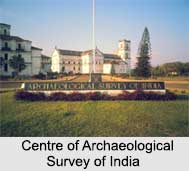 Archaeological Survey of India is headed by a Director General who is helped by an Additional Director General, two Joint Directors General and 17 Directors. It protects a Central Archaeological Library in the National Archives building in ‘Janpath’, New Delhi established in 1902. The Survey in addition maintains a library in each of its circles to cater to local academics and researchers. Archaeological Survey of India is headed by a Director General who is helped by an Additional Director General, two Joint Directors General and 17 Directors. It protects a Central Archaeological Library in the National Archives building in ‘Janpath’, New Delhi established in 1902. The Survey in addition maintains a library in each of its circles to cater to local academics and researchers.
Archaeological Survey of India provides evidences of the early Historic Period. Monuments and sites like Taj Mahal, Tomb at Sikandara, Qutb Minar, Sanchi and Mathura received nominal funds during the 19th century. The important sites excavated by the ASI include Harsha-ka-Tila at Thanesar in Haryana exposing a cultural sequence from the Kushan period to medieval periods. Circles of Archaeological Survey of India The Archaeological Survey of India is divided into a total of 29 circles, each headed by a Superintending Archaeologist. Each of the circles is further divided into sub-circles. The circles of the Archaeological Survey of India are: • Agra • Aizawl • Amravati •Aurangabad • Bengaluru • Bhopal • Bhubaneswar • Chandigarh • Chennai • Dehra Dun • Delhi • Dharwad • Goa • Guwahati • Hyderabad • Jaipur • Jodhpur • Kolkata • Lucknow • Mumbai • Nagpur • Patna • Raipur • Ranchi • Sarnath • Shimla • Srinagar • Thrissur • Vadodara The ASI also administers three ‘mini-circles’ at Delhi, Leh and Hampi. Archaeological Survey of India is the leading organization for the archaeological researches and protection of the cultural heritage of the nation. |
| |||



Archaeological Survey of India
| Archaeological Survey of India is a Government agency, founded in 1861. It preserves and maintains the ancient monuments of India. |
| ||||||||||||||||||||||||||||

