
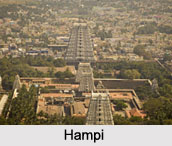
Hampi is a historic city located in the Vijayanagara
district of Karnataka.
Situated along the Tungabhadra
River in the eastern-central part of the state, it lies near the city
of Hospet. The city is renowned for the Hampi Group of Monuments, which
includes the famous Virupaksha Temple. Owing to its exceptional historical and
cultural significance, Group of monuments at Hampi has been designated a UNESCO World
Heritage Site.
Hampi
Hampi, located in Karnataka, is a historic destination renowned for its magnificent ruins, ancient temples, and remarkable Vijayanagara architecture. Set amid rocky hills and the Tungabhadra River, the UNESCO World Heritage Site attracts visitors with its grand monuments, vibrant festivals, fascinating history, and extraordinary natural landscape, making it a memorable heritage destination.
Introduction
Ancient History of Hampi
 Hampi is believed to have been associated with Kishkindha,
the mythical monkey kingdom described in the Hindu epic Ramayana and
traditionally regarded as the kingdom ruled by Vali and Sugriva. The region
finds mention in Ashokan
inscriptions as well as in Hindu religious texts such as the Puranas, where it
is referred to as the Pampaa Devi Tirtha Kshetra.
Hampi is believed to have been associated with Kishkindha,
the mythical monkey kingdom described in the Hindu epic Ramayana and
traditionally regarded as the kingdom ruled by Vali and Sugriva. The region
finds mention in Ashokan
inscriptions as well as in Hindu religious texts such as the Puranas, where it
is referred to as the Pampaa Devi Tirtha Kshetra.
The original patron goddess of Hampi was Pampa Devi, also known as Hampa-devi. According to Hindu tradition, Pampa was considered the “mind-born” daughter of Lord Brahma. The name Hampi is derived from Hampe, the local Kannada form of the word ‘Pampa.’ According to legend, the goddess undertook severe penance in her desire to marry Virupaksha, a form of Lord Shiva. She was later believed to have been reborn as Dakshayani, the daughter of Daksha, and subsequently as Parvati, the daughter of the Himalayas. From at least the Vijayanagara period to the present day, the Kalyanotsava, or marriage festival, celebrating the union of Virupaksha and Pampa has remained the most important festival at the Virupaksha Temple.
Archaeological evidence indicates that Hampi was inhabited
and held local religious significance as early as the 3rd century BCE, during
the Mauryan Empire. The sacred core of the site, including portions of the
Virupaksha Temple, dates back to around the 7th century, several centuries
before the establishment of the Vijayanagara Empire.
Medieval History of Hampi
The medieval history of Hampi is closely intertwined with the rise and prosperity of the powerful Vijayanagara Empire. Founded in 1336 by the brothers Harihara I and Bukka Raya I of the Sangama dynasty, the empire established Hampi as its capital. The city's strategic location made it an ideal imperial centre. Surrounded by hills and massive granite boulders, Hampi benefited from natural defenses, while the Tungabhadra River provided water and supported trade and economic activity.
Over the following centuries, Hampi developed into the political, administrative, religious, and economic centre of the Vijayanagara Empire. Under powerful rulers such as Krishnadevaraya, who ruled from 1509 to 1529, the empire expanded across much of southern India, with its influence extending from the Arabian Sea to the Bay of Bengal. During the 15th and early 16th centuries, Hampi grew into one of the largest and wealthiest cities of its time. Its bustling markets attracted merchants from distant regions, including Persia and Portugal, and traded in diamonds, pearls, precious stones, silk, spices, horses, and other valuable goods.
 The reign of Krishnadevaraya
marked one of the greatest periods of Hampi's architectural and cultural
development. The celebrated ruler commissioned and supported the construction
of numerous temples, monuments, and other structures, many of which survive
among the ruins of Hampi today. The city is believed to have supported a vast
population and became a major centre of commerce, religion, culture, and
administration.
The reign of Krishnadevaraya
marked one of the greatest periods of Hampi's architectural and cultural
development. The celebrated ruler commissioned and supported the construction
of numerous temples, monuments, and other structures, many of which survive
among the ruins of Hampi today. The city is believed to have supported a vast
population and became a major centre of commerce, religion, culture, and
administration.
Hampi's prosperity came to a devastating end in 1565 following the Battle of Talikota. In January that year, the Vijayanagara army faced a united coalition of the Deccan Sultanates. The defeat of the imperial forces and the death of the influential ruler Aliya Rama Raya left the capital vulnerable. Hampi was subsequently conquered, looted, and extensively destroyed. The devastation led to the gradual abandonment of the once-magnificent capital, and the city eventually fell into ruins.
Despite the collapse of the Vijayanagara Empire, the remains
of Hampi continue to reflect the grandeur of its past. The ruins of temples,
palaces, marketplaces, royal enclosures, and other monumental structures
provide evidence of the city's former wealth and importance. Accounts left by
foreign travellers describe Hampi as one of the most prosperous and magnificent
cities of its time, with extensive markets and a thriving international trade
network.
Tourism in Hampi
Since the 19th century, Hampi's ruins have attracted considerable interest from archaeologists, historians, and researchers. Today, the site is regarded as one of India's most important historical and cultural landscapes. Its surviving monuments and ruins offer a remarkable glimpse into the political, economic, religious, and artistic achievements of the Vijayanagara period. In recognition of its outstanding historical and cultural significance, Hampi was inscribed as a UNESCO World Heritage Site in 1986.
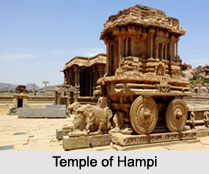
Hampi’s spectacular setting is dominated by river Tungabhadra, craggy hill ranges and open plains, with widespread physical remains. The sophistication of the varied urban, royal and sacred systems is evident from the more than 1600 surviving remains that include forts, riverside features, royal and sacred complexes, temples, shrines, pillared halls, Mandapas, memorial structures, gateways, defense check posts, stables, water structures, etc.
Among these, the Krishna temple complex, Narasimha, Ganesa, Hemakuta group of temples, Achyutaraya temple complex, Vitthala temple complex, Pattabhirama temple complex, Lotus Mahal complex, can be highlighted. Suburban townships (puras) surrounded the large Dravidian temple complexes containing subsidiary shrines, bazaars, residential areas and tanks applying the unique hydraulic technologies and harmoniously integrating the town and defense architecture with surrounding landscape.
The region is famous for iconic landmarks such as Virupaksha Temple, Vijaya Vittala Temple, the legendary Stone Chariot, and the elegant Lotus Mahal. These structures showcase remarkable craftsmanship and reflect the artistic brilliance of the Vijayanagara period.
Spread across a vast landscape of nearly 29 square
kilometers, people describe Hampi as the “world’s largest open-air museum.” The
ruins are divided mainly into two zones- The Sacred Centre which includes
temples and religious sites. The second zone is the Royal Centre that contains
palaces, royal enclosures, baths, and administrative structures.
Monuments in the Sacred Centre at Hampi
The following landmarks are among the most famous attractions in Hampi at the sacred centre.
Virupaksha Temple
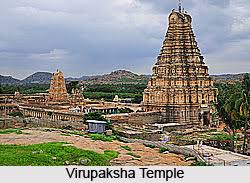 The Virupaksha
Temple is one of the most important and revered temples in Hampi,
Karnataka. Dedicated to Lord Shiva,
the ancient temple has remained an active place of worship for centuries. The
temple complex is distinguished by its towering entrance gateway, or gopuram,
which rises nearly 50 metres and can be seen from a considerable distance.
The Virupaksha
Temple is one of the most important and revered temples in Hampi,
Karnataka. Dedicated to Lord Shiva,
the ancient temple has remained an active place of worship for centuries. The
temple complex is distinguished by its towering entrance gateway, or gopuram,
which rises nearly 50 metres and can be seen from a considerable distance.
The Virupaksha Temple is also known for a remarkable optical phenomenon that occurs within the complex. A natural pinhole-camera, or camera obscura, effect projects an inverted image of the temple's main entrance tower onto an interior wall. Sunlight passes through a tiny, precisely positioned opening in a dark inner chamber. As light travels in straight lines through the aperture, the rays cross before reaching the opposite wall, producing a sharp, upside-down image of the approximately 50-metre-high Raja Gopuram. This phenomenon demonstrates the principle of the rectilinear propagation of light, in which light travels in straight lines. The unusual optical effect adds another fascinating dimension to the architectural and scientific significance of the Virupaksha Temple.
Vijaya Vittala Temple
The Vijaya
Vittala Temple is regarded as one of the finest examples of temple
architecture in India and represents the artistic and architectural
achievements of the Vijayanagara Empire. The temple complex is dedicated to
Lord Vittala, a form of Lord
Vishnu, and is renowned for its intricate carvings, elaborate
sculptures, and beautifully crafted stone pillars.
 One of the most distinctive features of the temple is its
celebrated musical
pillars. These intricately carved pillars are traditionally known for
producing different musical tones when gently tapped, reflecting the remarkable
craftsmanship and architectural ingenuity of the Vijayanagara period.
One of the most distinctive features of the temple is its
celebrated musical
pillars. These intricately carved pillars are traditionally known for
producing different musical tones when gently tapped, reflecting the remarkable
craftsmanship and architectural ingenuity of the Vijayanagara period.
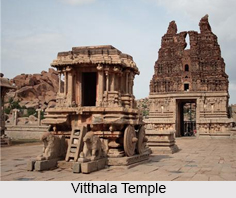
The temple complex also houses the famous Stone Chariot, which has become one of the most recognizable symbols of Hampi. The fully developed temple complex includes structures such as the Kalyana Mandapa and Utsava Mandapa, enclosed within a cloistered compound with three entrance gopurams. In addition to the conventional spaces found in contemporary temples, the complex features a Garuda shrine, also known as Stone Chariot, designed in the form of a granite chariot and a grand bazaar street. The complex also contains a large Pushkarani, or stepped tank, with a Vasantotsava Mandapa, a ceremonial pavilion situated at its centre.
Stone Chariot Hampi: The Stone Chariot is one of the most iconic monuments in Hampi. Located within the Vijaya Vittala Temple complex, it is regarded as a masterpiece of Vijayanagara architecture. The chariot serves as a shrine dedicated to Garuda, the vehicle of Lord Vishnu. Carved entirely from granite, the structure is designed to resemble a ceremonial temple chariot. It stands on large stone wheels, giving it the distinctive appearance of a chariot in motion.
Sasivekalu Ganesha
The Sasivekalu Ganesha is a large monolithic statue of Lord Ganesha carved
from a single block of rock. Standing approximately 2.4 metres tall, the statue
is located on the slopes of Hemakuta Hill in Hampi. The name “Sasivekalu”
refers to mustard seeds, as the rounded shape of the deity’s belly is
traditionally said to resemble a mustard seed. The statue is housed within an
open pavilion supported by stone pillars, adding to its distinctive
architectural setting and visual appeal.
Ugra Narasimha Statue
The Ugra Narasimha statue is one of the most striking
sculptures in Hampi and represents Lord Narasimha,
one of the avatars of Lord Vishnu. Carved from a single block of granite, the
massive statue stands approximately 6.7 metres tall and is regarded as the
largest monolithic sculpture
in Hampi. The imposing figure is characterized by its fierce expression
and detailed craftsmanship, reflecting the exceptional artistic skills of the
Vijayanagara period.
Monuments in the Royal Centre at Hampi
The following monuments are among the most famous attractions in Hampi at the royal centre.
Queen’s Bath
The Queen’s Bath is a historic bathing pavilion believed to
have been used by the royal family of the Vijayanagara Empire. Located near the
Royal Enclosure, the structure presents a relatively simple appearance from the
exterior. However, its interior features a large square pool surrounded by
ornate balconies and corridors. Decorative arches and windows add an elegant
character to the pavilion, reflecting the architectural refinement of the
Vijayanagara period. An ancient aqueduct system supplied water to the bath,
demonstrating the advanced engineering and water-management techniques employed
during the period.
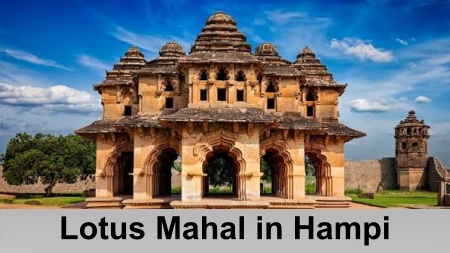 Lotus Mahal Hampi
The Lotus
Mahal is regarded as one of the most graceful and visually distinctive
structures in Hampi. Located within the Royal Enclosure, the monument stands in
an area that once served as an important administrative and residential centre
of the Vijayanagara rulers.
The structure derives its name from its architectural design, which is said to resemble a blooming lotus. Its architecture reflects a distinctive blend of Hindu and Indo-Islamic influences, evident in its graceful arches, elegant balconies, and symmetrical layout. These features give the Lotus Mahal a unique character and make it one of the notable monuments within the historic landscape of Hampi.
Other Tourist Attractions at Hampi
Apart from its monuments and temples, Hampi is also renowned
for its extraordinary natural landscape. Massive granite boulders are scattered
across the region, creating a dramatic and almost surreal setting. These
distinctive rock formations were shaped by natural processes over millions of
years and surround the temples, hills, and riverbanks, giving Hampi a unique
appearance rarely seen elsewhere in India.
Hemakuta Hill
Hemakuta
Hill is regarded as one of the most scenic locations in Hampi. The hill
is characterized by a cluster of small ancient temples
dating to the early Vijayanagara period, which add to its historical and
architectural significance. The summit of the hill offers a panoramic view of
Hampi’s surrounding ruins, rocky landscape, and distant hills. The hill is
particularly popular during sunrise and sunset, when the warm golden light
illuminates the temples, granite boulders, and surrounding landscape.
Elephant Stables
The Elephant Stables is an impressive monument in Hampi. The
long structure was used to house the royal elephants of the Vijayanagara
Empire. It consists of eleven large domed chambers, each connected by arched
corridors. The architecture of the Elephant Stables reflects a distinctive
blend of Hindu and Indo-Islamic influences. Each dome features a slightly
different design, giving the monument a unique architectural character and
enhancing its overall beauty.
Matanga Hill
Matanga Hill
is regarded as the highest point in Hampi and is renowned for offering
breathtaking panoramic views of the surrounding landscape. The hill provides an
expansive view of Hampi’s ancient ruins, rocky terrain, and the Tungabhadra
River. Visitors often ascend the hill in the early morning to witness the
sunrise as it illuminates the historic ruins and surrounding landscape. The
climb takes travelers along rocky paths and ancient stone steps, making the
ascent somewhat challenging. However, the spectacular views from the summit
make the effort worthwhile.
Hampi Bazaar
Hampi Bazaar is one of the most historically significant
areas of Hampi. During the height of the Vijayanagara Empire, the bazaar served
as a vibrant commercial centre. Today, Hampi Bazaar consists of a long stretch
of stone pavilions and ruined mandapas lining both sides of the road. Although
the bustling marketplace has disappeared, the surviving structures continue to
reflect the important role that trade and commerce once played in the economic
life of the Vijayanagara capital.
From the 1960s onward, Hampi gradually emerged as an attraction for motorbikers and offbeat travellers, particularly at a time when the town’s infrastructure remained underdeveloped. Groups of tourists began gathering on its hills and among its ancient ruins for parties and spiritual retreats. These visitors came to be popularly known as the “Hampi Hippies,” while some publications referred to Hampi as the “lost city.”
Hampi is also known for its annual Hampi Utsava, or Vijaya Festival, a celebration with roots dating back to the Vijayanagara period. The festival is organised by the Government of Karnataka as a ‘Nada Habba,’ or state festival. Usually held between November and January, it features cultural performances, music, dance programmes, and traditional processions against the backdrop of Hampi’s historic ruins.
In 1986, the monuments of Hampi were declared a UNESCO World
Heritage Site, establishing the destination as one of India’s most significant
heritage sites. The designation recognised Hampi’s remarkable collection of
temple complexes, royal structures, market streets, and sophisticated water
systems, which together demonstrate the architectural and engineering
achievements of the Vijayanagara Empire.
Visiting Information to Hampi
Hampi is located approximately 348 kilometres from Bengaluru, 385
kilometres from Hyderabad,
and 266 kilometres from Belagavi.
The nearest railway station is in the city of Hospet, about 13 kilometres from
Hampi. The nearest airport is Jindal Vijaynagar Airport in Toranagallu, located
around 32 kilometres away, and is well-connected to Bengaluru. Hampi is also
accessible by overnight buses and trains connecting it with destinations such
as Goa and
Bengaluru.
Recently updated articles in Cities of India
Hampi
Hampi, located in Karnataka, is a historic destination renowned for its magnificent ruins, ancient temples, and remarkable Vijayanagara architecture....
Places of Interest in Deogarh Uttar Pradesh
A place of historical and archaeological significance, Deogarh is a site with few popular places of interest.

Deoghar in Jharkhand
Deoghar is the divisional headquarters of Santhal Parganas located in Jharkhand and is popular for the famous Baidyanath temple and Shiva Temples.

The Asiatic Society of Mumbai
Asiatic Society in Mumbai is the temple of Asian Studies from the time of British rule in India.
Vasco da Gama / Vasco City
Vasco da Gama / Vasco is the biggest city of Goa and is one of the most visited for its perfect amalgamation of business as well as leisure options.
Related articles in Cities of India
Holy Cities of North India
Holy Cities of North India are having the rich history of Hinduism and the entire civilization was grown up with the hands of beliefs, rituals and the...
Holy Cities of South India
Holy Cities of South India gives the detailed cultural formation of Dravidians from the early era, which later developed to the world by the Pallavas...
Holy Cities of West India
Holy Cities in West India were established by the rulers of Rajputs and the Satvahana Dynasty and the medieval rulers of Junagadh.
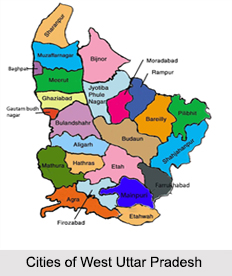
Cities of West Uttar Pradesh
Cities of West Uttar Pradesh include Meerut, Bulandshahr, Ghaziabad, Saharanpur, Muzaffarnagar, Bijnor, Bareilly, Rampur, Agra, Aligarh, Mathura and m...

Port Cities of South India
Port Cities of South India are developed from the early phase of colonial era when the Portuguese and the French traders came to India