Introduction
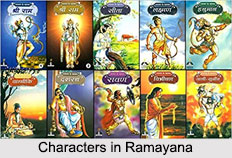
The characters in Ramayana are instrumental in narrating the entire epic. They are meaningfully related to each other helping to bring a significant conclusion. Each of the characters significantly adds to the narration at different times and places in the Sanskrit epic. Most of the characters like Lord Rama, Sita, Lakshmana, Hanuman and others are considered as deities according to Hindu mythology.
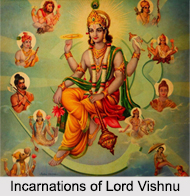
Lord Rama is considered as an incarnation of Lord Vishnu; whereas Lord Hanuman is considered as the incarnation of Lord Shiva. The antagonist in the Hindu epic, Ravana, is an iconic character in Hindu mythology and some religious sects regard Ravana as a deity as well.
Characters in Ramayana
Following are the different characters in Ramayana:
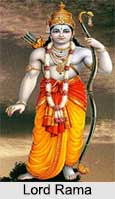
Lord Rama
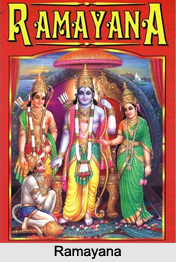
Lord Rama was the son of King Dasaratha and Queen Kausalya. He was the prince of Ayodya. He is an "avatara" of Lord Vishnu and was married to Sita. Lord Rama had a strong relationship with his brother Lakshmana as well. He is known as "Maryada Purusottama" and is the symbol of virtue.
Sita
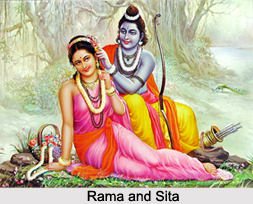
Sita was the daughter of Mother Earth adopted by King Janaka. Sita married Lord Rama, and loved him so much that she followed him into the exile. She is celebrated for her virtue and beauty, and is also regarded as an "avatara" of the Goddess Lakshmi, Lord Vishnu`s consort. She was abducted by the demon king Ravana and was imprisoned on the island of Lanka, until Rama rescued her by defeating Ravana.
Ravana
Ravana was a devil who performed penance for a long time until Lord Brahma appeared before him and granted him a boon. He received a great blessing from the God that he cannot be killed by any mortal, evil spirit, or other divine being. His pride was combined with great intelligence and power which led him to rule over the earth by spreading horrible immorality everywhere. Vishnu incarnates as the human Rama to defeat him, thus circumventing the boon given by Brahma.
Lakshmana
Lakshmana was the son of King Dasaratha and Queen Sumitra. He was the brother of Lord Rama and the twin brother of Shatrughna. Lakshmana was extremely dedicated to his brother and followed him throughout many adventures and hunts. He was married to Sita`s younger sister, Urmila. He is ascribed as the incarnation of "Ananta Sesha", the 1000 headed Naga.
King Dasaratha
King Dasaratha was the emperor of Ayodhya, father of Lord Rama, Lakshmana, Bharata, and Shatrughna. He was a good king, kind and well-liked by his people. He was the scion of Raghuvamsa. He had 3 wives namely Kaushalya, Kaikeyi and Sumitra.
Janaka
Janaka is portrayed as the wise and virtuous ruler of Videha, with his capital at Mithila. Married to Queen Sunayana, he is best known as the father of Sita and Urmila. Janaka stands out in the epic not just for his role as a king and father, but for his deep spiritual insight and detachment from worldly desires. Celebrated for his unwavering commitment to dharma and his philosophical outlook, he is often cited as a symbol of living a life rooted in wisdom and inner freedom.
Sunayana
Sunayana is honored as the esteemed queen of Videha and the devoted consort of King Janaka, the ruler of Mithila. She holds a significant place in Ramayana as the mother of two pivotal figures in the epic. Her first daughter Sita is the central female character and her younger daughter is Urmila. Sunayana is integral to the lineage and legacy of Mithila’s royal family. Her nurturing presence and guidance helped shape the virtues and strength that Sita would later embody as a symbol of courage, devotion, and righteousness.
Mandavi
Mandavi is introduced as a noble princess of Videha and a key member of the royal family. She becomes the devoted wife of Bharata, the younger brother of Lord Rama. Mandavi also holds spiritual significance as an incarnation of the sacred conch shell associated with Goddess Lakshmi, symbolizing purity, divinity, and auspiciousness. She is the daughter of King Janaka`s brother Kushadhvaja.
Urmila
Urmila is the younger daughter of King Janaka and sister of Sita. Urmila is believed to be an incarnation of Nagalakshmi, the serpent goddess known for her divine grace and strength. Married to Lakshmana, the devoted brother of Lord Rama, Urmila is celebrated for her unwavering dedication and silent sacrifice. While Lakshmana accompanied Rama into exile, Urmila chose to remain in Ayodhya, enduring years of separation without complaint. Her quiet endurance and steadfast love exemplify a profound sense of duty and resilience.
Bharata
Bharata is famous for his love and devotion towards his elder brother Lord Rama. He was the son of King Dasaratha and Queen Kaikeyi. Bharata was married to Mandavi, daughter of King Janaka`s brother Kushadhvaja. They had two sons, Taksha and Pushkala.
Shatrughna
Shatrughna was the son of King Dasaratha and Queen Sumitra. His twin brother is Lakshmana, and his half-brothers are Lord Rama and Bharata. He followed his brother Bharata all over the place. Shatrughna was married to Sita`s sister Shrutakirthi.
Kaikeyi
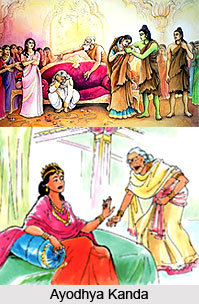
Kaikeyi was the third and youngest wife of King Dasaratha, and mother of Bharata. She is celebrated for her beauty. After she saved the life of Dasaratha in fight, he was offered to grant anything she would ask of him. Kaikeyi later called in this favour to crown Bharata as a king and Lord Rama sent into the forest, stirred by the words of her maid, Manthara.
Sumitra
Sumitra was the second wife of Dasaratha and was the mother of Lakshmana and Shatrughna. In Ramayana, Sumitra is portrayed as a noble princess from the kingdom of Kashi who becomes the esteemed queen of Kosala. Known for her wisdom, composure, and unwavering devotion, Sumitra embodies the virtues of a thoughtful and supportive queen.
Kaushalya
Kaushalya was the first queen of King Dasaratha and the mother of Lord Rama. She had a wonderful and liberal character. In her previous birth she was born as "Manushataroopa" and had pleased Lord Vishnu with her self-punishment.
Sage Viswamitra
Sage Viswamitra was a great sage and wise man who was once a king. Through a long meditation, he achieved a number of magical powers. He took Lord Rama on a chase to beat a demon and to lift the bow of Lord Shiva.
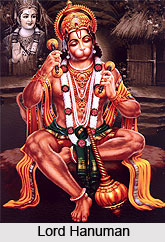
Lord Hanuman
Lord Hanuman was the advisor of Sugriva. He was the son of Anjana and Kesari and he is believed to be an avatar of the supreme Lord Shiva. He is described as the monkey God. He was a guardian spirit, the offspring of a nymph and the Wind God.
Maricha
Maricha, a formidable rakshasa in the Ramayana, is remembered for his crucial role in one of the epic’s most pivotal events—the abduction of Sita. Aligned with Ravana, the chief antagonist of the tale, Maricha aided in executing the deceptive plot that lured Rama away from his hermitage. Disguising himself as a golden deer to capture Sita’s attention, Maricha’s illusion set the stage for Ravana to seize Rama’s wife. He was a demon, uncle of Lord Ravana. Lord Rama defeated him with a sanitizing magical weapon, and he left his immoral ways to become a Sage.
Surpanakha
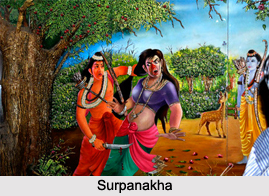
Surpanakha was the sister of Ravana who was a powerful demon. She tried to seduce Lord Rama and kill Sita, but Lakshmana attacked her. Then she tried to collect the demon army in opposition to Lord Rama.
Jatayu
Jatayu was a powerful golden eagle who spoke in the voice of a human being. He was loyal to King Dasaratha, and requested his service to Lord Rama. He died protecting Sita from Ravana.
Sugriva
Sugriva was the fair king of the "vanaras", a race of supernatural monkeys. He was seized by his elder brother Bali, and pledged his service to Lord Rama and Lakshmana if they could re-establish him to his throne.
Bali
Bali was the king of "Kishkindha". He was killed by Lord Rama and was the grandson of Prahlad and a great devotee of Lord Vishnu. He was also known as "Mahabali". He imprisoned all the beautiful women for his enjoyment. Bali was the husband of Tara.
Angada
Angada was a "vanara" youth, son of Bali and nephew of Sugriva. He was brave and intelligent. He helped Rama to search his wife Sita along with Sugriva and other monkeys. Sugriva sanctified Angada as the prince of "Kishkindha".
Sampati
Sampati is recognized as a revered demigod with the form of a mighty vulture or eagle. He is the elder son of Aruna, the charioteer of the sun god Surya, and the older brother of the valiant Jatayu. Known for his wisdom and sharp vision, Sampati once soared the skies with unmatched grace. As a youth, Sampati lost his wings while protecting Jatayu from the scorching heat of the sun, a sacrifice that left him grounded but spiritually elevated. Despite his physical limitations, he played a vital role in the Ramayana by guiding Rama’s allies in their search for Sita.
Subala
Subala was a mountain in the island of Lanka. Lord Hanuman perched the Subala Mountain, when he took a colossal spring, and by his extraordinary strength it leaped over the broad ocean.
Shravan Kumar
Shravan Kumar was as a dedicated son who carried his blind parents on his shoulders for a pilgrimage tour. King Dasaratha went for hunting and his arrow mistakenly hit Shravan Kumar instead of hitting a deer. He died. King Dasaratha brought the jug of water to the parents of Shravan Kumar but his parents were not ready to accept the water without hearing the voice of their son.
Jambavan
Jambavan was the king of the Riksharaj (magical bears). He was a friend of Sugriva and Lord Rama. He is celebrated for his gentle wisdom and calm strength. Jambavan is said to have emerged from the yawning mouth of Brahma, the creator deity, making him one of the oldest and most wise beings in the epic. He played a crucial role in the Ramayana by awakening Hanuman to his immense inner strength, just before Hanuman’s legendary leap to the island of Lanka in search of Sita. He was present during the great churning of the ocean, the Samudra Manthana. He once encircled the Vamana avatar of Vishnu 21 times in a single leap, highlighting his unmatched agility and devotion.
Kumbhakarna
Kumbhakarna, a towering rakshasa from the Ramayana, is best known as the formidable younger brother of Ravana, the king of Lanka. Renowned for his immense size and insatiable appetite, Kumbhakarna was also a figure of surprising nobility and valor. Despite his allegiance to Ravana, ancient texts often portray him as a virtuous and wise warrior, capable of great insight and moral clarity. When awakened from his deep slumber to join the battle against Rama, Kumbhakarna unleashed his strength on the battlefield with devastating effect, reportedly slaying 8,000 vanaras during the fierce conflict. He used to sleep for six months at a time before waking up and eating everything he could see.
Meghanad
Meghanad, more famously known as Indrajit, was the formidable eldest son of Ravana and the crown prince of Lanka. Earning his title after conquering Indraloka, the realm of the gods presided by Lord Indra, Indrajita is celebrated in Hindu mythology as one of the mightiest warriors to ever walk the battlefield. Trained under the guidance of the sage Shukra, he mastered powerful celestial weapons and mystical knowledge, becoming nearly invincible. During the epic war between Rama and Ravana, Indrajita played a crucial and destructive role. With the deadly Brahmastra, he is said to have slain a staggering 670 million vanaras in a single day. His unmatched prowess even allowed him to defeat both Rama and Lakshmana by rendering them unconscious using divine weapons and sorcery, an achievement no other warrior in the Ramayana could claim. Meghanad ultimately met his end at the hands of Lakshmana, marking the fall of one of Lanka’s most fearsome defenders and a turning point in the great war.
Sushen
Sushena, a renowned healer in the court of Ravana, stood out in the Ramayana not for his allegiance, but for his unmatched expertise in medicine. When Lakshmana was gravely injured during the fierce battle, it was Sushena who identified the life-saving remedy, the mystical Sanjivani herbs, believed to grow only on the distant Kailasa Mountain. Understanding the urgency, Sushena advised that the herb be retrieved without delay. Acting on this counsel, Hanuman undertook the legendary feat of flying across the skies and lifting the entire mountain to ensure the right herb reached the battlefield.
Prahasta
Prahasta was a powerful demon warrior who was a general in Ravana`s army of Lanka. He reported to Ravana the arrival of Lord Rama. He is also referred as being the maternal uncle of Ravana and Kaikesi`s brother.
Lava
Along with Kusha, Lava was one of the student to whom Valmiki taught the Ramayana which he received from Narada. He was one of the sons of Lord Rama. The twin brother of Lava is Kusha. Lava was the king of Sriwasti, in northern Kosala. He was the founder of the city of Lahore, which is named after him.
Kusha
Kusha was one of the twin sons of Lord Rama and Sita. The other son is the Lava. He was born in a forest after Sita had been banished from Ayodhya. Both the twin brothers Lava and Kusha were well-read and trained in military skills.