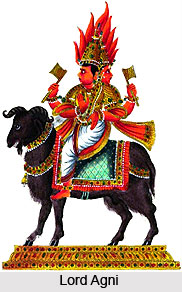
 Adhyayas five to eleven in Agni Purana has been dedicated to the vivid description of the seven kandas of Ramayana. The Fire-God or Lord Agni has given a summary of the great epic in all these chapters. According to Agni the description of Ramayana gives one emancipation and true joy. He has discussed the preparation of sacrificial Payasha, the birth of Lord Rama and his four brothers. The sending out of Rama and Lakshmana by their father also forms an important part of these chapters. The marriage of Rama with the daughter of Janaka and the marriage of his brothers in that principality has also been described by Lord Agni.
Another important part of these chapters is the installation of Rama on the throne and the preparations which are associated with the ceremony. The evil counsel that is Kaikeyi also gains prominence in the summary of Ramayana. It describes how Dasaratha is forced to install Bharata on the throne and sends Rama and Lakshmana to exile. The summary says that after the death of Dasaratha Bharat had returned to Ayodhya and he wanted Rama to return but as Rama did not agree he waited for Rama to get back.
In the seventh chapter the Fire God narrates that Rama had received celestial weapons from the holy sage Agastya. He says that during their stay in the forest Surpanakha had proclaimed her love for Lord Rama. Then he goes on to say that as Lakshmana had disfigured Surpanakaha and Khara, the brother of Surpanakaha had attacked Rama. It was in this chapter that Ravana had carried away Sita in his island home. Jatayu, the bird-king had fought Ravana on the way but was unfortunately killed.
Lord Agni in the Agni Purana had described how Rama had lamented by the banks of Pampa for his beloved wife. He had sent his monkey army all over to bring information about Sita. The war between Lord Rama and Vali has also been described in the summary of Ramayana in Agni Purana.
Finally the description says that Hanuman had found Sita in the forest of Ashoka. As Hanuman discovers Sita with Ravana he brings about a lot of damage to the land of Ravana and when he reaches India Hanuman had informed Rama about Sita. It has also been said that Rama gets a bridge constructed with the advice of the Ocean-God, makes friend with Vibhishana and enters Lanka with his troops.
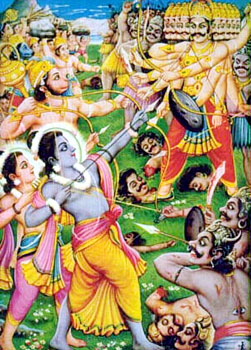
Lord Agni has also described how Rama sends Angada to Ravana demanding the surrender of Sita. At this Ravana had declared war. The result of the war was that Ravana falls and takes place the meeting of Rama and Sita. This was the adhyaya where Agni had described the return of Rama to Ayodhya with Sita and Lakshmana in the aerial car known as Pushpaka.
Finally the adhyayas describing the summary of Ramayana ends with the birth of the two sons of Rama named as Lava and Kusha and finally his accession to heaven.