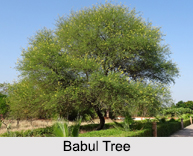
 Indian herbs are considered to be helpful for achieving good health with the help of natural sources. The age old traditions associated with herbs are kept alive by the people of medicinal milieu, considering their effects on many diseases and the belief in herbal therapy has been creating in millions of people, since ancient times. Though the Indian herbs are used extensively in herbal therapy and other alternative treatments, they should be consumed in proper amount because over consumption of some herbs may lead to bad health or may have some kind of side effects. There are some agricultural institutes, which take initiatives to cultivate Indian herbs that can be the source of life giving medicines. Apart from this, there are yoga centers, where medicines are prepared like the Patanjali Yogpith of Haridwar.
History of Indian Herbs
Ancient history of Indian herbs depicts that the Rig Veda, the oldest document of human knowledge, carries evidence regarding the use of medicinal plants in the treatment of various diseases. The tradition of Ayurveda originated around 5000 years ago. Ayurveda, "the science of life", offers rich and comprehensive outlook to a healthy life. The basic concept of Ayurveda is to maintain a balance of body, mind and spirit, along with the usage of some herbs that are widely cultivated in India for medicinal usage. The ancient book of Charaka, which was written around 1000 BC, concentrates on medicine and depicts that in ancient times the practitioners used to treat diseases with the help of decoctions from different herbs.
Types of Indian Herbs
 Indian herbs are used as medicinal herbs, culinary herbs, aromatic herbs and ornamental herbs. They even have spiritual usage in some cases. These herbs and their uses are given below.
Indian Medicinal Herbs
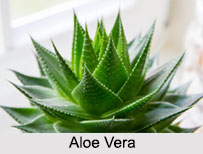
Most of the Indian herbs are used widely used due to their medicinal values. For medicinal or spiritual use, any part of a plant might be considered to be herb. These parts are leaves, roots, flowers, seeds, resin, root bark, inner bark (cambium), berries and sometimes the pericarp or other portions of the plant. Plants contain phytochemicals that affect body. Medicinal herbs have curative effects and are used to prepare herbal medicines. They are considered as having powerful effects on curing certain diseases. Some types of herbal extract, such as the extract of St. John`s wort (Hypericum Perforatum) or of kava (Piper Methysticum) can be used to relieve depression and stress. However, large amounts of these herbs may lead to poisoning. Therefore, they should be used with caution. One herb-like substance called `Shilajit` is used to lower blood glucose levels. Thus, the herb is especially important for those suffering from diabetes. Some Indian herbs that are famous for their curative effects are abrus precatorius, adhatoda vasica, aloe vera, ashwagandha, asparagus racemosus, basil, bhringaraj, cardamom, castor, ginger, guggul, lemongrass, safed musli, sandalwood, sarsaparilla, shankapushpi, solanum nigrum, tinospora cordifolia and vinca rosea.
Indian Culinary Herbs
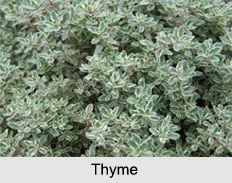
Culinary herbs are different from vegetables. They are used in small amounts and provide flavor rather than substance to food. The names of some of the culinary herbs are rosemary (rosmarinus officinalis), thyme, parsley and sage. Some plants are used both as spice and herb, such as, dill seed, dill weed or cilantro (leaves) and coriander (seeds).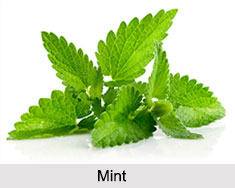
Indian Aromatic Herbs
Aromatic herbs are pleasant smelling flowers or foliage. Oils from aromatic herbs can be used to produce perfumes and toilet cologne and are sometimes used as essential oils. Dried aromatic herbs also have some usages. Some common aromatic herbs include mint, marjoram, rosemary and basil.
Indian Ornamental Herbs
Ornamental herbs consist of brightly colored flowers and foliage. Many of them have whitish or light-colored flowers. Valerian has crimson blossoms, while borage and chicory have blue flowers. Herbs such as variegated thyme mint, lavender and chives produce variegated foliage.
Some herbs are used not only for medicinal and culinary purposes, but also for recreational purposes. One such herb is cannabis. The infusions, decoctions and extracts of some herbs can be used in herbal bath for relaxation and healing.
Religious Importance of Indian Herbs
Indian herbs are significant parts of many religions. In Hinduism, a form of basil called Tulsi is being worshipped as a goddess for its medicinal value, since the Vedic times. Many Hindus have Tulsi plants in front of their houses. Commiphora Myrrha, Aletris Farinose (ague root) and Boswellia Spp (frankincense) are significant parts of Christianity. In the partially Christianized Anglo-Saxon pagan, nine herbs charm is used. The charm is created using nine herbs to cure poisoning and infection.