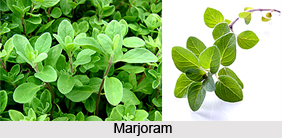
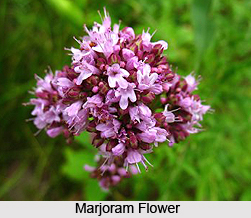
 This spice is not very popular or commonly used spice in India, except that it is used for certain special dishes. It is the dried leaves of marjoram or sweet marjoram with or without flowering tops in small proportion that constitute the spice of commerce.
It is an aromatic herb, of mint family, 30 to 60 cm high. It is extensively cultivated in India. Sweet marjoram is characterized by a strong spicy and pleasant odor. The flavor is fragrant, spicy, slightly sharp, bitterish and camphoraceous.
The color of the dried herb is light green with a slight grayish tint. The whole leaves are small with hairs on both sides of the leaf. When examined under the microscope, many dot-sized oil glands are seen on the leaf. They yield 3.5% volatile oil.
Analysis of the dry herb gave the following values:
Moisture:7%
Protein:14.31%
Fixed oil:5.60%
Volatile oil:1.72%
Pentosans:7.68%
Fiber:22.06%
Ash:9.69%.
Besides above it also yield tannin and astringent substances and ursolic acid (0.21% in tops; 0.05% in stem).
There is wide variation in the mineral content of Indian, French and German sweet marjoram herb. Therefore range of mineral matter content is given below to have an idea.
Total ash:6.3 to 24%
Sand:0.66 to 14%
Sand free ash:5.4 to 14.3%
Potash:18.3 to 20.2%
Sodium:0.65 to 0.68%
Calcium:17.6 to 24.8%
Phosphorus:8.9 to 9.1%
Iron:6.1 to 7.3%
Silica:19.4 to 26.5%
Magnesium:4.8 to 6.7%
Manganese:trace to 1.05%
Chlorine:1.51 to 2.05%.
 Commercial sample of marjoram should contain crude fiber: 3.5% (max); total ash: 13%(max); acid insoluble ash: 3.5% (max); volatile oil: 1.0% (min); moisture: 10% (max); and total ether extract: 6.5% (min). Sweet marjoram contains about 14.5% protein, 5.6% fixed oil and 7.68% pentosans.
Steam distillation of the leaves and flowering heads yields volatile oil, known in the trade as `Oil of Sweet Marjoram` (yield from fresh flowering herb, 0.3 to 0.4%; dry herb: o.7 to 3.5%). The oil is colorless or pale yellow-green, with a tenacious odor reminiscent of nutmeg and mint.
Marjoram leaves are used by the industrial manufacturers for flavoring liver and polish sausages and cheese, in soups, stews, dressings, salads, egg and vegetable dishes, fancy meat sausages etc.
The leaves of the plant are used fresh or dried and highly esteemed as a condiment for seasoning food; they are also used also as a poultry seasoner. Fresh leaves are employed as garnish and incorporated in salads. They are often used for flavoring vinegar. The aromatic seeds are used in confectionery and French confitures.
The oil is employed to a small extent in high-grade flavor preparations and perfumes. It is also used as perfume and flavor for soap and liquor industries respectively.
Sweet marjoram is considered as highly medicinal like other members of the same family such as mint, basil etc. It is considered expectorant, carminative and tonic. The leaves and seeds are considered astringent. An infusion of the plant is used as stimulant, surorific, emmenagogue and galactagogue. It is reported to be useful in asthma, hysteria and paralysis.
Sweet marjoram oil is used as an external application for sprains, bruises, stiff and paralytic limb and tooth ache. It is also used for hot fomentation in acute diarrhea. Leaves and seeds are reported to provide a ready remedy for colic.
Post harvesting processing of the spice is very simple. There is not much of higher technology is needed. The spice has limited demand in domestic market but has higher export potentiality.
Botanical name:Majorana hortensis Moench.
Family name:Labiatae.
Indian names are as follows:
Hindi:Marwa
Bengali:Murru
Kannada:Maruga
Kumauni:Bantulsi
Malayalam:Maruvamu
Punjabi:Marwa
Sanskrit:Maru
Sindhi:Murwo
Tamil:Maruvu, Maru
Urdu:Marva khusa.