Our history books often focus around the achievements and activities of the kings of India overlooking the accomplishments of the queens. It is said that the consorts of the rulers were usually not associated with the actual administration of the kingdom except perhaps in a few cases. Inscriptions from ancient times show the names of some queens who were actively involved in the administrative activities of the court. Most of the queens were, however not involved in the day-to-day affairs of the kingdom, but were active in the religious and cultural spheres and their names are remembered even today in this context. When it came to the South Indian kingdoms, historians believe that the history of the southern kingdoms spreads over 5000 years. The Southern India was considered to be undisputed in the ancient era by the invaders until the British entered this region.
Queens of the Powerful Kingdoms of South India
Until the 14th century, South India was under the control of powerful kingdoms. The three most important dynasties of South India were the Pandyan, Chola and Chera. The rulers of these three kingdoms were referred to as the Three Crowned Kings of Tamilakam. Other than these kingdoms, there were the Satavahana, Pallava, Chalukya, Rashtrakuta, Hoysala and the Kakatiya dynasties. Here, we discuss about the queens of these powerful kingdoms.
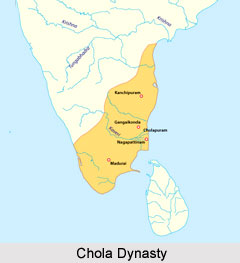
Queens of Chola Dynasty: The Cholas ruled from 300s BCE to 1279 CE and is known to be the longest ruling dynasties of southern India. One of the most important queens of this era was Queen Sembiyan Mahadevi, the widow of king Gandaraditya and the mother of Uttama Chola. She was a patron of art and architecture, and constructed numerous temples some of which are at Kutralam, Virudhachalam, Aduthurai, etc. She had a town named after her and during her lifetime, special celebrations marked her birthday in the Shiva temple in the town of Sembiya Mahadevi. She also bestowed several gifts of bronzes, including the bronze idol of Nallur and jewellery in the Nallur Kandaswamy Temple.
 Queens of Pandyan Dynasty: The Pandyan rule in South India was from 4th century BCE to almost 16th century CE. According to Hindu legends, Malayadwaja Pandya and his queen Kanchanmala had one daughter Thataathagai, who was later known as Meenakshi. She succeeded her father"s throne and finally took her true form of Meenakshi. This reflected the matrilineal tradition in South India and the regional belief that "penultimate powers rest with the women", Gods listen to their spouse, and that the fate of kingdoms rest with the women. The reverence for Meenakshi is a part of the Hindu Goddess tradition and it is said that her eyes are fabled to bring life to the unborn.
Queens of Chalukya Dynasty: The queens of the Chalukyas of Badami in the state of modern day Karnataka, issued royal records, administered some of the divisions of their empire and donated to charity. Vijja also known as Vidya or Vijaya Bhattarika was the senior queen or the pattamahishi of Chandraditya Prithivivallabha Maharaja whose father Pulakeshin II ruled over the Chalukyan kingdom in the Karnataka region during the 7th century A.D. She was a talented Sanskrit poetess and has been identified by some scholars with Vijayanka, a great literary figure of those times. She wrote poems featuring topics such as love, nature, changes of season, the sea, and the female beauty. Another Chalukyan queen who deserves mention is Loka Mahadevi the queen of Vikramaditya II who assisted her husband in the building of the Shiva temple at Pattadakkal in the 8th century A.D to commemorate his victory over the Pallavas.
Queens of Pallava Dynasty: Among the Pallava queens, the name of Charudevi stands out as she is mentioned as the wife of the heir Buddhavarman. Inscriptions in her name record the donation of land to a Vishnu temple in the 4th century AD. There were many other Pallava queens like Rangapataka, the favourite consort of Rajasimha Pallava, who was associated with the construction of the famous Kailasanatha temple in Kanchipuram in the 8th century A.D. The names of Mailaladevi and Ketaladevi II who ruled between the periods of 1053 to 1054 A.D. and few other queens are well-known.
 Queens of Kakatiya Dynasty: The most influential monarch of the Kakatiya dynasty in the Deccan Plateau was Rani Rudrama Devi, who reined around 1262 to 1289 CE. She jointly began her rule with her father Ganapatideva, as his co-regent, from 1261-62 and assumed full sovereignty in 1263. Unlike her Kakatiya predecessors, she chose to recruit as warriors many people who were not aristocratic, granting them rights over land tax revenue in return for their support. This was a significant change and one that was followed by her successor and also by the later Vijayanagara Empire. Her demise finally came in the hands of the Kayastha chieftain Ambadeva in 1289, after a valiant battle between the two. Though some sources claim, she did not die until 1295.
The Kakatiyas had few other queens like the two queens of Krishnadeva Raya, who were Tirumala Devi and Chinna Devi. They accompanied him to the temple of Lord Venkateswara at Tirumala, present day Tirupati and presented many expensive gifts to the presiding deity. The exquisite life-size bronze images of the three of them can be seen even today inside this temple complex. One of the queens of Achyuta Raya, the successor of Krishnadeva Raya, was Oduva Tirumalamba, a Sanskrit scholar and poetess who authored Varadambika Parinayam, which was the story of marriage of King Achyuta Deva Raya in Sanskrit.
Queens of Satavahana Dynasty: The origin of the Satavahana dynasty is uncertain but according to the Puranas, their first king overthrew the Kanva dynasty. It is said that the Satavahanas were the early issuers of Indian state coinage struck with images of their rulers. One of the prominent queens from this dynasty was Queen Naganika, she was the wife of Satakarni I, who was the third of the Satavahana kings and ruled the Deccan region of India. His wife, Queen Naganika was the first queen before Queen Victoria to have a coin issued in her name. The inscriptions of Queen Naganika at Naneghat near Junnar and the discovery of 2 silver coins play a pivotal role in understanding the period of the Satavahanas. The inscriptions at Naneghat are written with great flamboyance, to give an idea and the insights of the early years under Satakarni I and the prosperity of their empire. These ancient inscriptions suggest that there was a cave here which was commissioned by Queen Naganika. It is known that she was the daughter of the Maratha king Tranakiya and her marriage with the Satavahana ruler was a significant political alliance.
Queens of Hoysala Dynasty: The Hoysala ruled between the 10th and 14th century and was considered an important period in the development of art, architecture and religion in South India. The most influential queen from this era is Shantala Devi; the main queen of the king Vishnuvardhana and a patron of art and architecture. She helped him in the administration of the kingdom as well as building temples around their capital city of Belur. The famous Chennakesava Temple was built by a general of the Hoysala king Narsimha III but the surrounding structures were commissioned by the queen herself. Her legends have been immortalized in a book by KV Iyer called Natyarani Shantala.
Other than these famous queens there were sculptures of many other queens of the Nayaka rulers which were seen in various temples, especially in Tamil Nadu, standing with intense devotion with folded palms, praying to the deities. The concept of polygamy was very much prevalent and the kings of South India married many princesses of other royal households. The main reason for this was to strengthen their position by way of these matrimonial alliances.