 History of Sikkim reveals the rule of rulers of Sikkim during the colonial era- the rule of British East India Company and the British Government in India.
Early History of Sikkim
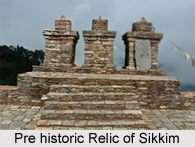
The earliest important event in the history of Sikkim is the passage of the Buddhist saint Guru Rinpoche through the land in the 8th century. He introduced Buddhism to Sikkim, and foretold the era of monarchy in the state that would arrive centuries later. In the fourteenth century a prince from Eastern Tibet, had a divine revelation one night instructing him to travel south to seek his fortunes. His descendants later formed the royal family of Sikkim.
Medieval History of Sikkim
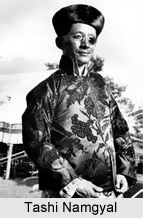
In 1642, the fifth generation descendant of Khye Bumsa, Phuntsog Namgyal, was the first king of Sikkim, marking the beginning of the monarchy. In 1670 he was succeeded by his son, Tensung Namgyal. In 1700, Sikkim was invaded by the Bhutanese with the help of the half-sister of the king, who had been denied the throne. The Bhutanese were driven away by the Tibetans, who restored the throne to the king ten years later. Between 1717 and 1733, the kingdom faced many raids by the Nepalese in the west and Bhutanese in the east, culminating with the destruction of the capital by the Nepalese. In 1791, China sent troops to support Sikkim. Following Nepal`s defeat, Sikkim became a suzerainty of Qing Dynasty.
Modern History of Sikkim
With the arrival of the British East India Company, in neighbouring India, Sikkim allied with them against their common enemy, Nepal. The Nepalese attacked Sikkim, and defeated it. This prompted the British East India Company to attack Nepal, resulting in the Gurkha War of 1814. Treaties signed between Sikkim and Nepal (the Sugauli Treaty) and Sikkim and British India ( Titalia Treaty) - returned the territory annexed by the Nepalese to Sikkim in 1817. Gradually the ties between Sikkim and the British administrators of India grew sour. In 1849 two British doctors, who were in charge of relations between the British and Sikkim Government, ventured into the mountains of Sikkim unannounced and they were detained by the Sikkim government which lead to a British expedition against the Himalayan kingdom, after which the Darjeeling district and Morang (one of the 75 districts of Nepal) were annexed to India in 1835. The invasion led the king to be a puppet under the directive of the British governor.
Sikkim-After Independence
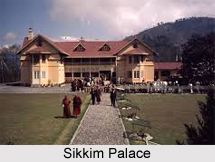
In 1947 Sikkim was prohibited from joining the Indian Union and Prime Minister Jawaharlal Nehru agreed to provide a special protectorate status for Sikkim. Sikkim was to be a tributary of India, in which India controlled its external defence, diplomacy and communication. A state council was established in 1955 allowing a constitutional government for Sikkim. In 1973, the people rioted in front of the palace demanding for protection from India. India`s actions were brought into the spotlight of world awareness, however history had already been written and matters came to a head in 1975, when the Prime Minister appealed to the Indian Parliament for representation and change of Sikkim`s status to a state of India. In April, the Indian Army moved in Sikkim, seizing the city of Gangtok, disarming the Palace Guards. Within two days the entire nation was in Indian hands. A referendum was held in which 97.5% of the people voted to join the Indian Union. A few weeks later on May 16, 1975, Sikkim officially became the 22nd state of the Indian Union, and monarchy was abolished. As part of a significant pact between India and China signed by the Prime Ministers of the two countries, Manmohan Singh and Wen Jiabao, China released an official map clearly showing Sikkim as part of the Republic of India.