
 Maharashtra, the land of charismatic Marathas, unfolds the legend of diverse culture and tradition, keeping in pace with the modernity. The history was recorded with the use of Marathi language, a Prakrit adaptation of Sanskrit. According to excavated evidences, Maharashtra was inhibited since the Paleolithic era. The name Maharashtra derived from "rathi" or "chariot driver" has its close affinity with the occupation of the inhabitants used to exist there who assembled to form the "fighting force" and used to be known as " maharathis". Maharashtra has a valiant history, which still murmurs the enigmatic aura of the state. The history of Maharashtra can actually be classified into five broad periods like Pre-medieval, Islamic Rule, The Rise of the Marathas, The Peshwas and the British rule.
History of Maharashtra
Maharashtra, the land of charismatic Marathas, unfolds the legend of diverse culture and tradition, keeping in pace with the modernity. The gallant history of Maharashtra is still echoed amidst its historical relics and archeological wonders.
Introduction
Maharashtra, the land of charismatic Marathas, unfolds the legend of diverse culture and tradition, keeping in pace with the modernity. The history was recorded with the use of Marathi language, a Prakrit adaptation of Sanskrit. According to excavated evidences, Maharashtra was inhibited since the Paleolithic era. The name Maharashtra derived from "rathi" or "chariot driver" has its close affinity with the occupation of the inhabitants used to exist there who assembled to form the "fighting force" and used to be known as " maharathis". Maharashtra has a valiant history, which still murmurs the enigmatic aura of the state. The history of Maharashtra can actually be classified into five broad periods like Pre-medieval, Islamic Rule, The Rise of the Marathas, The Peshwas and the British rule.Pre-medieval History of Maharashtra
Not much information is available about the early history of Maharashtra. Depending on the evidences till unearthed, several dynasties from its advent have dominated the land. Vidarbha, the eastern part of Maharashtra was once controlled by the Vakatakas (250 -525 AD) under whose patronage art and religion flourished and technology became prominent. By the 6th century Maharashtra came under the Chalukyan regime. Later the Rashtrakutas spread out their kingdom in most of the peninsular India. Thus Maharashtra was in chaotic turmoil by the continuous wars and conquest of various dynasties until Ashoka, the Buddhist king came in power and managed to consolidate the disintigatrated parts. Maharashtra became the nucleus of Indian Commerce during Ashoka`s reign and Indian trade was prospered even in abroad.
Islamic Rule in Maharashtra
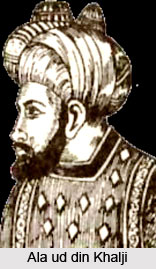
Maharashtra was originally unaffected from the Muslim influences because the principal site of the Mughal Empire was Delhi. It was when Ala-ud-din Khalji invaded parts of Deccan, Islamic influence engulfed the land and for a considerable period the Islams dominated the land. With the downfall of Tughluqs, the Bahamani Sultanate overpowered their kingdom and constituted the episode of next 150 years of Islamic rule. Till 16th century Maharashtra was separated into many autonomous Islamic states that were under the direct provision of Mughal Empire in Delhi.
The Rise of the Marathas in Maharashtra
 As the history records, till the 16th century, Maharashtra undergoes great upheaval with the rise and fall of different dynasties. 17th century emerged with the ascension of Marathas with the leadership of Shivaji Bhosle. He was crowned king in 1674 after a hard won battle with the Muslims. The Maratha Empire reached its pinnacle in the reign of Shivaji. He integrated almost the entire Deccan and even annexed some parts of central India and parts of modern Pakistan with the Maratha Empire. After crushing the Mughals in 1707, it was the Marathas who became prominent in Indian politics. In 1712, Bajirao I ascend the throne. He introduced the post of Peshwa or Prime minister. However Bajirao was not competent enough to control the administration and Marathas had to suffer a setback in the third battle of Panipat in the hands of Afghan chief Ahmed Shah Abdali. Consequentially the Marathas incurred a huge loss and finally reduced to a provincial state.
The Peshwa Raj in Maharashtra
The Peshwas were the Brahmin Prime Ministers to the Marathas who began commanding Maratha armies and later became the de facto rulers of the Maratha Empire. They ruled Central India from 1749 to 1818. The Peshwas were entitled to look after the administrative and the military affairs of the Maratha state. Even the foreign relations of other Maratha states were determined by the Peshwa. After Shivaji none of the Maratha rulers could prove their efficiency. Henceforth after Shivaji, the Maratha power was entirely controlled by the Peshwas.
The word `Peshwa` was derived from Persia connoting "foremost" and this was introduced in Deccan by the Muslim rulers. The first Peshwa, Moropant Trimbak Pingle, was appointed by Chhatrapati Shivaji, the founder of the Maratha Empire, during his reigning period. As per historical evidence, Peshwa Sonopant Dabir was appointed by Shahji to assist Shivaji. The Peshwa was given the power of a Prime Minister.
The first Peshwas to receive the status of king was eight or nine years prior to 1700 AD. They oversaw the greatest expansion of the Maratha Empire around 1760 with the help of Sardars (Generals) like Holkar, Shinde, Bhonsale, Pantprainidhi, Gaekwads, Panse, Vinchurkar, Pethe, Raste, Phadke, Patwardhan, Pawar, Pandit and Purandare.
Ramchandra Neelkanth Bahutkar, alias Ramchandra Pant Amatya Bawadekar, was the youngest member of the council of ministers of Chhatrapati Shivaji. He also worked as a senior minister for Chhatrapati Sambhaji, Rajaram and Sambhaji II and during 1689-1699 he received the status of a king from Chhatrapati Rajaram as "Hukumatpanha". He was one of the greatest diplomats, administrators and warriors of the Maratha Empire and wrote the famous code of civil and military administration `Adnyapatra`. This eminent Peshwa recaptured many forts from Mughals during 1690-1694 and in some cases he applied the guerilla war techniques. He received immense support from the great Maratha warriors, Santaji Ghorpade and Dhanaji Jadhav for accomplishing his ministerial duties. Sometimes he himself took active part in the wars during 1689-1695 and in the absence of Chatrapati Rajaram; he sometimes played the role of shadow king. After Ramchandra Neelkanth Bahutkar, Tarabai was appointed to the post of the Peshwa.
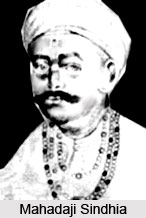
The Bhat family of Shrivardhan in the Konkan region was also assigned to keep the post of the Peshwas. During the reigning period of Chhatrapati Shahu, Balaji Vishwanath Bhat was appointed as the Peshwa in 1713 AD. After the appointment of Baji Rao I by Shahu in 1719, the position of the Peshwas became hereditary in the Bhat family. This led to a rebellion by General Trimbak Rao Dabhade, the Senapati (commander in chief). Trimbak was killed at the Battle of Bilhapur on April 1, 1731. After this incident, the Peshwas and the Bhat family were given the unchallenged control over Maratha. Baji Rao`s son was also appointed as Peshwa in 1740 AD by Shahu. The Peshwas were given considerable authority to command the Maratha armies. Shahu made the Peshwas his successors at the time of his demise in 1749. Since then Peshwa became the head of Maratha Empire. The Peshwas called the descendants of Shivaji who persisted as the supposed Raja of Satara, `Swami` that connotes `the real Owner` in Marathi. After the demise of Madhav Rao and the battle of Panipat, the Peshwa became a ceremonial head of state. Thereafter, the Peshwas earned the epithet of titular and the successors were Narayan Rao, Baji Rao, Raghunath Rao, Sawai Madhava Rao II Narayan, Chimnajee Madhava Rao, Baji Rao II, Amrit Rao (brother of Baji Rao II), Nana Sahib et al. The then generals and diplomats of the Peshwas were Ranoji Scindia, Malhar Rao Holkar, Udaji Pawar, Govind Pant Bundele, Pilaji Jadhav, Pilaji Gaekwad, Visaji Krushna Biniwale, Nana Phadnis, Mahadji Shinde and others.
In 1689 Ramchandra Pant Amatya Bawdekar, the Peshwa, received the status of a king by Chatrapati Rajaram. The first Peshwa from the Bhat family was Balaji Vishwanath Bhat who was a chitpavan Brahmin. He was the first Peshwa of the Maratha confederacy. He made the office of Peshwa hereditary. He was a shrewd diplomat apart from being a military general and under him the Maratha from a microscopic minority, rose into great power. His son Baji Rao I succeeded him. He was also a military general and a diplomat like his father. He liberated the revenue provinces of the Maratha power the Mughal supremacy ands also extended the Maratha supremacy in the Deccan. Under Baji Rao I, Gujrat, Malwa, the territory of Bundelkhand came under Maratha supremacy. Baji Rao II, the last Peshwa was defeated by the British East India Company in the Battle of Khadki which was a part of Third Anglo-Maratha War (1817-1818). The British East India Company annexed the territory of Peshwa in Central Maharashtra in their Bombay province.
The Peshwa tradition was one of the most important changes in the Maratha Empire and it had a great effect on the extension of the Maratha province.
The word `Peshwa` was derived from Persia connoting "foremost" and this was introduced in Deccan by the Muslim rulers. The first Peshwa, Moropant Trimbak Pingle, was appointed by Chhatrapati Shivaji, the founder of the Maratha Empire, during his reigning period. As per historical evidence, Peshwa Sonopant Dabir was appointed by Shahji to assist Shivaji. The Peshwa was given the power of a Prime Minister.
The first Peshwas to receive the status of king was eight or nine years prior to 1700 AD. They oversaw the greatest expansion of the Maratha Empire around 1760 with the help of Sardars (Generals) like Holkar, Shinde, Bhonsale, Pantprainidhi, Gaekwads, Panse, Vinchurkar, Pethe, Raste, Phadke, Patwardhan, Pawar, Pandit and Purandare.
Ramchandra Neelkanth Bahutkar, alias Ramchandra Pant Amatya Bawadekar, was the youngest member of the council of ministers of Chhatrapati Shivaji. He also worked as a senior minister for Chhatrapati Sambhaji, Rajaram and Sambhaji II and during 1689-1699 he received the status of a king from Chhatrapati Rajaram as "Hukumatpanha". He was one of the greatest diplomats, administrators and warriors of the Maratha Empire and wrote the famous code of civil and military administration `Adnyapatra`. This eminent Peshwa recaptured many forts from Mughals during 1690-1694 and in some cases he applied the guerilla war techniques. He received immense support from the great Maratha warriors, Santaji Ghorpade and Dhanaji Jadhav for accomplishing his ministerial duties. Sometimes he himself took active part in the wars during 1689-1695 and in the absence of Chatrapati Rajaram; he sometimes played the role of shadow king. After Ramchandra Neelkanth Bahutkar, Tarabai was appointed to the post of the Peshwa.
The Bhat family of Shrivardhan in the Konkan region was also assigned to keep the post of the Peshwas. During the reigning period of Chhatrapati Shahu, Balaji Vishwanath Bhat was appointed as the Peshwa in 1713 AD. After the appointment of Baji Rao I by Shahu in 1719, the position of the Peshwas became hereditary in the Bhat family. This led to a rebellion by General Trimbak Rao Dabhade, the Senapati (commander in chief). Trimbak was killed at the Battle of Bilhapur on April 1, 1731. After this incident, the Peshwas and the Bhat family were given the unchallenged control over Maratha. Baji Rao`s son was also appointed as Peshwa in 1740 AD by Shahu. The Peshwas were given considerable authority to command the Maratha armies. Shahu made the Peshwas his successors at the time of his demise in 1749. Since then Peshwa became the head of Maratha Empire. The Peshwas called the descendants of Shivaji who persisted as the supposed Raja of Satara, `Swami` that connotes `the real Owner` in Marathi. After the demise of Madhav Rao and the battle of Panipat, the Peshwa became a ceremonial head of state. Thereafter, the Peshwas earned the epithet of titular and the successors were Narayan Rao, Baji Rao, Raghunath Rao, Sawai Madhava Rao II Narayan, Chimnajee Madhava Rao, Baji Rao II, Amrit Rao (brother of Baji Rao II), Nana Sahib et al. The then generals and diplomats of the Peshwas were Ranoji Scindia, Malhar Rao Holkar, Udaji Pawar, Govind Pant Bundele, Pilaji Jadhav, Pilaji Gaekwad, Visaji Krushna Biniwale, Nana Phadnis, Mahadji Shinde and others.
In 1689 Ramchandra Pant Amatya Bawdekar, the Peshwa, received the status of a king by Chatrapati Rajaram. The first Peshwa from the Bhat family was Balaji Vishwanath Bhat who was a chitpavan Brahmin. He was the first Peshwa of the Maratha confederacy. He made the office of Peshwa hereditary. He was a shrewd diplomat apart from being a military general and under him the Maratha from a microscopic minority, rose into great power. His son Baji Rao I succeeded him. He was also a military general and a diplomat like his father. He liberated the revenue provinces of the Maratha power the Mughal supremacy ands also extended the Maratha supremacy in the Deccan. Under Baji Rao I, Gujrat, Malwa, the territory of Bundelkhand came under Maratha supremacy. Baji Rao II, the last Peshwa was defeated by the British East India Company in the Battle of Khadki which was a part of Third Anglo-Maratha War (1817-1818). The British East India Company annexed the territory of Peshwa in Central Maharashtra in their Bombay province.
The Peshwa tradition was one of the most important changes in the Maratha Empire and it had a great effect on the extension of the Maratha province.
The British rule and the Post-Independence
The British rule started in actuality only after they attained victory in three Anglo-Maratha wars. The northern part of Deccan was incorporated with Bombay Presidency from 1848 to 1853. The princely states like Nagpur, Satara etc. submitted to the British supremacy to maintain their local autonomy. The British generals crushed the minor revolts, later arose. Therefore the fall of Marathas before the British supremacy smoothened the path of the British to establish them politically in India.
After India unchained herself from the clutches of the British Raj, the political scenario of Maharashtra has undergone certain changes. Several states are annexed and the former disintegrated princely states were consolidated to form an integrated whole of the present Maharashtra. In 1960, under the Bombay Reorganization Act, Maharashtra and Gujarat were recognized legally as the separate states and the present state of Maharashtra came into being with Bombay as its capital. The post-independence history of Maharashtra comprises the period from the attainment of independence to the final separation and integration of the states. The post-independence era prompts the social and economic policies adopted by the government for the welfare of the state.
After India unchained herself from the clutches of the British Raj, the political scenario of Maharashtra has undergone certain changes. Several states are annexed and the former disintegrated princely states were consolidated to form an integrated whole of the present Maharashtra. In 1960, under the Bombay Reorganization Act, Maharashtra and Gujarat were recognized legally as the separate states and the present state of Maharashtra came into being with Bombay as its capital. The post-independence history of Maharashtra comprises the period from the attainment of independence to the final separation and integration of the states. The post-independence era prompts the social and economic policies adopted by the government for the welfare of the state.
Rise of Prarthana Samaj in Maharashtra
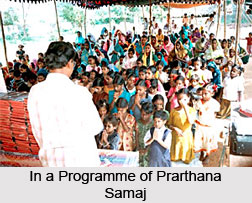 Prarthana Samaj, or the "Prayer Society" in Sanskrit, is a movement for religious and social reform in Maharashtra that is based on previous reform movements and traditions of Maharashtra. The direct antecedent of the Prarthana Samaj in Mumbai was the Paramahamsa Sabha, a secret society for the furtherance of liberal ideas that was formed in 1849 by Ram Balkrishna Jaykar and others in Mumbai. It was secret in order to avoid the anger of the powerful and orthodox fundamentals of society. Meetings were arranged for discussion, the singing of hymns, and the sharing of a communal meal prepared by a low-caste cook. Members of this community ate bread baked by Christians and drank water brought by Muslims.
Alike the Brahmo Samaj of Bengal, the Prarnatha Samaj represented an Indian response to European liberalism, including the principles of rational or theistic belief and social improvement. The members of the Prarthana Samaj followed the great religious tradition of the Maratha Sant Mat like Namdev, Tukaram and Ramdas(the guru of Shivaji). The Brahmo Samaj founders went through many world religions including ancient Vedic texts, which consequently were not accepted to be infallible or divine. Although the supporters of Prarthana Samaj were devoted theists, they also do not consider the Vedas as divine or perfect. They drew their sustenance from the Hindu scriptures and used the hymns of the old Marathi "poet-saints" in their prayers. Their ideas dated back to the devotional poems of the Vitthalas as part of the Vaishnava Bhakti devotional actions of the thirteenth century in southern Maharashtra. The Marathi poets had motivated a movement of conflict to the Mughals. But, beyond the religious concerns, the prime focus of the Prarnatha Samaj was on the social and cultural reform. The Prarthana Samaj critically looked into the relations between modern social and cultural systems and religious beliefs and thus gave importance to social reform as compared with the political alterations that were already initiated by the British government. Their all-inclusive reform movement has led many inspiring projects of cultural change and social improvement in Western India. Some of them include the improvement of the lot of women and dejected classes, an end to the caste system, elimination of child marriages and infanticide, educational opportunities for women, and remarriage of widows. Sir Ramakrishna Gopal Bhandarkar, Dr. Atmaram Pandurang, Narayan Chandavarkar and Justice Mahadev Govinda Ranade guided the successes of the community.
The Prarthana Samaj was first started in Bombay and was inspired by the Brahmo Samaj but is milder and less fundamental in its principles. Theistic worship came at the forefront. Many members hold the view that explicit beliefs and theological thought are not necessary for a boundless theistic movement. Prarthana Samaj believes that God is the creator of this universe and he is the only true God; there is no other God beside him. His worship alone shall lead to happiness in this world and the next. Love and reverence for him, praying and singing to him spiritually with these feelings is his true worship. To worship and pray to images and other idols is not a true mode of divine adoration. God does not incarnate himself and all men are His children; therefore they should have affection towards each other without distinction.
The doctrine of Prarthana Samaj was very similar to the Brahmo Samaj but with one significant difference. The Prarthana Samaj based its worship on the devotional poems of the Vitthalas, especially those of Tukaram. The Vitthalas or Varkari Panth, `pilgrim`s path,` is the sect of Vitthala, the Vaishnava bhakti devotional movement that rose in the thirteenth century and is centered on Pandharpur in the far south of Maharashtra.
In 1872 another great Brahmo personality, Pratap Chandra stayed for six months at the invitation of the Prarthana Samaj. During his visit there was a plan of making Prarthana Samaj to become a branch of Brahmo Samaj. This was prevented by Mahadeo Ranade pointing out the splits among the Brahmos of Bengal, which might be spread all across in Bombay. The Prarthana Samaj continued as an independent reform movement and this was the most important and well-organized movement of the time that was sponsored by leaders of society. The mildness of the Prarthana Samaj has meant that there have never been groups of missionaries as in the Brahmo Samaj. With only one or two missionaries the movement has not spread widely. However, the mildness of the Samaj has been attractive in the South, in Andhra Pradesh and Tamil Nadu, where the Prarthana Samaj is the most popular of the Samajs. The Samaj runs the Young Theists Union, the Postal Mission to send religious literature, the Subodh Patrika, night schools, and a Ladies Association.
In 1875 the Prarthana Samaj faced its first crisis and a resulting split among its members. Swami Dayananda Saraswati visited Gujarat and Maharashtra with the result that a new ideology of exposed truth, fundamental change, and open conflict provided a dramatically different species of religious movement. A section of the Prarthana Samaj membership was involved in Aryan ideology and was excited by Dayananda. They wanted to have the Prarthana Samaj openly reject all caste rules and restrictions. After extensive internal debate led by S. P. Kelkar, those who accepted Dayananda`s message broke away and founded the Brahmo Samaj of Bombay. Kelkar`s Brahmo Samaj however failed after eight years, and in 1882 he returned to the Prarthana Samaj and became one of their few missionaries.
Although the Prarthana Samaj does not support image-worship, in practice members follow the ceremonies of Hinduism though regarding them as of no religious importance. Thus Samaj members can still practice image-worship in their homes and be part of the caste system. It is said that the Prarthana Samaj pays adherence to Hinduism with a protest. However, their own services use hymns of the old Maratha poet-saints, especially Tukaram. The Prarthana Samaj maintained various institutions, namely a free reading room, a library, night schools for workers, and an orphanage in Pandharpur. After 1906, they also formed a Depressed Classes Mission of India under the leadership of Vithal Ramji Shinde. The establishment of this new society made a great difference in changing the religious and social life of Maharashtra.
Recently updated articles in States of India
History of Thissur District
Early History of Thissur District explains flourishing of the port cities. Now these port cities are transformed into archaeological sites.
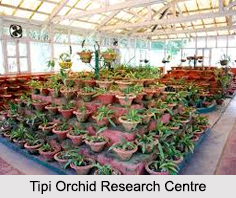
Tippi Orchid Research Centre, Arunachal Pradesh
Tippi Orchid Research Centre in Arunachal Pradesh is renowned for its rich collection of exotic and endangered orchids. Surrounded by lush rainforest...
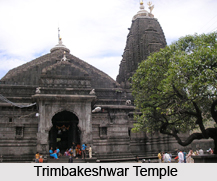
Tourism in Nashik District
Pilgrimage tourism in Nashik district involves visiting the various places of Hindu and Jain worship located here. Some of the holiest sites for Hind...
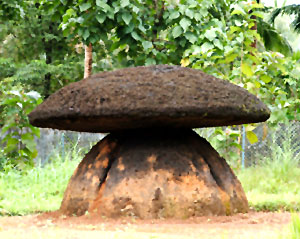
Mangadu, Kerala
Mangadu in Kerala’s Kollam district is a significant megalithic site known for its urn burials, cist burials, menhirs, and stone circles. Excavations...
Devaswom
History of Devaswom is not very ancient and can be dated back to late seventeenth century.
Related articles in States of India
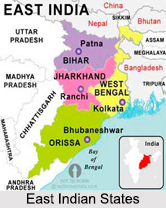
East Indian States
East Indian States comprises of Bihar, Jharkhand, West Bengal, Odisha and also the Union Territory of Andaman and Nicobar Islands. It defines the cult...
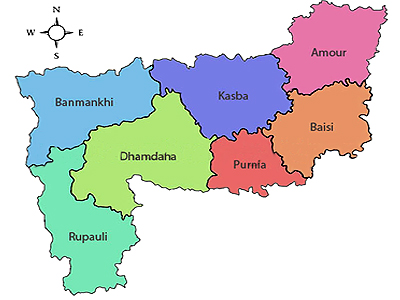
Purnia District in Bihar
Purnia District is located in Bihar and extends from River Ganga to Nepal. The district has a rich Hindu history and glorious past.
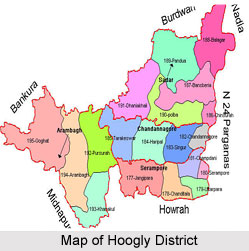
Hooghly district
Hooghly District along the bank of the river Hooghly is one of the principal trading ports of West Bengal.
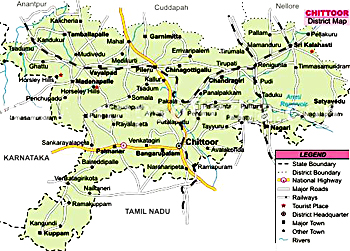
Geography Of Chittoor District
Geography of Chittoor district is spread along the topography of the land which is divided into two natural divisions; Chittoor has a dry and healthy...
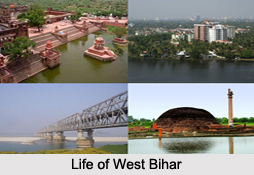
Districts of West Bihar
Districts of West Bihar is comprised of medieval monuments that were built by the different governors of Mughal era.