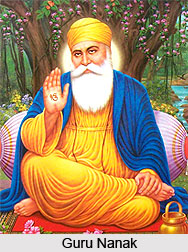
 Sikhism was propagated by Guru Nanak and his successors. The religion had originated in the Indian state of Punjab. The religion stresses on the devotion of God. Sikhism is the 5th largest religion in the world and presently has 23 million followers worldwide. The religious philosophy of the Sikhs has traditionally been known as "Gurumat" or the advice of the gurus.
Concept of Sikhism
The word Sikhism is derived from `Sikh` which, in turn, originates from the Sanskrit word `sishya` meaning a learner or `siksha` which means instruction. It dates back to the 15th century A.D. Service to mankind; hard work and dedication towards family life are also important principles of the religion. According to Nanak, the essence of Sikh philosophy is, `Realization of Truth is Higher than all else. Higher still is truthful living`.
History of Sikhism
During the first half of the 16th century, Sikhism came into existence combining both the Hindu as well as the Islam ideals. It is the synthesis of the Sant tradition of northern India or the Nirguna Sampradaya. Guru Nanak, the father of Sikhism made extensive journeys across the country and on his way he imparted his ideologies and philosophies.
 In the history of Sikhism, the year 1699 is of paramount importance for the people of Sikh communities because it was during this time that the Khalsa brotherhood and the Baisakhi festival came into existence. Guru Gobind Singh, the 10th Guru of the Sikhs was the one who had declared the "Guru Granth Sahib" as the ultimate religious authority of the Sikhs and had declared the Khalsa Panth as the temporal authority of the Sikhs.
Principles of Sikhism
As the word Sikh means "disciple", the core of Sikh philosophy thus, revolves around discipleship or obedience to one"s Guru. The principle of Sikhism focuses on the fact that an individual should detach oneself from all worldly ties. To lead a moral and righteous life is of utmost importance to a Sikh. The main tenets of the Sikh philosophy are renunciation, faith in God, love towards Human kind and obedience towards ones Gurus. Thus it can be said that Sikhism highly values the principles of moral life and faith in God. In the present age the Guru Granth Sahib embodies all the principles which a member of the Sikh community should adhere to.
Sikh Philosophy
Sikhism upholds the philosophy of monotheism. The Sikh people strongly believe in "Waheguru" which means the wonderful lord who created the beings of the world. For the Sikhs, the concept of God is simultaneous with the concept of Universe and they adhere to the belief that God is an all encompassing entity. The Sikhs believe that God is shapeless and timeless. The presence of God is omnipresent.
Nanak stressed on the fact that a true devotees should meditate in a sincere manner in order to accomplish enlightenment. According to Nanak, an individual should realize the power of God with his inner self and should experience God in every step of life. Salvation also holds prime importance within the philosophy of Sikhism. The Sikh people are supposed to follow the ideologies of the holy Guru Granth Sahib and also the teachings of the ten Sikh Gurus. Sikh philosophies are closely associated with the society and culture of Punjab.
Spread of Sikhism
Sikhism was initiated by Guru Nanak in India in the late 15th century. History says that Nanak had preached the philosophy of Sikhism by undertaking long journeys throughout the country. Nanak"s philosophy which was neither Hindu nor Muslim but focused on a righteous living inspired a large number of followers. After the death of Nanak his work of spreading the ideologies of Sikhism was conferred to Guru Angad Dev. In a similar manner eight other gurus had come into the Sikh community to spread the ideals preached by Nanak. After the ten gurus the authority of spreading Sikhism or the authority of guiding a Sikh in the right direction was bestowed upon the Holy Scripture, the Guru Granth Sahib. Sikhism today is a widely spread religion and has around 23 million of followers worldwide.
 Holy Scriptures of Sikhism
The two main sources of scriptures for the Sikhs are the Guru Granth Sahib and the Dasam Granth. The Guru Granth Sahib is also referred as the Adi Granth as it was the first volume of scriptures written by Guru Arjan Dev. The Guru Granth Sahib was declared by Guru Gobind Singh as the eternal Guru of the Sikhs. Apart from these the "Janam Sakhis" also occupy an important position for the Sikhs as they give account of the early life of Nanak and the subsequent spread of Sikhism.
Influences on Sikhism
Some scholars are of the opinion that Sikhism was closely influenced by two dominant religion of the 15th century those were namely Hinduism and Islam. Sikhism as a religion had more close association with the Sant movement or the Nirguna Samprdaya from the northern part of the country. Nanak had been a lot inspired by the teachings of Kabir.
Sikh Gurus
The word, `guru` holds prime importance for the Sikhs. Guru means a guide or a counsel and the one who shows the right path of living. Sikhism was started by Guru Nanak, known as the first guru of the Sikhs. After Guru Nanak, Sikhism was spread by nine other gurus till the period of 1708. The practice of guruship among the Sikhs started with Guru Nanak and continued till Guru Gobind Singh. After Guru Gobind Singh, the Guru Granth Sahib was made the eternal Guru of the Sikhs. The ten gurus of the Sikhs in order of chronology were;
1. Guru Nanak
2. Guru Angad Dev
3. Guru Amar Das
4. Guru Ram Das
5. Guru Arjan Dev
6. Guru Har Gobind
7. Guru Har Rai
8. Guru Har Krishan
9. Guru Tegh Bahadur
10. Guru Gobind Singh.
Sikh Festivals
Most of the festivals of the Sikh community revolve around the lives of Sikh gurus or the Sikh martyrs. Generally, Sikh festivals take place according to the new Nanaksahi calendar. The Sikh festivals generally include the Guruparabs, Baisakhi, Diwali and the Hola Mohalla. Apart from these festivals, the Sikh community also celebrates a number of ceremonies and customs which form an integral part of the Sikh life.
Sikhism till date is based on the concept of Waheguru and considers the Guru Granth Sahib as their ultimate religious authority. In the recent times, certain alterations have surfaced in the Sikh philosophy but the basic tenets preached by Guru Nanak, remains the same.
Sikhism
Sikhism is a religion started by Guru Nanak in land of Punjab in 15th century A.D.