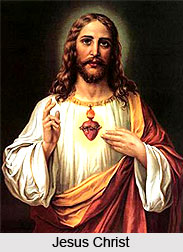
 Christianity is a monotheistic religion founded by Lord Jesus Christ. The Christian religion is created on the life and teachings of Jesus. Christianity has been playing a prominent role in shaping of Western civilization since the 4th century. Christians spread widely in all over the country. The religion is followed in South India, Konkan Coast, North-East India and also in Central India. Christians present in India is most visible in the form of educational institutions, social services and hospitals run by Christian organizations.
Origin of Christianity
Christianity is the 3rd largest religion of the country. The origin of Christianity is credited to Jesus Christ who is believed to be the only begotten Son of God. Jesus Christ is a teacher, the model of a virtuous life, the revealer of God, as well as an incarnation of God and necessarily the saviour of humanity who suffered, died, and was resurrected to bring about salvation from sin.
In India, Christianity is believed to have arrived with the coming of Saint Thomas in 52 AD. Saint Thomas arrived in Kodungallur, Kerala and established the Seven Churches and evangelized Kerala and Tamil Nadu. The second phase of Christianity was during the colonization of India which started after discovery of sea route to India by Portuguese explorer Vasco da Gama in 1498.
Concepts of Christianity
The true Concepts of Christianity implies that God is Jesus, God is Father, God is Love and the love of God is Redemptive. The followers of Christianity believe in only one God who has created the man and the world. Christians share a common belief in the uniqueness of Jesus as a truly divine and truly human incarnate Son of God who is the saviour of mankind. They believe each individual by their faith and life determines their eternal destiny - either in heaven or in hell. According to Christian belief, Jesus ascended into heaven, and many believe that Jesus will return to judge the living and the dead, granting everlasting life to his followers. Christians believe in the concept of trinity in Christianity that though Father, Son and Holy Spirit are three different persons, yet they are one.
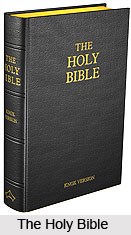 Holy Bible
The Holy Bible is the central religious text of Christianity. The Christians derive their inspiration from the 39 books comprising the Old Testament, and 27 books comprising the New Testament.
Sects of Christianity
Christians were divided into two major sects; "The Protestants" and "The Roman Catholics". According to the Roman Catholic Denomination, the first Bishop of Rome, the Pope is regarded as God"s representative on earth. He is the supreme authority in matters of faith and morals for Catholics all over the world.
Around 70 percent of Christians in India are Roman Catholics and the rest of the community belongs to mainly Protestants and Orthodox. There are more than more than five million Protestants in India extending from the northern and eastern regions of the country.
Christian Communities in India
A great population belongs to the Christian Communities in India. The Anglo-Indian Community is the group that is descended from a European male progenitor. Anglo-Indians were brought by some of the policies of the British, Portuguese and Dutch settlers and traders in India during the pre-independence period. Anglo-Indian culture and heritage is a new generation Christian community who are characterised by their unique interest in continuing rich traditions, values and culture.
The advent of Kannada Catholic Community was seen after coming of the Portuguese in India. The community prevails in Karnataka and in the 19th century, through the efforts of the Protestant missionaries. A Church was established and Christianity gradually spread throughout Karnataka. Syrian Christian Community prevails in Kerala, and traces their origin from the time of St. Thomas, the apostle. The Syrian community in India form about one-fifth of the total Christian population of the country.
Christians are taught about the conquest of passion, inner purity of heart and conscience, equality of all men before the eye of God and love, which fulfils all the laws of morality. Hence, Jesus taught a life of love, service to all fellowmen with the utmost sincerity of heart, which was a truly universal way of life. According to Jesus Christ, God was a form of love who made no distinction between the sinner and pious, between the righteous and unrighteous.