 Limestone
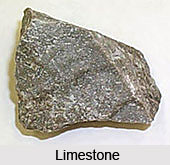
Limestone is calcareous sedimentary rock composed of the mineral calcite, which upon calcinations yields lime (CaO) for commercial use. In its broadest interpretation the term includes any calcareous material such as marble, chalk, travertine, tufa, limeshell, coral and marl each possessing different and distinct physical properties. The crystalline equivalents of limestone having the same chemical composition are calcite and aragonite.
In nature, the limestone bed is found to occur in varying purity, generally a part of the calcium molecules being replaced by magnesium tending towards magnesium limestone or dolomitic limestone. Limestone with more than10% of mineral dolomite is termed dolomite limestone, and that with 5 to 10%, magnesium limestone. The rock containing more than 95% of calcium carbonate is termed high-calcium limestone. Recrystallised limestone takes good polish and is used as decorative and building stone. It is then called `marble`.
A variety of other names is associated with limestone depending upon the modes of occurrence, texture, and the remains of foraminifera, molluscs and other shell-forming creatures, for example, oolitic and pisolitic limestones, reostone, crinoidal limestone, foraminiferal limestone, calcareous ooze, bryozoa limestone, argillaceous and hydraulic limestone and the like.
Oolitic limestone is the name given to granular limestone of which each grain consists of a series of concentric layers of calcium carbonate resembling the eggs of the fish. When it resembles the eggs of Roe fish, it is called Roestone. The name Pisolite-limestone is given when the grains are of the size of peas. Crinoidal limestone is a rock composed of encrinites with the remains of foraminifera-molluscs and their lime-forming organism
 Uses of Limestone
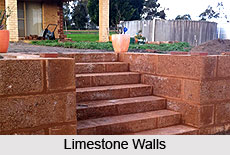
Limestone is quarried for roadbeds, building and landscape construction, and cement manufacture. Limestone is especially popular in architecture, especially in North America and Europe, are made primarily of the material. Limestone is readily available and relatively easy to cut into blocks or more elaborate carving. It is also long lasting and stands up well to exposure.
However, it is a very heavy material, making it impractical for tall buildings; it is also quite expensive. Limestone was most popular in the early 20th and late 19th centuries. Train stations, banks and other structures from that era are normally limestone. Limestone is used as a facade on some skyscrapers, but only in thin sheets rather than solid blocks. In North America, most limestone used in construction comes from Indiana.
Though the limestone used for construction is good for humid climates, it is vulnerable to acids, making acid rain a problem when it occurs in places where limestone is used extensively. The acids in the water can wear away the details of statues and other art.