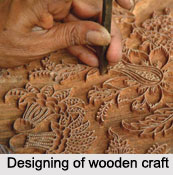
 Woodcrafts of India are famous since ages and probably one of the most primitive arts. Woodcarving is an ancient craft practised in India long before the age of ancient stone sculptural age. Indian wood worker designated as sutradhar has always held a high position in the society.
Indian wooden handicrafts are broadly liked in national and international marketplace. India has a lot of industries of wooden handicrafts in diverse states. A High number of woods exist in India for wood monument like white wood, Cedar, Shisham, Rose wood, Ebony wood, Walnut etc. These kinds of wood are used for carving statue, sculpture, furniture, wooden toys, attractive items, usefulness items, gift items, wooden elephant and other home inner embellishment structures.
History of Wood Craft
The history of wooden handicrafts of India can be traced to ancient times. Ancient India highlights wood as a medium for manufacturing daily usable items, utensils, axes, toys and dolls for children crafted with wood. Excavations at Indus valley civilization have proved the existence of woodcrafts.
Creative woodwork began as a temple and palace expertise and increased together with architecture and sculpture. Depending on local accessibility, diverse woods were used for wood carving and fashioned into spiritual, attractive and useful pieces. Over time, various centres of wood carving appeared, each with its different style.
Indian Wood craft groups
Wood carving groups are distributed across the country. The major locations, along with their distinctive products are:
Andhra Pradhesh: Engraved chairs, mirror frames, idols of Bhongir and Madhavmala and wooden plates of Udayagiri.
Assam: Carved sinhasanas (thrones) for prayer houses.
Gujarat: Printing blocks of Pethapur; engraved and inlayed sandalwood and teak boxes of Surat chests of Bhavnagar, Rajkot, Mahuva.
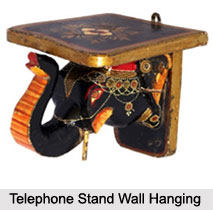 Himachal Pradesh: Carved doors, windows, panels of Kangra, carved walnut wood utility and decorative items like bowls, trays, jewellery boxes, screens, tables, and cupboards of Jammu & Kashmir.
Karnataka: Carved figures of Kumta; carved rosewood animals, especially elephants of
Mysore.
Kerala: Ebony, rosewood and sandalwood figures of Trivandrum, Thrissur, Ernakulam, Kochi.
Madhya Pradesh: Carved wall panels, boxes and furniture of Indore, Alirajpur, Bhopal, Ujjain, Ratlam.
Maharashtra: The musical instruments of Miraj.
Odisha: Wooden masks and rathas (chariots) of Puri and toys of Baragarh.
Punjab: furniture; low relief carving, with geometrical, animal, floral motifs of Hoshiarpur, Jalandhar, Amritsar, Bhera.
Rajasthan: Carved figures, wooden shrines of Bassi; bowls Of Pipar, Bhari Sajanpur: carved plaques, tribal and animal figures of Tripura.
Uttar Pradesh: Screens, folding tables, trays, bowls, boxes of Sahranpur; printing blocks of
Pilkhuwa, Farukkabad.
Different types of wood crafts
The most common varieties used to make Indian handicrafts are teak, sal, oak, mango, ebony and mahogany. Sandalwood, sheesham, rosewood and walnut are the fascinating varieties but expensive used in producing fine pieces of furniture and decorative items. There has been a consequent flow of breaths of Renaissance amongst traditional and antique woodcraft, owning to its uniqueness. Wooden Jewellery Box has intricate carvings, brass inlay and hammered metal, hand crafted by master craftsmen. With inlaid floral designs, imprinted with paintings and finished in lacquer, the wooden music boxes are meticulously hand crafted.
Scenes from Indian epics, particularly from the battlefield, forest and palaces include the themes for wood carving in India since ages. The tradition reached its paramount excellence between 1420 and 1470, when king Zain-ul-Abadin built his capital, which testified to the richness of this heritage. Wood Craft Carved walnut woodwork is among the most important crafts of Kashmir. Udaipur in Rajasthan has a long tradition in lacquer ware. The kheradees are the traditional wood workers, enjoying a respectable position in the community.
Plain lac ornamentation of wood creates the striped patterns in resplendent blending of colour with the designs varying from zig or dana work, atishi or fire, abri or cloud, nakashi etc. The products made are usually tables, tea pots, lamps, decorative plates, chakla and belan, toys, pidis, small stools and so on.
Wood carving, one of Karnataka`s oldest crafts inflated the doors and ceilings of temples and temple chariots. The most popular and praiseworthy example of it, however, is the sandalwood carvings, a hereditary household craft, going back several generations. There are two varieties in sandalwood- srigandha, (close grained and yellowish brown in colour) and nagagandha (darkish brown) from which oil is extracted.
