
 Ernakulam is the downtown area or the western part of the mainland of Kochi city in Kerala, India. Ernakulam is located at an average elevation of 4 m. The city is the most urban part of Kochi and has lent its name to the Ernakulam district. Ernakulam is called the commercial capital of the state of Kerala. The Kerala High Court, the Office of the Corporation of Cochin and the Cochin Stock Exchange are situated here. The city has served as an incubator for many Malayali entrepreneurs and is a major financial and commercial hub of Kerala.
Ernakulam
Ernakulam is the downtown area or the western part of the mainland of Kochi city in Kerala. There are many temples to visit here.
Introduction
Ernakulam is the downtown area or the western part of the mainland of Kochi city in Kerala, India. Ernakulam is located at an average elevation of 4 m. The city is the most urban part of Kochi and has lent its name to the Ernakulam district. Ernakulam is called the commercial capital of the state of Kerala. The Kerala High Court, the Office of the Corporation of Cochin and the Cochin Stock Exchange are situated here. The city has served as an incubator for many Malayali entrepreneurs and is a major financial and commercial hub of Kerala.History of Ernakulam
Starting from the Stone Age, Ernakulam has been the site of human settlement. Monolithic monuments like Dolmens and rock-cut caves can be seen in many parts of Ernakulam.
Etymology
Ernakulam was also known as "Rishinagakulam" in ancient days. The word `Ernakulam` has been derived from the name of a very famous temple of Lord Shiva called the Ernakulathappan Temple. It is also said that the word Ernakulam has been taken from Malayalam words `Ere naal Kulam`, that means `Pond for a long time`.
Climate in Ernakulam
Since the region lies in the south western coastal state of Kerala, the climate is tropical, with only minor differences in temperatures between day and night, as well as over the year. Summer lasts from March to May, and is followed by the South-west monsoon from June to September. October and November form the post monsoon or retreating monsoon season. Winter from December through February is slightly cooler and windy, due to winds from the Western Ghats. The city is drained in the monsoon season by heavy showers.
Demographics of Ernakulam
 According to the 2011 census Ernakulam district has a population of 3,282,388. Ernakulam has a sex ratio of 1028 females for every 1000 males, and a literacy rate of 95.68%. This district is listed as the "most advanced" district in Kerala.
Economy of Ernakulam District
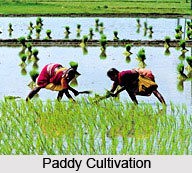
 The district`s important segment of economy is constitutes mainly of agriculture which is the biggest source of employment. Of the geographical 235319 hectares, crops are grown in 210438 hectares. Coconut is the principal crop followed by rubber, paddy, and tapioca. Pokkali, which is a paddy cultivation system, is peculiar to the District. Under this system only one crop can be taken in a year. After harvesting suitable varieties of fishes and prawns are grown in the fields, which is more profitable. Activities allied to agriculture such as dairy, poultry and fishery play an important role in the economy of the district. Among the total cultivated area 29.40% is irrigated in the district.
Ernakulam district is the most developed district in Kerala, bestowed with all the geographical factors that help the development of industry. So it can be said that it is in the forefront of all other Districts in Kerala in the field of industry. One of the unique features of Kerala is the availability of all types of transport facilities, which can be named as road, rail, canal, sea, air, etc.
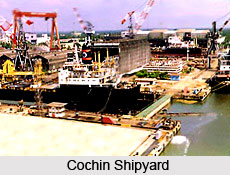
 Some of the major industrial firms in the district are named as Fertilizers and Chemicals Travancore, Indian Rare Earths, Hindustan Machine Tools, Appollo Tyres, Hindustan Insecticides, Forest Industries of Travancore, Travancore Cochin Chemicals, Cominco Binani Zinc, Cochin Shipyard, Cochin Refineries, etc. The industrial growth in the district accelerates mainly by the availability of electricity, fresh water, fairly long coastline, good banking facility, proximity to Kochi Port, or International airport at Nedumbassery. In addition to this processing zone is situated at Kakkanad. The Brahmapuram Diesel plant and Pathalam Naphtha plant are present in the District because of this the district consume major share of electricity. There are 29037 small-scale industrial units that are functioning in this district.
Culture of Ernakulam District
 Important temples of the district are Shiv temple of Aluva, Chottanikkara, Thrikkakkara, Thrippunithura, Ernakulam, Ponnurunni, Palarivattom, Chowara, Sreenarayanpuram and Perumbavoor. Kalady is famous because of the fact that Adisankara was born at that place. There is a famous Christian pilgrim Center at Malayattoor present in this District. The festival starts at April 10 and lasts for 10 days. St. George Church at Kadamattam is very old and was founded by Mar Abo Metropolitan in 5th Century A.D. He brought a cross from Persia, which is still preserved in the church. The name of Kadamattathu Kathanar is associated with this church.
The festival at the church of Vallarpadam on September 24 is very famous and attracts people belonging to all religions. The icon of Virgin Mary in this church is credited with many miracles. St. George Florence Church at Edappally is considered to be the oldest church in Kerala, which was founded in 593 A.D. before that St. Thomas founded the 7 churches. A large number people are fed for the feast of St. Joseph on March 19 in St. Antonys church situated at Kannamaly.
Another worth mentioning festival is the Easter Festival at St. Marys Church at Piravom. One of the ancient mosques in Kerala is at Kanjiramattam.
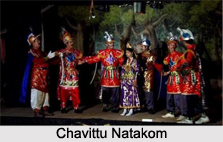
Chavittu Natakom : The Chavitty Natakom is the famous Neo-classical dance form of the Coastal belt of Ernakulam District. The Portuguese influence in Kerala helped the spread of Christianity along the South West Coast. As a result, a new type of community was slowly brought into existence, which being cut off from its original set up had to look upon the westerner for cultural sustenance.
Out of this situation there was born a new art form with songs, dialogues and dances similar to the miracle plays of the west. They are known as Chavittu Natakom. The influence of the west can be shown in the stage settings, introduction of certain costumes, etc.
Some of the important plays, which are staged at that time, were Genoa, Caralman, Charitham, Napoleon charitham, etc. Mainly the Places like Gothuruth, Mundamvely, Varapuzha were famous for this art form.
Temples in Ernakulam
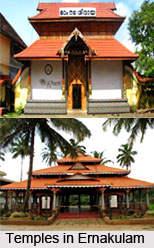
The city with its temples, old churches and its culture is ranked first in the number of domestic tourists visiting Kerala. There are many holy places like temples to visit in Ernakulam. The temples that are located here are Ernakulathapan temple dedicated to Lord Shiva, Hanuman Temple, Muruga Temple, Valanjambalam Devi Temple, Ravipuram Srikrishna Swamy Temple.
Tourism in Ernakulam
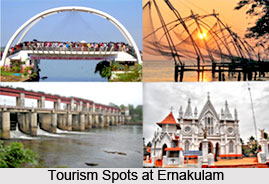
 Ernakulam is the commercial capital of Kerala and is dotted with interesting places like Pierce Leslie Bungalow, Koder House, St. Francis Church, Santa Cruz Basilica, Bishop`s House, David Hall, Synagogue and many other attractions.
Ernakulam district is the commercial capital of Kerala. There are several attractive visiting places in and around the district. Other interesting spots like Marine Drive, Kochi, Chinese Fishing Nets, Hill Palace Museum, Bolgatty Island, Willington Island, Kodanad, Parikshith Museum, Dutch Palace, Kerala Historical Museum, Chendamangalam, Bhoothathankettu, Wonder La, and Kakkanad.
Pierce Leslie Bungalow of Ernakulam
This is a grand structure, which was earlier the office of Pierce Leslie & Co., the centuries old coffee merchants in 1862. It was built in a fusion of three architectural styles called-the Dutch, the Portuguese and the Keralite. The verandahs are furnished with waterfronts.
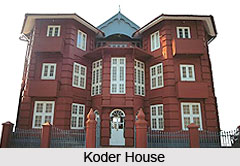
Koder House of Ernakulam
This 18th century structure was built by Samuel S Koder of the Kochin Electric Company. The beginning of Indo-European style over the colonial style was emphasised in this architecture.
Delta study of Ernakulam
This High School here is a part of the magnificent bungalow built in 1808 and it was once a warehouse.
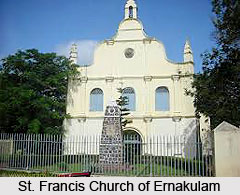
St. Francis Church of Ernakulam
St. Francis Church of Ernakulam is an ancient church, which is considered to be the oldest European church in India. It has a long history of construction and re-construction. It was originally built of wood and timber by the Portuguese in 1503. Later, the Dutch Protestants reconstructed it with stone granite in 1779 and then converted into an Anglican church by the British in 1795. Now, it is under the Church of South India Council. Vasco da Gama`s tomb can be seen here.
Santa Cruz Basilica of Ernakulam
The Portuguese built this ancient church and was sanctified as a Cathedral by Pope Paul IV in 1558. It was destructed during 1795 British attack. It was declared as the church, Basilica in l894 by Pope John Paul II.
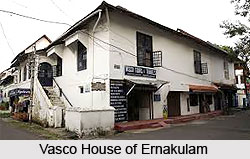
Vasco House of Ernakulam
This is a 16th century building with typical European glass paned windows, balcony and verandahs. It is believed to have been the residence of Vasco-da-Gama.
VOC Gate of Ernakulam
This is a huge wooden gate facing the parade grounds, which was built in 1740. The name `monogram VOC` of the gate can be seen carved on it. The parade ground covers an area over 4 acres. Earlier, it was the venue of the military parades of the Portuguese, the Dutch and then the British. Now, it serves as a sports ground.
Bishop`s House of Ernakulam
This beautiful building is situated on a small hillock near the parade grounds. It was built in 1506 as the residence of the Portuguese Governor. The front side of it was built in the Gothic arches. There is a tread worthy path along a circular garden leading to the inviting portal.
Fort Immanuel of Ernakulam
This fort is situated along the beach and was once a splendid fort. The fortress here signified the alliance between the then rulers of Kochi and Portugal. It was built in 1503 and fortified in 1538. The Dutch and the British destroyed the fort in the 1800`s.
David Hall of Ernakulam
The Dutch East India Company built it in the later part of the 17th century. The hall is known by the name of David Koder, a Jewish businessman, who was one of the later occupants.
The Cochin Club of Ernakulam
It started functioning in the 1900`s. There is an impressive collection of sporting trophies. It is situated in a meticulously beautified park.
Mattancherry Palace of Ernakulam
It is also known as the Dutch Palace. It was originally built by the Portuguese in 1557 and presented to Raja Veera Kerala Varma of Kochi. At present, it is a `Portrait Gallery` of Kochi Rajas. Many beautiful wall paintings, Old Dutch maps of Kochi, royal palanquins and other ancient materials can be seen here. It can be visited from 10:00 to 17:00 hrs every day except on Fridays.
Synagogue of Ernakulam
This oldest synagogue was built in 1568 in the Commonwealth. It was destroyed in 1662 during the Portuguese attack and rebuilt after 2 years by the Dutch. The visitors can see a clock tower, stone slabs with Hebrew inscriptions, great scrolls of Old Testament, copper plates bearing ancient scripts, etc here. The visiting hours are from 10:00 to 12:00 hrs and 15:00 - 17:00 hrs. It remains closed on Saturdays and Jewish Holidays.
Jew Town of Ernakulam
 The area around the synagogue is called Jew Town. It is the centre of spice trade and curio shops.
Cherai Beach of Ernakulam
This beautiful beach along the border of the calm island Vypeen is perfect for swimming. The Dolphins can be seen occasionally. Paddy fields and coconut groves are found in large numbers.
Bolghatty Island of Ernakulam
This is a fantastic holiday resort. Bolghatty Palace was built here in 1744 by the Dutch, later taken over by the British East India Company. Now, it serves as a hotel managed by the K.T.D.C. The special feature of this island is a small golf course and the honeymoon cottages.
Wellingdon Island of Ernakulam
This is an artificial island in the middle of the artful back-waters. It was named after Lord Willingdon, a former British Viceroy of India. The visitors can avail the excellent hotels, trading centres, Port Trust and the Southern Naval Command Headquarters.
The Hill Palace Museum of Ernakulam
This beautiful palace is situated at Thripunithura about 10 km from Kochi. It was built in 1865. This huge palace was built by 49 extravagant buildings of traditional architectural style of Kerala. The glory of 19th century paintings, murals, stone sculptures, manuscripts and inscriptions can be enjoyed in the museum room. It covers a vast area of 52 acres of terraced land. The deer parks and horse riding facilities are available around it.
Parikshith Thampuran Museum of Ernakulam
A large number of ancient coins, bronzes, copies of murals and megalithic relics of Kerala can be seen here. It is near the Shiva temple on Darbar Hall Road, Ernakulam.
Madhavan Nayar Foundation of Ernakulam
It is situated about 8 km from Ernakulam town at Edapally. It has life size figures revealing the historic episodes and events from the Neolithic to the neoteric era. The art gallery has 200 original paintings and sculptures, which are the works of the contemporary Indian artists. The light and sound shows with English and Malayalam commentaries attract a number of visitors.
Vamanamoorthy Temple of Ernakulam
This temple is dedicated to Lord Vamana, one of the divine incarnations of Lord Vishnu. The inscriptions of three centuries from the 10th to the 13th can be seen here. The deity of this temple is popularly known as `Thrikkakariappan`.
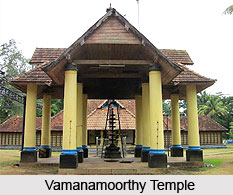 Kaladi of Ernakulam
It is situated about 32 km from Ernakulam. The great philosopher and reformer of Hinduism, Adi Sankara was born here. There is a legendary spot called `Crocodile Ghat` found here. As per the legends, Sri Sankara`s mother Aryamba was against his taking up austerity. One day, a crocodile caught his feet and held on until he convinced his mother and obtained her permission.
Kodanad of Ernakulam
It is one of the largest elephant training centres of South India. The beautiful Periyar River flows in the north of this place. The elephants are mainly trained for Safari. There is also a small zoo here.
Chennamangalam of Ernakulam
It is situated about 42 km from Ernakulam. It has versatile landscape. There are three beautiful rivers, picturesque hillocks and gleaming plains of green vastness surrounding this place. The Splendid architecture of Kerala can be seen in the Paliam Palace here. It was the official residence of the Paliath and the Achaus, the hereditary prime ministers to the Kings of Kochi. Many historic documents and important relics are preserved here. Here, the peaceful coexistence of a temple, a church, a mosque and also a synagogue can be seen. The remains of the Vypeenkotta Seminary built by the Portuguese in the 16th century attract the eyes of all the visitors here.
Malayatoor of Ernakulam
It is situated about 47 km from Kochi. There is a Catholic church on a beautiful hill, at an altitude of about 609 meter here. It is dedicated to St. Thomas. During the annual festival `Malayatoor Perunal` between March and April, thousands of dedicated devotees visit here.
Bhothathankettu of Ernakulam
It is an outstanding picnic spot about 50 km northeast of Ernakulam town. The `Salim Ali Bird Sanctuary` at Thattakkadu is situated near the two main irrigation projects, the Periyar Valley and the Idamalayar Irrigation projects. It is encircled by a huge forest. It is also a paradise for the trekkers.
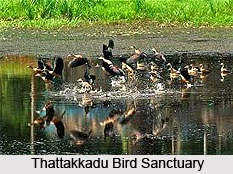
Thattakkadu Bird Sanctuary of Ernakulam
It is on the Kochi-Munnar road, about 20 km from Kothamangalam. This sanctuary is rightly named after its explorer Dr. Salim Ali, the renowned ornithologist. A variety of native birds like the Malabar grey-horn bill, the woodpecker, the parakeet etc can be seen here. The Ceylon frog-moth and rose-billed roller are among the rare birds found in this sanctuary. Various migrant birds also come here during the season.
Chinese Fishing Nets of Ernakulam
 The Chinese Fishing Nets are called "Cheena Vala" in Malayalam. It can be seen at the entrance of the Cochin harbour. There are large nets which hang from bamboo or teak posts. The local fishermen Fort Cochin still use them.
Munikkal Guhalayam of Ernakulam
This place is full of mythological stories. It is situated atop a hill at Chengamanad, 30 kms north of Kochi. It was earlier known as Jangaman and the Sage Jangaman is said to have lived here around 2000 years ago. Now, a famous Lord Murugan temple can be seen on the spot where the sage is said to have meditated. The word `Munikkal Guhalayam` literally means `sages rock cave`. As per another story, Lord Murugan also known as `Guhalayam` had made this place as his abode and hence the word `Guhalayam`.
Ernakulam Junction Railway Station
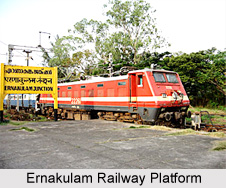 Ernakulam Junction Railway Station is considered as the major railway station in Kochi as well as in India. It is the largest railway station in the city of Kochi. The railway station is administered by the Southern Railway department of the Indian Railways and comes under the Thiruvananthapuram Railway Division. Ernakulam Junction railway station is well connected with major parts of the country. It is a junction, joining lines going in four different directions namely: north towards Shornur, south towards Alappuzha, south-west towards Willingdon Island and east towards Kottayam. Due to the loop structure of the tracks, trains going from the Thrissur side to the Kottayam side have to turn their directions, whereas those travelling for Alappuzha do not face this problem.
The Ernakulam Junction Railway station is one of the major railway stations in Kerala with trains to any part of India and also one of the A1 graded stations in the Southern Railway. The station also has a Train Care Centre in its premises. The station provides several facilities to the passengers like, ATM Services, Waiting Rooms, Food Stalls, Book Stalls, etc.
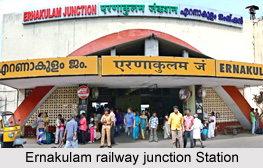
Naming of Ernakulam Junction Railway Station : Ernakulam Junction Railway Station is known as "Ernakulam South" or simply "South" amongst the local people. The reason behind this name is to distinguish it from Ernakulam Town which in turn is named as "Ernakulam North" or simply "North". Some very significant trains like H. Nizamuddin - Trivandrum Rajdhani Express passes through this station.
Structure of Ernakulam Junction Railway Station : Ernakulam Junction Railway Station has 6 platforms to handle long-distance and passenger trains. The railway station has two entrances. The main entrance is near to the Chittor road. The second entrance is called East entrance which is parallel to the Karshaka road.
Developments of Ernakulam Junction Railway Station : Ernakulam Junction was the first railway station in Kerala to have an escalator. It was installed on 9 September 2013. The first ATM facility and Railway cyber cafe to be installed at a railway station in Kerala was Ernakulam Junction. Even though there have been many proposals to convert Ernakulam junction into a world class station, no development activity is happening at present.
Recently updated articles in Cities of India
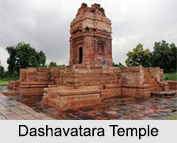
Places of Interest in Deogarh Uttar Pradesh
A place of historical and archaeological significance, Deogarh is a site with few popular places of interest.
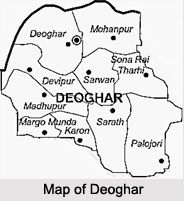
Deoghar in Jharkhand
Deoghar is the divisional headquarters of Santhal Parganas located in Jharkhand and is popular for the famous Baidyanath temple and Shiva Temples.
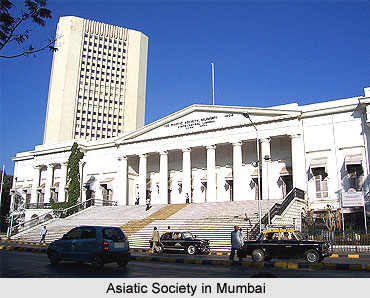
The Asiatic Society of Mumbai
Asiatic Society in Mumbai is the temple of Asian Studies from the time of British rule in India.
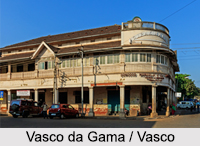
Vasco da Gama / Vasco City
Vasco da Gama / Vasco is the biggest city of Goa and is one of the most visited for its perfect amalgamation of business as well as leisure options.
Agriculture of Ladakh
Agriculture in Ladakh is primarily practiced in the short summer season due to its cold desert climate. Farmers grow hardy crops like barley, wheat, p...
Related articles in Cities of India
Holy Cities of North India
Holy Cities of North India are having the rich history of Hinduism and the entire civilization was grown up with the hands of beliefs, rituals and the...
Holy Cities of South India
Holy Cities of South India gives the detailed cultural formation of Dravidians from the early era, which later developed to the world by the Pallavas...
Holy Cities of West India
Holy Cities in West India were established by the rulers of Rajputs and the Satvahana Dynasty and the medieval rulers of Junagadh.
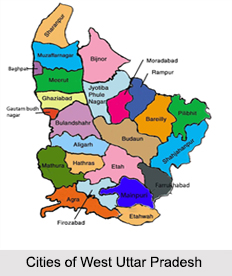
Cities of West Uttar Pradesh
Cities of West Uttar Pradesh include Meerut, Bulandshahr, Ghaziabad, Saharanpur, Muzaffarnagar, Bijnor, Bareilly, Rampur, Agra, Aligarh, Mathura and m...
Port Cities of South India
Port Cities of South India are developed from the early phase of colonial era when the Portuguese and the French traders came to India