About Dravidians
Various theories have been purported for the proper origination of the word `Dravida` which is a Sanskrit word. It has been said by the scholars that the word is behind the formation of the etymon of the word Tamil. Others hold that the word `Dravida` may be originated from Sanskrit `Drava` that connotes water or sea, thus signifying the people of India who lived close to the sea.
Furthermore, the languages of South India are considered to be the Dravidian languages. As per the general Indian legend, the Dravidian people resided in India before the advent of Aryans. The Dravidians were flourishing and developing their tradition in the southern India. The physical characteristic of this group was that they were dark-skinned and short in height. The Dravidians are said to be the composers of religious treatises and fine hymns in Tamil language and they were the founders of magnificent stone temples in and around India. The Dravidians prospered in several kingdoms and the temples established by the Dravidians got religious importance by the visitors of Hindu religious heritage.
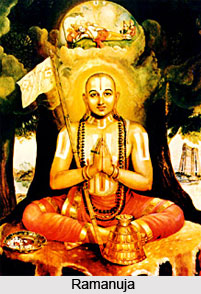
The Dravidians have influenced Hinduism in a great manner. They are evident among the masses specially the elite in the South. It is believed that they were polytheists and also held in veneration certain types of horned animals. Many elements of Tantra are a heritage from the Dravidians. Tree worship, Zoolatry and belief in Snake-spirits (Nagas) are also traceable in the Indus Valley civilisation. The masses in our villages and cities worship all tree, water, snake, animals and Shiva and his consort. Many of the rites are traceable to the earliest culture of the Dravidians. Dravidians have given us the philosophy of non-dualism of Lord Shiva, the philosophic basis of Bhakti as enunciated by Ramanuja, Madhava and Nimbarka. Religious architecture is greatly indebted to Dravidians.
The Dravidians have contributed to the cult of Lord Shiva, the worship of Mother Goddess or Shakti and also the institution of Yoga. Dravidians have given us various symbols associated with these gods and goddesses for example the lion and the bull. Many features of the temple architecture especially those of the South have been of the Dravidian origin. They were also acquainted with the working of metals. So far as the Hindu culture is concerned much of its basis is a contribution from the Dravidians. Among the articles of food, the Dravidians have given us wheat, rice, milk, pulses, vegetables, cotton dress, dwellings and few customs also. The Dravidians have adopted Sanskrit language. The Dravidians have contributed important elements to the religious emphasis, the social structure, the manners and customs, the arts which constitute the Hindu civilisation. The Dravidians have also given us great philosophers like Shankar, great products of artistic genius in the realms of dance and temple architecture and also the sect called Shaivism. Besides in the early period of Muslim invasion Dravidians kept intact the products of Aryan thought and culture, thereby preserving for the generations to come the bases of Indian culture. Dravidians are the native Indian community who were the founder of Hindu religious and social systems.
The Dravidians established a particular civilisation that is known as Dravidian civilization. As per some research scholars, the speakers of the proto-Dravidian languages are the founder of Dravidian civilisation. This civilisation is said to be in existence before the advent of Indo-Aryans in India and this pre-Vedic civilisation is basically the civilisation of the people who used to speak proto-Dravidian languages.
Origin of Dravidians
There are various theories that have been brought out regarding the Origin of Dravidians. The term Dravidian is used to refer to all of the non-Aryan population in the peninsula of India. They are considered to be the aboriginal inhabitants of the land. Dravidians are of Caucasian origin. They prevail in the southern and eastern parts of India. The history of the Dravidians is lost in antiquity. They were the domiciled inhabitants. They have preserved no literature and left no monuments which throw light upon their origin.
There are two main theories with regard to the origin of the Dravidians in India. One is that they came through the northwest passages in the Himalaya Mountains much earlier than the Aryan invasion. The physical features of the Dravidians are similar to that of the Caucasians. They were driven to the south and east by later invasion of the Aryans. The other theory is that they had a southern origin. The imaginary sunken continent in the Indian Ocean, called Lemuria is thought to have been the original home of the Aryans.
Dravidians were most tenacious as far as their religious rites are concerned. The great mass of Dravidian deities, rites, and superstitions have become a part of Hinduism. In several manners there has been connection between original Dravidian worship and Hinduism.
Some Historians suggest that proto-Dravidian was part of a larger Elamo-Dravidian language family. According to some the Dravidians were preceded in the subcontinent by an Austro-Asiatic people and were followed by Indo-European-speaking migrants later. The original inhabitants may be identified with the speakers of the Munda languages.
Some believe that Dravidian-speaking people were spread throughout India before a series of Indo-Aryan migrations. There are evidences that native Dravidian speakers learned and adopted Indic languages.
Another theory of origin of Dravidians was propagated by Sir William Hunter. According to him there are two branches of Dravidians: Kolarians speaking dialects and the proper Dravidians who belong to Tamil family. The first group entered India from north east thereby occupying the northern part of Vindhyas. However even the basis of this theory is considered as obscure.
Worship of Shakti in Dravidians
Worship of Shakti among the Dravidians is offered to those Goddesses who have not been incarnated and have no fixed temple or image as such. They are fierce. The Shakti ceremonies in the Dravidian worship are totally different from the Shakti puja of the Tantras. These ceremonies are more terrifying than the Shakti ceremonies found in Hinduism. The worship of these deities is propitiation in order to prevent their doing some evil.
While the village deity is worshipped it is feared that Shaktis will be watching and out of jealousy may do some harm. In order to prevent such consequences the Shaktis are propitiated at midnight. This is done after the day when the sacrificial buffalo was killed. An outsider is brought to the place where the sacrifice is done. His body is smeared with blood from the beheaded buffalo, winds the intestines around his neck, and takes the liver in his mouth. A pot that contains food is soaked in blood that is placed in his hands. This is accompanied by men armed with sticks and old swords and then proceeds towards the village boundaries.
As this procession moves the inmates remain in deathlike stillness for fear of the Shaktis and evil spirits which are hovering over the procession. The men shout and flourish their swords and sticks to keep off these spirits. The man who carries the bloody offering is held up by ropes and even then often falls to the ground, saying that he sees the spirits. When he falls, limes are cut in two halves and are thrown into the air and lambs are sacrificed on the spot. The man recovers from his pretended collapse and the procession moves forward. After arriving at the village boundary, the bloody rice is left as an offering and the man who carried it divests himself of his bloody trappings. Often he is carried to the temple of the village goddess where water is poured over him to revive him. The bloody rice is scattered to keep out the Shaktis.
At times Shaktis are worshipped individually. The gruesome ceremonies are aimed at pacifying the anger of the Shakti. Among these Kati Ankamma is a major deity. She is the Shakti of the place where the dead are buried. It is believed that she lives on corpses. She also sets fire to houses and finds pleasure in killing cattle. The worship is done by one or two households in union. This is done when there has been some unusual trouble which may be attributed to Kati Ankamma. The household gods are taken to the water in the evening and it is kept submerged all night. The pujari comes next day with the musicians as well as with the people who are possessed by demons. After removing the gods from the water they burn incense and sacrifice a sheep.
The next day the worship of Kati Ankamma begins, and is of short duration, for it is not pleasant enough to be extended any longer than is actually necessary. The Madiga story-teller goes to the burial ground accompanied by the people in whose interest the worship is conducted, together with a crowd from the village. The story-teller disguises him as a woman, for he has no desire to be recognized by any of the other deities as the one who did honour to the Shakti. He takes earth and with the help of cotton makes it stick together without much delay, he makes a rude image.
Donga Shakti is one of the Shaktis. The word Donga means thief. It is considered that skilfully she comes and kills the cattle for her own benefit and accounts for her name. She is worshipped at night as she is believed to be an enemy to gods and men. Worshipping her is considered as the last resort. The ceremonies take place in the night and it is over before daylight. Women do not stay near by. Only brave men are present.
Nadividhi Shakti is another form of Shakti. Nadvidhi means ` the middle street.` It is believed that she comes into the very centre of the village to ruin. A goat is sacrificed which is an offering and charms are performed until it is thought the Shakti has consented to enter the image. The household gods are propitiated while worshipping the Shakti. Then there is the buffalo sacrifice and a large number of sheep and goats are also killed. Blood is sprinkled over her. In the early morning after the day of sacrifice the potter places the image in a basket after another goat has been sacrificed. The potter carries the basket and a few men escort them.