
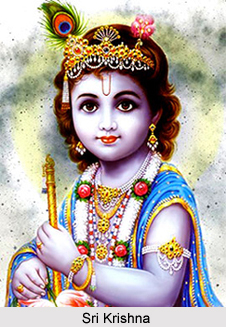
 Vaishnava literature was composed in different parts of India that included Bengal, Karnataka, Assam and Tamil Nadu. The major Vaishnava poets include Mirabai, Chandidas, Kamalakanta, Kalidasa, Ramprasad Sen, Sri Chaitanya and Vidyapati.
Vaishnava Literature
Vaishnava Literature eulogized lord Vishnu and his incarnations. This theme was rampant among the writers when Vaishnavism was a popular cult.
Introduction
Vaishnava literature was composed in different parts of India that included Bengal, Karnataka, Assam and Tamil Nadu. The major Vaishnava poets include Mirabai, Chandidas, Kamalakanta, Kalidasa, Ramprasad Sen, Sri Chaitanya and Vidyapati.Vaishnava Literature in Tamil Nadu
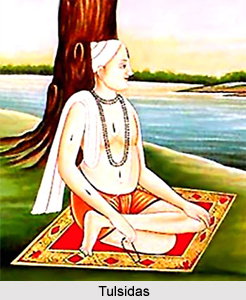 Vaishnava Alvars composed devotional hymns and songs. Poygai, Pudam and Pey were the three earliest Alvars from Tamil Nadu. Tirumalisai Alwar who lived in the eight century composed Naanmugantiruvadiandadi. Periyalvar and his adopted daughter Andal composed nearly 650 Vaishnava hymns. Nammalvar, who belonged to the ninth century, wrote Tiruvaimoli.
Vaishnava Literature in Assam
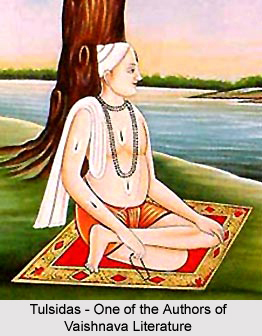 Vaishnava Literature in Assam was largely propagated and popularized by Sankaradeva, the founder of Assamese Vaishnavism. With great care and endeavour, he set himself to spread the Vaishnava faith among the people and rationalise men`s religious attitudes. Vaishnavism opened a new chapter of religious renascence and literary progress. Before going into the literary works of the time, it would perhaps be useful to take a look at Sankaradeva`s Vaishnava faith.
The Vaishnava faith initiated by Sankardeva is known as Ekasarana Dharma, i.e., devotion to one God. The cardinal features of it are : (i) Sravana Kirtana Dharma : the principle of audition was accepted as a stimulating device for religious devotion, (ii) the Dasya view of life was propounded in the manner Kabir and Tulsidas did, according to which the relation of man to God was like that of a servant to his sovereign. It was not like that of a woman to her beloved as postulated by Mirabai or Surdas. That is why the character of Radha and the "fiery power of unreflecting love" are absent as themes from the general purview of Assamese Vaishnavism. (iv)Literature: its recognized channel of expression was meant to stimulate interest among the general masses of the people, women and illiterates particularly. Thus Vaishnava religion, as a revolt against Brahmanism and Tantrism, was manifested in a religion where theology was made vivid and faith in a loving, personal God for the people propounded. Sankardeva (1449-1569) and Madhavdeva (1489-1596), the two best-known saint-poets of Assam, belong to the later medieval period. With a hitherto unknown reformative and creative zeal he paved the way for ankiya nats (one-act plays), the bargits (the devotional songs) and the verse adaptations of the Bhagavat and The Mahabharat, Shankardev brought about the pan-Indian Vaishnavite movement in this corner of the country raising Assamese literature to the status of a great literature. This literature was enriched further by Madhavdev, the spiritual heir and true follower of Shankardev. His Namghosha, a treatise of philosophical verses, Bhakti-Ratnavali, a versification of Vishnupuri Sannyasi`s devotional treatise with the same title, Rajasuya Yajna, a poetical rendering of the Mahabharat episode of the Rajasuya sacrifice of the Pandavs, the ankiya nats and the bargits are invaluable contributions to Assamese literature. Other prominent Vaishnav poets of this period are Ram Saraswati, Ananta Kandali, Shridhar Kandali, Ratnakar Kandali, Kangsari Kavi and Sarbabhaum Bhattacharya. The writings of Shankardev aimed at bringing unity to the society by overcoming racial differences.
The main feature round which the literature of the Vaishnava era revolved was the great Bhakti movement. Vaishnava poet-preachers taught that a life of mere external ritualism without the spirit that is to animate and inspire the outer life is a fraud, Mithyachara, as described by Lord Krishna. Vaishnava literary men have focused their energies on trying to show how the philosophy and tenets of the new faith could be given a simple and beautiful expression. Vaishnava literature found a universal response and appeal.
The literature that sprouted its seed in the subsequent phase, 1650-1826, may be assigned the stature of the post-Vaishnavite literature which included the literature of the Ahom period. Though the same Vaishnavite trend may be said to have continued through the period of Shankardev to the fag-end of the Ahom reign, there were much deviations during the later period. A feeling of weariness pervaded the literary atmosphere following the time of the great Vaishnav poets. Under the auspices of the Ahom kings, against the Vaishnavite literature which was always religious, a new kind of prose literature, secular in nature, emerged the historical literature being in vogue. Yet, with most of the writers, the same underlying creed continued. The language of the Vaishnav period had a conventional form with many words borrowed from outside the region. But in this period, literature in the form of history, brought about a language with it roots in its own soil. This new kind of literature influenced even the writers of the Vaishnav tradition to write some of the biographies in prose like the famous Katha-gurucharit.
The Vaishnava literature of Assam, as in other parts of the country, was based to a great extent on the epics which served as the storehouse of materials for literary works. The Vaishnava poets perfected their language to a standard capable of expressing concisely different shades of thought and feeling, including the highly philosophical ones. It could be tender and moving if the poet was describing death or parting. It could be lucid and easy, if he was describing child-life or tranquillity of nature. It could be rugged, majestic and sullen in the passages concerned with bloodshed, battle or calamity.
Gradually, as religious fervour declined, literary Vaishnava works declined as well. Poets like Sridhar Kandali who followed this "grand line" of poets tried to enliven the dying Vaishnava literary traditions. The age that succeeded was an age marked by a political change ushered in by the hegemony of the Ahoms.
Till the end of the Vaishnava era, the centre of literary activity was in western Assam that was under the hegemony of kings either of Kamatapura, Cooch Behar or Kamarupa. This signified a single political unity. With the decline of these kingdoms and the consolidation of the Ahom political power in eastern Assam, the centre of literary and intellectual activity shifted from the west to the east. The Ahoms got merged in the indigenous population and through their successive rulers built up and established steadily a tradition of literary work of a more utilitarian type.
Vaishnava Literature in Bengal
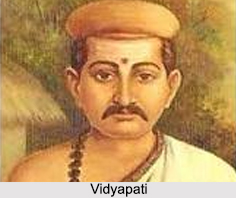 Vaishnava Literature in Bengal developed in the 14th century with "Shrikrishnakirtan" composed by Baru Chandidas. It is the first epic in Bengali Language. It has 418 lyrics on Radha and Lord Krishna. "Shrikrishnakirtan" is a lyrical play. In the second half of 14th century many lyrics were composed by Chandidas on the story of Radha and Krishna. Many Bengali poets, both Hindu and Muslim, composed Vaishnava lyrics in Brajabuli as they were inspired by Vidyapati.
Literature of Chaitanya : Chaitanya Mahaprabhu was inspired by lyrics of Jayadeva, Vidyapati and Chandidas. He composed lyrics on Radha and Krishna. His lyrics reflected the spiritual aspects of Radha- Krishna"s relationship. Post Chaitanya, Vaishnava literature is the product of the movement that was initiated by Chaitanya also known as the Vaishnava movement. Through this literature Radha and Krishna`s romance depicted the mystical relationship of the human soul to the divine soul. Many lyrics, informative biographies, and philosophical scriptures regarding Vaishnavism were written in Bengali Literature too.
 Creation of Vaishnava Padavali : Vaishnava Padavali was composed for three hundred years till the 18th century which have been inspired by different aspects of love. Post-Chaitanya era the themes of Vaishnava lyrics were enlarged. New lyrics were being added to reveal other aspects of Krishna. The lyrics that have been inspired by Vaishnava philosophy also include hymns and devotional poems. The post-Chaitanya poets added symbolic and spiritual meanings to the romance of Radha and Krishna.
Vaishnava Poets : There is no perfect account of number of Vaishnava poets and how many lyrics they composed. The manuscripts of most of these lyrics have not been found. There is a possibility that the lyrics were not written and they were sung by Kirtan singers. Some lyrics that can be dated to the 18th century includes Bishwanath Chakravarty`s "Ksanadagitachintamani" (1705), Radhamohan Thakur`s "Padamrtasamudra", Vaisnavadas` "Padakalpataru" (1760) and Narahari Chakravarty`s "Gitachandroday". "Padakalpataru" has 3,000 Vaisnava lyrics by nearly 150 poets. According to Vaishnava concept of aesthetics and different episodes of Krishna`s life the lyrics have been arranged.
Vaishnava Poets from 16th to 19th Century : In the late 19th century Dinesh Chandra Sen has mentioned the names of 164 composers and 4,548 lyrics in "Banga Bhasa O Sahitya" (1895). More compositions were found thereby raising the number of Vaishnava lyrics to about 8,000. Muslim poets like Afzal, Alaol, Syed Sultan, Syed Martuza and Ali Raza also wrote Vaishnava Padavali.
 Some prominent Vaishnava poets who belonged to the 16th century were Murari Gupta, Narahari Sarkar, Basudev Ghosh, Lochandas, Jnanadas, Govinda Das, Balaram Das and Dwija Chandidas. The 17th century poets were Kaviranjan, Kavishekhar, Radhaballabh Das, Ghanashyam Das and Ramgopal Das and others. The 18th century poets were Vaisnavadas, Chandrashekhar, Radhamohan Thakur, Narahari Chakravarty and Yadunandan. Chandidas wrote on love and union, Jnanadas on affection and Govindadas on trysts.
Vaishnava Biographies : "Charitakavya" Vaisnava biographies grew out of the life stories of Chaitanyadev and his associates. The first poetical biography in Bengali is "Chaitanyabhagavata" (1548) that was composed by Brindaban Das in 25,000 couplets. Lochandas` "Chaitanyamangal" (1576) was the next biography on Chaitanyadev. Lochandas was followed by Jayananda who composed "Chaitanyamangal". Krishnadasa Kaviraja wrote another biography of Chaitanyadev- "Chaitanyacharitamrta" (1612). Vaishnava lyrics may be divided into four categories based on the theme- the life of Chaitanyadev, Bhajan, the relationship of Radha and Krishna and spiritualism.
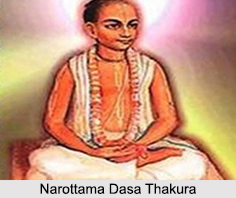
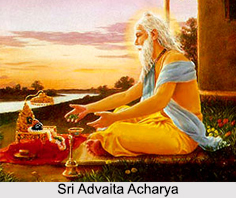
Biographies of Other Vaishnava Saints : There were several biographies about Advaita Acharya who is the oldest of Chaitanyadev`s companions. The first book on him in Bengali verse was written by Ishan Nagar. Then was "Advaitamangal" by Haricharan Das. Thereafter was the book with the same title composed by Shyamdas. "Advaitabilas", was written by Narahari Das in the 18th century. Loknath Das composed two biographies on Advaita Acharya`s wife Sitadevi – "Sitacharita" and "Sitagunakadamva". "Premavilas" was a biography (1601) about Srinivas who was another close associate of Chaitanyadev and it was written by Nityananda Das. He also figures in Yadunandan Das` "Karnananda" (1608). Gurucharan Das`s "Premamrita" and Manohar Das`s "Anuragavallari" are also other works. Narahari Chakravarty wrote on the life of Narottama Thakur and the book was named "Narottamavilas".
 Plays in Vaishnava Literature : A number of plays with Vaishnava themes were written. Kavikarnapur wrote a Sanskrit play and translated into Bengali language and named it "Chaitanyachandrodayakaumudi". This play emphasizes the austere side of Chaitanya`s life and his devotion to Krishna.
Other Contributions towards Vaishnava Literature : Rabindranath Tagore composed "Bhanusingha Thakurer Padavali" (1884) in Brajabuli. Maladhar Basu translated the 10th and 11th cantos of the Sanskrit "Srimad Bhagavata" into Bengali and named it "Shrikrishnavijay". In this, Krishna`s divinity has been focused on. Afzal had composed some lyrics on the romance of Radha and Krishna.
Vaishnava Literature in Medieval Period
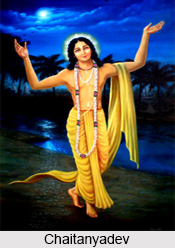 During medieval period, Vaisnava literature was dealing with a new genre, which was mainly associated with biography. In this genre, poetical works about the lives of historical personalities were composed. The first biographical book named "Chaitanya Charita" was composed in Sanskrit by Murari Gupta, who was Chaitanyadev`s contemporary. Below the biographical works of Vaishnava literature in medieval period has been discussed below in brief.
Murari Gupta"s Chaitanya Charita : Murari Gupta"s "Chaitanya Charita" was in the form of a diary with a mixture of prose and poetry. Hence, this is also known as "Murari Gupter Kadcha". It contains several important events in the life of Chaitanyadev, beginning with his birth and ending with his death. Murari Gupta depicted Chaitanyadev as the personification of Radha and Krishna, united together in love.
Brindaban Das"s Chaitanyabhagavata : "Chaitanyabhagavata" was the first poetical biography written in Bengali language. It was composed by Brindaban Das after 15 years of Chaitanyadev"s death. Brindaban Das depicted Chaitanyadev as the incarnation of Krishna.
Lochan Das`s Chaitanya Mangal : Lochan Das"s "Chaitanya Mangal" was the second biography of Chaitanyadev. This is considered to be the best of these three poetical biographies.
Krishnadasa Kaviraja"s "Chaitanyacharitamrita" : Among other poetical biographies, Krishnadasa Kaviraja"s biography of Chaitanyadev named "Chaitanyacharitamrita" (1612) was one of the most important ones. Krishnadasa was a disciple of Raghunath Das, an ascetic of Brindaban. Krishnadasa`s poem was popular because, though its main theme was the life of Chaitanyadev, it also contained reflections on the philosophy of Vaisnavism and its rites, contemporary history, society and traditions. Krishnadasa Kaviraja depicted Chaitanyadev as the personification of the spiritual relationship between Radha and Krishna.
Biographies of Advaita Acharya : Advaita Achrya was the oldest companion of Chaitanyadev. During medieval period, one biography on Sanskrit and four in Bengali were also composed about his life. The Sanskrit book "Balyalilasutra" was composed by Harakrishna Das, which deals with Advaita Achrya"s childhood life. The first book in Bengali was written by Ishan Nagar; second book (Advaitamangal) was composed by Haricharan Das; third book with the same title was written by Shyamdas, the manuscript of which is not longer found. The fourth book named Advaitabilas was done by Narahari Das in 18th century. These books provide many references about the associations of Advaita Acharya with Chaitanyadev.
Miscellaneous Writings in Medieval Period : Along with poetical biographies several plays and essays were also composed during medieval period on Vaishnava themes. Kavikaranpur wrote a Sanskrit play named "Chaitanyachandroday", which was based on the story of Chaitanyadev. Later, it was translated into Bengali with the title of "Chaitanyachandrodayakaumudi". This ten-act play emphasizes the ascetic side of Chaitanyadev`s life and his devotion to Krishna. Another play in Sanskrit named "Jagannathavallabhanatakam" was written on the life of Chaitanyadev by Ramananda Roy. The writers were also inspired by the folk legends and Puranas and implied them in their works. Among essays Nityananda`s "Premvilas", Yadunandan`s "Karnananda", Manohar Das`s "Anuragavallari" and Akinchan Das`s "Bibartavilas" are the most popular ones. These are all about devotional rites along with literary importance.
Recently updated articles in Indian Literature
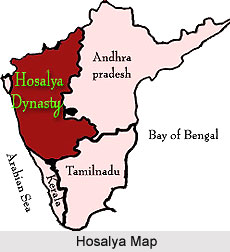
Gadyakarnamrita
Gadyakarnamrita is a 13th-century Sanskrit literary work written mainly in prose. It describes the ninety-day battle at Srirangam between the Hoysala...
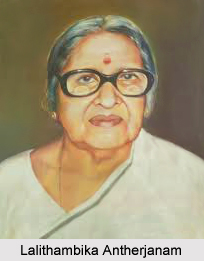
Women Writers in Malayalam Literature
Women writers in Malayalam literature have worked incessantly to make a place for their literary works. In the earlier periods, they were completely o...
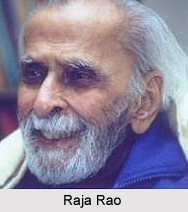
Comrade Kirillov, Novel by Raja Rao
Comrade Kirillov, a distinctive creation of Raja Rao, is presented as a brief yet incisive novelette that offers an ironic portrayal of the self-contr...
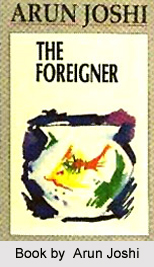
The Foreigner, Novel by Arun Joshi
“The Foreigner” is a book authored by Arun Joshi and published by Vision. It is an illustrious creation in the entire career of Arun Joshi, the famous...
Short Story in Telugu Literature
Short Story in twentieth century Telugu Literature was extremely popular and growing in and developing in a major way. Their popularity was greatly fa...
Related articles in Indian Literature
Mythological Themes in Indian Literature
Mythological themes in Indian literature have been integral to every ancient and contemporary writer and their path to f
Literature During Gupta Age
It is during the Gupta Age literature in the form of poetry, epos and drama gained a colossal importance.
Literature of Aravidu Dynasty
Sanskrit and Telugu were the popular literary medium of communication during Aravidu dynasty.
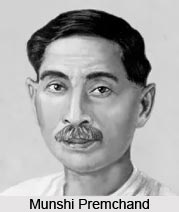
Munshi Premchand
Munshi Premchand was a legendary Indian writer notable for his modern Hindustani literature. A writer of a very high caliber, Premchand`s writings hav...
Sanskrit Poets
The names of some of the Sanskrit Poets are Bharavi, Devarshi Ramanath Shastri, Jayadeva and Srinivas Rath.